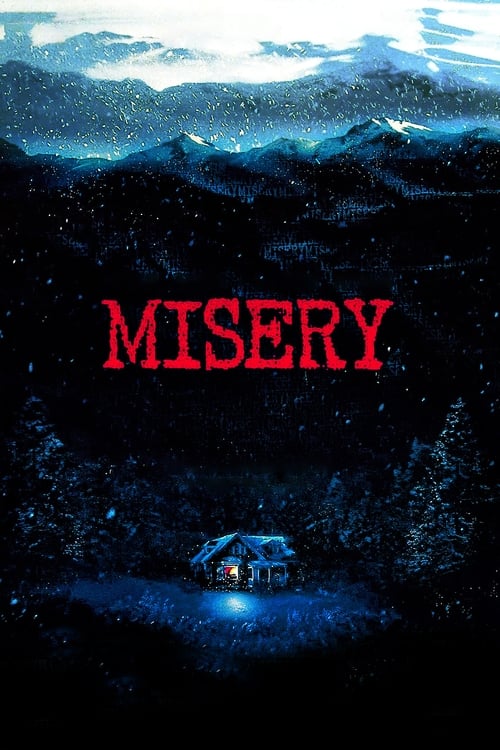
Misery (1990)
Directed by Rob Reiner
No · Ultra Based
How we score movies →Consciousness Markers
While the antagonist is female and powerful, this serves the thriller's suspense rather than any feminist agenda. The character is not presented as a commentary on gender dynamics or patriarchal systems.
The cast reflects the demographics typical of 1990s mainstream cinema without any intentional commitment to diverse representation. No evidence of progressive casting choices.
No LGBTQ+ themes, characters, or subtext present in the film.
No examination of racial themes, racial consciousness, or commentary on systemic racism present in the narrative.
No climate-related themes or environmental messaging whatsoever.
No critique of capitalism, wealth inequality, or systemic economic exploitation present in the film.
No body positivity messaging or celebration of diverse body types. The film contains no commentary on physical appearance or body standards.
While Annie Wilkes exhibits psychological pathology, the film does not treat neurodivergence as lived experience or present it with contemporary understanding. Her condition serves only narrative function.
No attempt to reframe historical events or present alternative historical narratives.
The film maintains suspenseful entertainment without attempting to educate, preach, or deliver moral lessons about social issues.


Synopsis
After an accident, acclaimed novelist Paul Sheldon is rescued by a nurse who claims to be his biggest fan. Her obsession takes a dark turn when she holds him captive in her remote Colorado home and forces him to write back to life the popular literary character he killed off.
Why it received this score
Misery presents itself as a straightforward psychological thriller without pretension toward social commentary. Rob Reiner's 1990 adaptation of Stephen King's novel focuses entirely on the mechanics of captivity and psychological horror, deploying its female antagonist as a force of nature rather than as a vehicle for examining gender dynamics or power structures. Kathy Bates delivers what remains a genuinely unsettling performance, but the character exists to frighten and disturb, not to educate or provoke reflection on systemic issues.
The film operates in a cultural moment when such entertainment could exist without obligation toward progressive messaging. Annie Wilkes is violent and dangerous because the story requires her to be so, not because the narrative wishes to examine the social conditions that produced her pathology. Her gender is incidental to her function as antagonist. There are no thematic explorations of representation, no climate consciousness, no anti-capitalist rhetoric, no examination of neurodivergence as lived experience. The film simply does not concern itself with these matters.
What remains is a suspenseful, technically proficient thriller that has aged reasonably well. Its low score reflects not a judgment of quality but rather an honest assessment that it predates and exists outside the particular constellation of progressive cultural sensibilities that define contemporary social consciousness. For a pre-2010 film, such a score is entirely appropriate.
Analysis generated by our Consciousness Algorithm
Critic Reviews
“Reiner captures just the right level of physical tension, but for the most part wisely emphasises the mental duels. Terrific.”
“The actors are supported by the best kind of writerly craft and directorial technique, the kind that refuses to call attention to itself, never gets caught straining for scares or laughs. Popular moviemaking -- elegantly economical, artlessly artful -- doesn't get much better than this.”
“In a way, Misery is a ghoul comedy. But it's more than that, because it's genuinely, consistently scary. With his enthusiastic direction -- the cutting, the odd angles, the unexpected timing -- Rob Reiner takes what might have been a static set-up, a couple of people talking in a room, and makes it harrowing. [30 Nov 1990, p.E1]”
“A weak handshake of a movie, it is slightly repellent -- hardly gripping, much less knuckle-whitening. This "Psycho" for fatsos is as self-aware as it is styleless.”