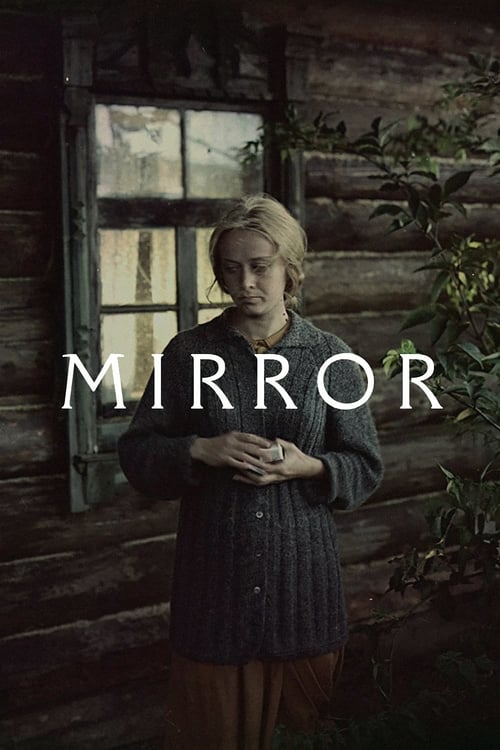
Mirror (1975)
Directed by Andrei Tarkovsky
No · Ultra Based
How we score movies →Consciousness Markers
The film features a woman as the central emotional anchor, but this is presented as a poetic and personal choice rather than a conscious representational strategy. No attempt at demographic diversity or deliberate casting statements.
The mother figure receives significant screen time and emotional weight, but the film treats gender as a natural aspect of human experience rather than as a social problem requiring critique or consciousness-raising.
The film operates within a Soviet context and references Soviet history, but it does not mount explicit critiques of capitalism or present anti-capitalist ideology as a narrative position.
The film incorporates documentary footage of Soviet history and interweaves it with personal memory, but it does not present an explicit revisionist argument or attempt to correct historical records according to contemporary values.
No LGBTQ+ themes or representation present. The film is concerned with familial and personal memory in a heteronormative context, but without any explicit ideology around sexual orientation.
The film does not engage with race or ethnicity as a thematic concern. It operates within a Soviet context where such categories were not central to artistic discourse in this manner.
No environmental themes or climate consciousness present. The film is concerned with time, memory, and history, not with ecological concerns.
The film does not engage with body image, appearance standards, or body positivity discourse. Bodies are presented as they are, as vessels for memory and experience.
No representation of neurodivergent characters or conditions. The film does not address this category of human experience.
Mirror is deliberately oblique and poetic. It does not explain itself or lecture the audience. The film trusts viewers to find their own meaning in its images and sounds.


Synopsis
A dying man in his forties recalls his childhood, his mother, the war and personal moments that tell of and juxtapose pivotal moments in Soviet history with daily life.
Why it received this score
Mirror is a film that predates the modern cultural moment by half a century, which makes scoring it against contemporary sensibilities a peculiar exercise in historical archaeology. Tarkovsky's meditation on memory and Soviet identity concerns itself with the texture of lived experience rather than the explicit articulation of social positions. The film does center a maternal figure of considerable interiority, played by Margarita Terekhova, who embodies memory itself as much as any character could. Yet this choice emerges from Tarkovsky's artistic preoccupations rather than from any calculated effort to satisfy contemporary representational expectations.
What we encounter in Mirror is a work of pure artistic intention, which operates according to its own logic. The film's non-linear structure and incorporation of documentary footage suggest an interest in collective historical consciousness, but this is presented as an aesthetic and philosophical matter, not as a social justice argument. The film does not lecture. It meditates. There is no agenda to detect here, only the patient accumulation of images and sounds meant to evoke the ineffable nature of memory itself.
For a film created in 1975, and in Soviet cinema no less, Mirror exhibits minimal markers of what we now call progressive social consciousness. This is not a deficiency on the film's part, but rather a reflection of its historical moment. The film belongs to the lineage of European modernism and Soviet artistic tradition, not to the cultural conflicts of the 2020s. To score it as if it were intended to participate in those conflicts would be to misunderstand what kind of work it is.
Analysis generated by our Consciousness Algorithm
Critic Reviews
“While there is barely a story to tie it all together, The Mirror finds connections in the longings of Alexei. He longs to understand his past, his land, his family, his inspirations and fears, and that’s what the movie is able to convey in its abstract but persuasive way.”
“Truly original and unique: genuine film poetry, full of spellbinding images and sequences. [20 Mar 1998, p.L]”
“Mirror is much copied, but as the recent run of Terrence Malick films demonstrates, eschewing time and plot for flotsam and psyche is much harder than Tarkovsky makes it look.”
“Mr. Tarkovsky appears so absorbed in grappling with his own demons that universality suffers. [17 Aug 1983, p.C14]”