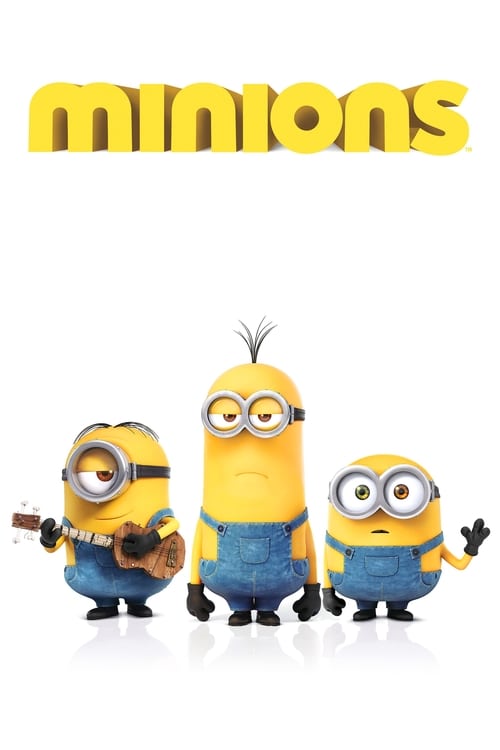
Minions (2015)
Directed by Kyle Balda
No · Ultra Based
How we score movies →Consciousness Markers
The film features a female lead villain and a reasonably diverse voice cast, though this appears incidental to the narrative rather than intentional representation work.
Scarlet Overkill is a female villain in a position of power, but the film offers no genuine feminist commentary. Her characterization is superficial and her gender is treated as incidental.
The voice cast includes actors of color, but the film contains no exploration of race, racism, or racial identity. Diversity appears to be a casting choice rather than thematic.
The film contains minimal dialogue and no speeches or monologues that convey moral instruction. Its humor is primarily visual and physical rather than preachy.
The minions have distinctive body types, but the film offers no commentary on body image or acceptance. Their design is purely comedic and fantastical.
The film depicts villains attempting to take over the world, but this is treated as cartoon adventure rather than social critique. There is no meaningful commentary on capitalism or wealth.
The minions' gibberish speech and childlike behavior could be read as neurodivergent coding, but the film treats this as humor rather than representation or acceptance.
No LGBTQ+ themes, representation, or subtext are present in the film. The focus is entirely on heterosexual relationships.
No climate themes, environmental consciousness, or ecological messaging appear in the film. The narrative is entirely divorced from such concerns.
The film's 1960s setting is used purely for aesthetic purposes. No historical reinterpretation or revisionist framing of past events occurs.


Synopsis
Minions Stuart, Kevin and Bob are recruited by Scarlet Overkill, a super-villain who, alongside her inventor husband Herb, hatches a plot to take over the world.
Why it received this score
Minions presents itself as a film of modest progressive ambitions, though its execution suggests a franchise more concerned with brand extension than genuine cultural commentary. The lead villain, Scarlet Overkill, is indeed a woman in a position of power, and Sandra Bullock delivers her lines with considerable verve. Yet the film treats this fact as mere novelty instead of substance. Scarlet exists primarily as a plot device, a costume and a voice, her characterization so thin that her gender becomes almost incidental to her function in the narrative. The film does not interrogate power, ambition, or villainy through any particular lens; it simply deploys them as cartoon machinery.
The supporting cast reflects a reasonably diverse ensemble, though one observes that this appears to be a consequence of Hollywood casting practices rather than any deliberate commitment to representation. The minions themselves, those small yellow creatures who occupy the narrative center, are voiceless except for their gibberish, which places them outside the realm of meaningful representation discourse. The film's humor relies heavily on slapstick and visual gags, which conveys no particular social consciousness. There is no engagement with questions of labor, exploitation, or the ethics of servitude, despite the minions' functional role as obedient workers.
The film's setting in 1960s London and its brief flirtations with spy-movie pastiche suggest stylistic ambition but not social awareness. Minions is a corporate product designed to generate revenue and extend a profitable franchise. Its modest representation of a female villain does not constitute progressive filmmaking, but rather the bare minimum of contemporary casting practice applied to a narrative that remains entirely unconcerned with social questions of any kind. The film succeeds as entertainment for children; it fails as a cultural text.
Analysis generated by our Consciousness Algorithm
Critic Reviews
“A surprisingly demented delight; a crazy, spirited, if simplistic fusion of off-beat adult humour blended with the sensibility of an anarchic toddler.”
“The breakout stars of the Despicable Me franchise seize the spotlight in an enjoyably demented off-shoot that is guaranteed to send their young fans bananas.”
“The action sequences are wild, the jokes relentlessly dumb-but-smart, and the sheer sense of anything-goes daftness...is glorious.”
“The marketing engine of Minions is undeniably powerful. This is something craftily designed to sell toys and theme park tickets and special cans of Tic-tacs. But it’s not a movie. It’s an eyesore.”