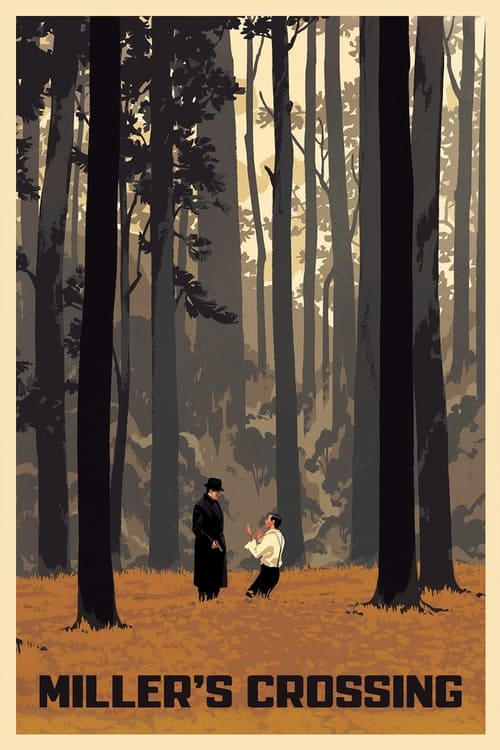
Miller's Crossing (1990)
Directed by Joel Coen
No · Ultra Based
How we score movies →Consciousness Markers
The film is stylistically mannered and self-conscious about its genre conventions, with carefully crafted dialogue and formal precision that occasionally borders on theatrical affectation, though this is more aesthetic than preachy.
The cast is predominantly white and male, reflecting the genre conventions of 1920s gangster fiction. No effort is made toward diverse representation.
There are no LGBTQ+ themes, characters, or representation in the film.
Female characters serve functional roles within a male-centered narrative. Verna is primarily an object of desire rather than an autonomous agent with her own arc or agency.
The film contains no racial consciousness, commentary, or interrogation of racial dynamics. Race is not addressed.
Climate themes are entirely absent from this 1929-set gangster film.
While the film depicts organized crime and corruption, it does not present anti-capitalist critique or consciousness. Crime is treated as a genre element rather than as systemic critique.
The film contains no body positivity messaging or themes.
There is no representation or engagement with neurodivergence in the film.
The film operates within established genre conventions of 1920s crime fiction rather than revising historical narrative or presenting alternative historical perspectives.


Synopsis
Set in 1929, a political boss and his advisor have a parting of the ways when they both fall for the same woman.
Why it received this score
Miller's Crossing is a fastidiously constructed neo-noir gangster film that inhabits the aesthetic and moral universe of 1920s crime fiction with scholarly precision. The Coen Brothers have crafted a period piece that concerns itself with traditional masculine codes of honor, loyalty, and betrayal within a world of bootleggers and political corruption. The film's preoccupations are entirely those of the genre it inhabits, with no detectable interest in contemporary social consciousness or progressive sensibilities.
The narrative centers on male characters navigating spheres of power and allegiance. Marcia Gay Harden's Verna exists primarily as an object of desire around whom the central conflict pivots, rather than as an agent with her own arc. The film makes no apparent effort to complicate gender dynamics or interrogate the patriarchal structures it depicts. Violence is rendered as a stylistic element of the criminal underworld rather than as something to be interrogated through a lens of social awareness. The 1990 release date is incidental; the film looks backward with considerable affection toward a specific literary and cinematic tradition.
What emerges is a work of formal mastery in service of a retro vision. There is no representation consciousness, no progressive agenda, no acknowledgment of the social categories that contemporary cultural criticism has made central to artistic evaluation. This is not a flaw, precisely, but rather a reflection of the film's deliberate aesthetic choices. Miller's Crossing occupies a space outside the frameworks we have been asked to assess.
Analysis generated by our Consciousness Algorithm
Critic Reviews
“Cold and cut to the bone, the film is a primer in screen virtuosity. Standard action film clichés, like a face getting hit with a chair, get turned inside out; both film and actors somehow manage to seem realistic and stylized at the same time. [21 Sept 1990, Life, p.6D]”
“A masterpiece, but of a unique kind... A gorgeously filmed, supremely well-acted, intricately written film noir about now.”
“Substance is here in spades, along with the twisted, brilliantly controlled style on which filmmakers Joel and Ethan Coen made a name.”
“A lifeless, tedious picture... A complete dud. [29 Oct 1990, p.26]”