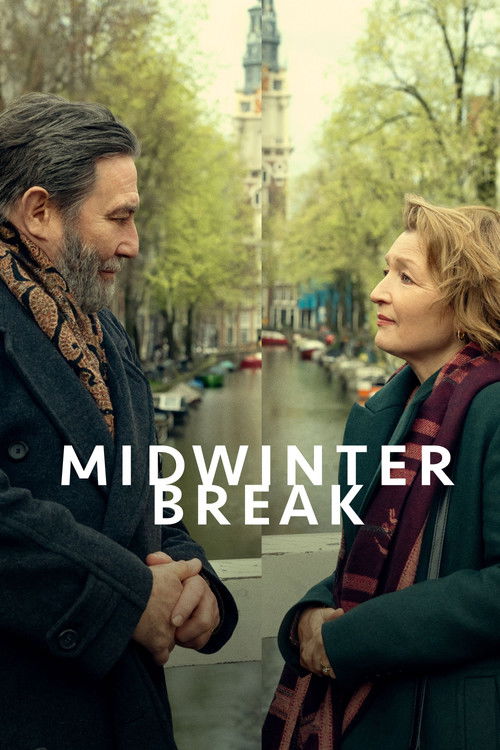
Midwinter Break (2026)
Directed by Polly Findlay
No · Ultra Based
How we score movies →Consciousness Markers
Gender dynamics are explored through individual psychology rather than systemic analysis. Stella is a woman with agency and complexity, but the film does not frame her experiences through explicitly feminist critique.
The cast is predominantly white and drawn from the established British theatrical tradition. While Lesley Manville and Ciarán Hinds are accomplished performers, there is no visible effort toward diverse representation.
The couple are retired, and the film touches on economic security and pension matters obliquely, but there is no systematic critique of capitalism or wealth inequality.
The film takes place in Amsterdam and contains no apparent engagement with racial themes or commentary. Race is not addressed in any meaningful way.
The film depicts aging bodies and the physical decline associated with age without fetishizing or pathologizing them, though this is more a matter of realistic representation than explicit body positivity messaging.
The film maintains a naturalistic tone throughout and avoids preachy exposition. Characters discuss their beliefs and history, but this emerges from genuine dramatic conflict rather than scripted instruction.
The narrative is centered on a heterosexual married couple with no LGBTQ+ themes or representation evident in the plot or supporting characters.
Climate change and environmental concerns do not factor into the narrative. This is a character study with no interest in ecological themes.
No characters with neurodivergence or disability are present in the narrative. This aspect of contemporary social consciousness is entirely absent.
The film contains no historical revisionism or reframing of past events through a contemporary lens. It is set in the present day with no engagement with historical narrative.


Synopsis
Longtime retired couple Stella and Gerry realise that their relationship has reached a crossroads while on holiday in Amsterdam. After so much time and so many memories, long-held promises and deeply concealed wounds threaten to come to light and force them to confront their future.
Why it received this score
Midwinter Break arrives as a modest chamber piece about the friction points in a long marriage, the kind of quiet drama that appeals to audiences who appreciate restraint and emotional subtlety. Director Polly Findlay's feature debut eschews the bombastic in favor of lingering conversations and meaningful silences, allowing Lesley Manville and Ciarán Hinds to inhabit Stella and Gerry with the kind of lived-in authenticity that comes from actors who understand the weight of accumulated years. The film's preoccupations are personal rather than ideological: faith, commitment, fidelity, and the question of whether long-term partnership is worth its accumulated pain.
From the perspective of contemporary social consciousness, the film remains largely indifferent to current cultural markers. The cast is predominantly white and drawn from the British acting establishment. Gender dynamics are explored through the lens of individual psychology rather than systemic critique. Stella's identity as a retired teacher and practicing Catholic inflects the narrative, but the film treats her religious faith as a private matter of conscience rather than a vehicle for social commentary. There is no discernible investment in representation as a visible political act, no characters marked by neurodivergence or disability, no climate themes, no economic critique. The film simply does not traffic in the vocabulary of progressive cultural activism.
What we have instead is a work concerned with the universal and the particular, with the interior lives of two people trying to understand whether they still know each other after decades of marriage. This is neither a strength nor a weakness from the perspective of evaluating contemporary cultural sensibilities, merely an absence. The film's refusal to engage with modern progressive frameworks means it registers as quaint, even old-fashioned, in its preoccupations. Yet there is an integrity to this approach: it declines to retrofit social consciousness onto a story that has no interest in the matter. We are left with a chamber drama about aging, regret, and the possibility of redemption through honest conversation.
Analysis generated by our Consciousness Algorithm
Critic Reviews
“An adaptation of a Bernard MacLaverty novel of the same name, “Midwinter Break” is a delicate film that stays in a minor key, but whose impact is profound if you can get on its level.”
“Polly Findlay’s adaptation of Bernard MacLaverty’s 2017 novel is a serious attempt to delve into a complex marriage, and fortunately for such heavy material it contains two winning performances from Manville (so delightful in “Mrs. Harris Goes to Paris”) and Hinds (“Is This Thing On?”).”
“Midwinter Break is most interested in the realities of long-term relationships—with unfaced trauma and graceful forgiveness alike—more than concrete absolutes, which is what makes it a valuable meditation on the imperfection of marriage.”
“To put it simply: it's just not very stimulating to watch two people who have a hard time talking... have a hard time talking. Stella and Gerry's love may be stuck in the wintry cold, but so is the film, utterly unable to be thawed.”