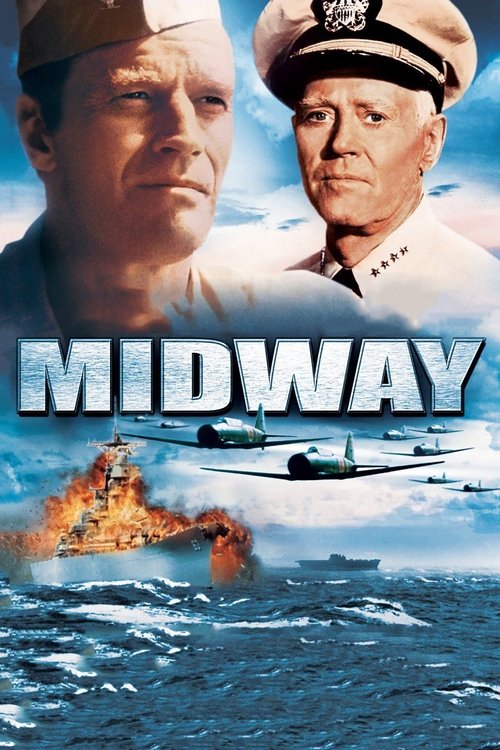
Midway (1976)
Directed by Jack Smight
No · Ultra Based
How we score movies →Consciousness Markers
The film includes Toshirō Mifune and a diverse supporting cast of character actors, but this reflects 1970s studio practice rather than deliberate inclusive casting philosophy. Women are virtually absent from the narrative.
While Mifune's inclusion shows some international casting, the film exhibits no racial consciousness or examination of systemic issues. The Japanese are depicted as military adversaries rather than subjects of racial commentary.
The film depicts military institutions and industrial warfare production without critique. Military-industrial structures are presented as necessary and heroic rather than subject to ideological interrogation.
The film presents a relatively conventional historical narrative of the battle. While it includes the Japanese perspective through Mifune's character, it does not fundamentally revise historical understanding or challenge traditional narratives.
The film prioritizes entertainment and spectacle over preachy messaging. While military procedures are explained through dialogue, there is minimal sense of the narrative pausing to deliver ideological lessons.
The film contains minimal female presence. Women appear only as wives or supporting figures in brief scenes, reflecting the male-dominated military narrative typical of 1970s war films.
No LGBTQ themes, representation, or narrative elements present. The film is entirely focused on military combat and strategic operations.
No environmental or climate-related themes appear in the narrative. The film is a historical military drama unconcerned with ecological issues.
Body positivity is entirely absent from the film's concerns. The narrative focuses on military operations and combat sequences rather than body image or physical diversity themes.
No representation of neurodivergence or neurodiverse perspectives present. The film contains no disability representation or related themes.


Synopsis
This war drama depicts the U.S. and Japanese forces in the naval Battle of Midway, which became a turning point for Americans during World War II.
Why it received this score
Midway stands as a monument to the grand war film tradition, a sprawling ensemble piece that marshals an impressive roster of Hollywood talent to recreate the pivotal naval engagement of the Pacific Theater. The film's primary concern is historical spectacle and military heroics, rendered with the earnest sincerity that characterized mid-1970s cinema. Charlton Heston leads a cast that reads like a greatest-hits compilation of American character actors, each deployed with the precision of battle formations. The inclusion of Toshirō Mifune to represent the Japanese command structure provides a measure of narrative balance, though the film's sympathies remain firmly with the American perspective.
What distinguishes Midway from contemporary social consciousness narratives is its absolute indifference to demographic representation as a value in itself. The casting choices reflect studio economics and star power rather than any deliberate effort toward inclusive representation. The film contains no examination of systemic inequity, no interrogation of military-industrial structures, no environmental commentary. It is a pure military procedural, interested in tactics and outcomes rather than social critique. The Japanese are portrayed as honorable adversaries rather than objects of ideological condemnation, which might be read as respectful but stems primarily from narrative convention rather than progressive intent.
The film represents the war genre in its classical form, before such narratives became vehicles for contemporary social commentary. Its restraint in avoiding topical messaging, its focus on the historical event itself, and its straightforward entertainment values place it squarely outside the scope of modern progressive sensibility markers. This is not a work of moral reckoning but of historical documentation filtered through Hollywood's traditional storytelling apparatus. One observes the film with the detachment of an archaeologist examining a period artifact, noting its concerns and constraints with equal measure.
Analysis generated by our Consciousness Algorithm
Critic Reviews
“The effects work rivals the likes of “Saving Private Ryan” and, well, “Independence Day.” It’s spectacular and realistic-looking. That’s to be expected. What’s not expected is how serious-minded and well-acted the picture is.”
“The film’s drama is B-movie basic. But the destructive colliding metal-on-metal inferno of what war is makes Midway a picture worth seeing.”
“Midway does a decent job of cramming in not only the eponymous three-day naval battle between the United States Navy and the Imperial Japanese Navy but also treats the audience to a wealth of other, related Greatest Generation’s greatest hits. ”
“The first thing director Roland Emmerich should do after his latest movie Midway hits theaters is apologize. Apologize to the visual effects crew, the stuntmen, the carpenters, the costumers and artists. He has squandered their considerable visual skill in retelling the crucial World War II battle at Midway by melding some of the best action sequences in years with the most banal of words.”