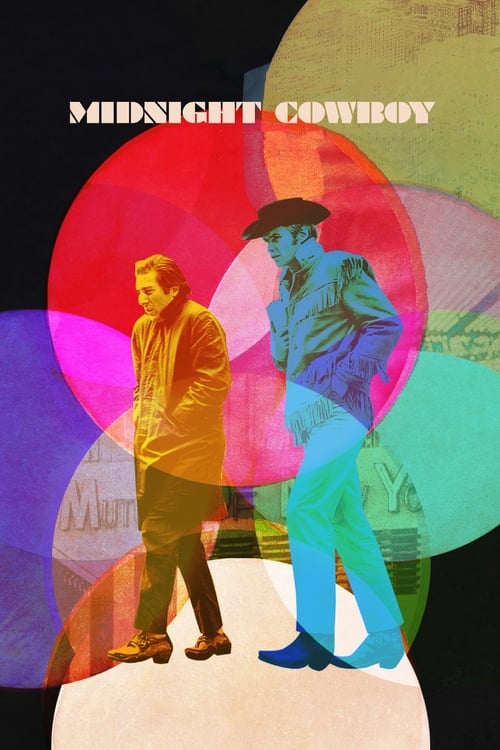
Midnight Cowboy (1969)
Directed by John Schlesinger
No · Based
How we score movies →Consciousness Markers
The film critiques capitalism through depicting exploitation and urban decay, though it frames these as natural consequences of human weakness rather than systemic injustice.
Homosexual encounters are depicted as part of the hustler's survival, but the film does not advocate for LGBTQ+ acceptance or visibility as a conscious theme.
The cast reflects the story's working-class setting naturally, but there is no deliberate effort toward diverse representation or commentary on casting as a political act.
Female characters exist primarily as clients or background figures. There is no feminist framework applied to gender relations or female exploitation.
While the film has moral weight, it does not preach or lecture the audience about social issues. The critique emerges through observation rather than explicit commentary.
The film depicts urban poverty across racial lines but does not engage with systemic racism or racial justice as a thematic concern.
The film contains no commentary on body image, disability representation, or body positivity as such.
Climate concerns are entirely absent from the film's narrative and thematic preoccupations.
Neurodivergence and mental health are not addressed as themes or considerations in the narrative.
The film makes no claims about historical events or attempts to reinterpret history through a contemporary lens.


Synopsis
Joe Buck is a wide-eyed hustler from Texas hoping to score big with wealthy New York City women; he finds a companion in Enrico "Ratso" Rizzo, an ailing swindler with a bum leg and a quixotic fantasy of escaping to Florida.
Why it received this score
Midnight Cowboy arrives as a document of urban destitution, not as a manifesto for social reform. The film observes its subjects with unflinching compassion, following two broken men through the sewers of New York City with the detached eye of a naturalist. That it depicts hustlers, sexual exploitation, and homosexual encounters was shocking for 1969, but shock value and cultural consciousness are not synonymous. The film critiques capitalism through the lens of desperation and abandonment, yet it does so through character and circumstance rather than through preachy commentary or structural advocacy.
What prevents a higher score is the absence of any coherent framework for understanding these inequities through a contemporary progressive lens. The film does not celebrate its characters as representatives of oppressed communities deserving recognition and restoration. It does not interrogate systemic racism, misogyny, or homophobia as such. Instead, it presents exploitation as a fact of urban life, tragic but unremarkable. Joe and Ratso are victims of circumstance and their own poor choices, not subjects of systemic injustice requiring institutional correction.
The representation present here is incidental rather than intentional. Dustin Hoffman and Jon Voight are not cast as a statement about inclusive casting. The film's sexual content, including a scene of male-male contact, emerges from the narrative logic of the story rather than from an agenda of sexual representation or LGBTQ+ visibility. We are watching a film made before such frameworks became the organizing principle of progressive cinema. Its modest score reflects not its quality as art (which remains considerable) but its distance from the specific markers of contemporary social consciousness.
Analysis generated by our Consciousness Algorithm
Critic Reviews
“A great picture, 113 minutes of stirring stuff, set to the ironic lilt of Jean "Toots" Thielemans's harmonica and Harry Nilsson's theme tune, "Everybody's Talkin'." ”
“Superb performances and a compelling script have made this film a strange mix of Oscar-winner and Cult Classic.”
“This multi-Oscar-winner nails its characters, time period, and locale so perfectly that it becomes even more compelling as time goes by. Fueled by two riveting character studies and its exposure of New York City's seamy underbelly, the movie screams “contemporary” and “eternal” at once...It's one of those rare movies that comes together just about perfectly, so check out this theatrical release while you can.”
“Outrageously overrated... the film indulges in bland satire, fashionable flashiness, and a sodden sentimentality that never admits either to its homosexual elements or to the basic misogyny of its stance. Add to that a glamorisation of poverty and an ending that makes Love Story seem restrained, and you have a fairly characteristic example of Schlesinger's shallow talent.”