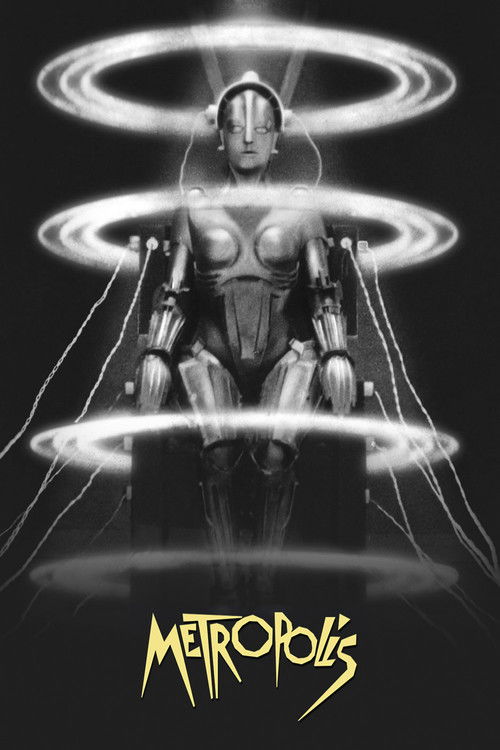
Metropolis (1927)
Directed by Fritz Lang
No · Ultra Based
How we score movies →Consciousness Markers
The film presents a genuine critique of capitalist exploitation and depicts workers sympathetically. However, the resolution advocates paternalistic cooperation rather than systemic change, limiting its radical potential.
The film contains messaging about reconciliation and human connection, but this predates contemporary preachy storytelling and emerges organically from the narrative rather than feeling imposed.
Maria is a symbolic figure but remains largely passive, existing as a saint and martyr rather than an active agent. Gender is not examined as a structural category.
The cast is entirely German and European by 1927 standards, with no attempt at diverse representation. This reflects the film's historical moment rather than any deliberate commitment to inclusion.
No LGBTQ+ themes, characters, or subtext are present in the film.
The film contains no engagement with race or racial dynamics. It is set in a racially homogeneous world by design.
No climate themes or environmental consciousness appear in the film.
Body representation is not a concern of the film. The robot Maria is presented as an ideal of perfection, not as body diversity.
No engagement with neurodivergence or disability representation exists in the narrative.
The film does not engage with historical revisionism. It creates a speculative future rather than reinterpreting the past.


Synopsis
In a futuristic city sharply divided between the rich and the poor, the son of the city's mastermind meets a prophet who predicts the coming of a savior to mediate their differences.
Why it received this score
Metropolis stands as a towering achievement in cinema history, a film so visually ambitious and thematically rich that we have collectively agreed to discuss it in perpetuity. Yet it remains, fundamentally, a product of 1927. The film's critique of capitalist exploitation and its sympathetic portrayal of the working masses contain genuine political consciousness, but this represents pre-contemporary progressive thought rather than the specific cultural markers that define modern social consciousness. The narrative ultimately advocates for paternalistic harmony between classes orchestrated by a benevolent male authority figure, which undermines any reading of systemic critique.
The female protagonist Maria, despite her symbolic importance and Brigitte Helm's compelling performance, functions primarily as a passive vessel for the film's messaging about reconciliation. She is a saint, a robot, a martyr, but never an agent of her own liberation. The film contains no meaningful engagement with gender as a structural category, nor does it address representation, LGBTQ+ themes, climate concerns, body diversity, neurodivergence, or modern historical consciousness. The visual spectacle of oppressed workers, while powerful, does not constitute contemporary social consciousness simply by existing on screen.
What we encounter is a masterwork of cinema that grapples with genuine moral questions about inequality and human dignity, yet through a lens entirely foreign to 2020s cultural sensibilities. The film deserves reverence as an artistic achievement and as a historical document of 1920s anxieties about modernization and social order. It simply does not register as culturally aware by contemporary standards, nor should we expect it to.
Analysis generated by our Consciousness Algorithm
Critic Reviews
“Seeing it is a time-bending experience, a way of visiting the past and glimpsing the past's idea of the future. A masterpiece of art direction, the movie has influenced our vision of the future ever since, with its imposing white monoliths and starched facades.”
“You've seen the rest; now see the best.”
“What ultimately saves the film from both silliness and ponderousness is not its simplistic social message, not its now-stale theme, nor its disappointing characterizations, but rather the dazzling cinematic (and theatrical) bag of tricks which Lang and company employed to keep things moving.”