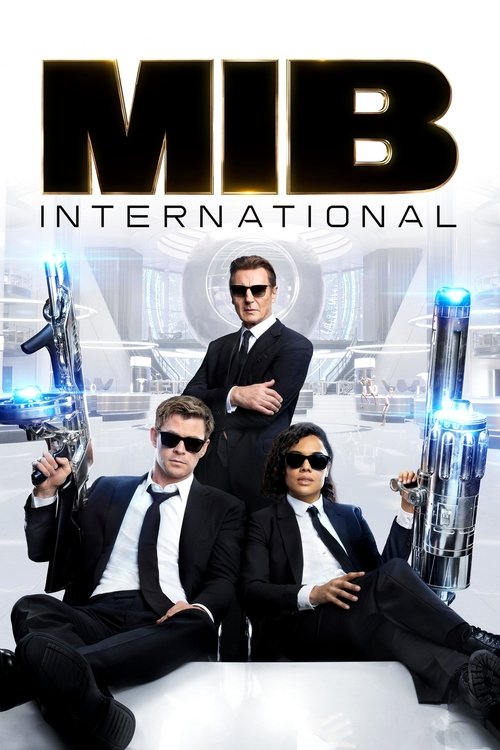
Men in Black: International (2019)
Directed by F. Gary Gray
No · Ultra Based
How we score movies →Consciousness Markers
The film features Tessa Thompson in an equal lead role alongside Chris Hemsworth, and includes Kumail Nanjiani and Kayvan Novak in supporting roles. The casting demonstrates ethnic and gender diversity, though without deliberate narrative commentary about representation.
Tessa Thompson's character is portrayed as competent and capable, operating as a peer to the male lead. However, the film provides no explicit feminist messaging, gender commentary, or examination of power dynamics between male and female agents.
While the cast includes actors of color in prominent roles, the film contains no dialogue, themes, or scenes that explicitly address race, racism, or racial identity. Diversity is present but unexamined.
The film avoids explicit preachy messaging or lectures to the audience. However, the very existence of diverse casting could be read as a subtle statement, though one never articulated by the film itself.
No LGBTQ+ themes, characters, or subtext are present in the film. The narrative contains no romantic or sexual content related to sexual orientation or gender identity.
The film contains no climate-related themes, environmental messaging, or references to climate change or ecological consciousness.
No anti-capitalist themes are present. The film does not critique corporate power, wealth inequality, or economic systems. The MIB organization functions as a benign authority.
The film contains no body positivity messaging, representation of diverse body types, or commentary on beauty standards and physical appearance.
No neurodivergent characters, representation, or themes are present in the film. Mental health and neurodiversity receive no attention.
The film contains no historical revisionism, reexamination of past events, or commentary on historical narratives and their construction.


Synopsis
The Men in Black have always protected the Earth from the scum of the universe. In this new adventure, they tackle their biggest, most global threat to date: a mole in the Men in Black organization.
Why it received this score
Men in Black: International arrives as a franchise installment suffused with the aesthetic of progressive casting without the substance to match. The film pairs Chris Hemsworth and Tessa Thompson as its leads, a choice that reads as deliberate representation: a woman of color and a male action star in equal footing, at least on paper. Thompson brings a compelling screen presence, though the film's script provides her little to work with beyond the standard "competent agent" archetype. The ensemble includes Kumail Nanjiani and Kayvan Novak, adding ethnic diversity to the roster, yet the film treats these inclusions as set decoration rather than meaningful character development.
What distinguishes this entry from earnest progressive filmmaking is its fundamental lack of intentionality. The film does not articulate why its diverse casting matters, nor does it explore the social dynamics that such casting might evoke. Thompson's character exists as a capable agent without commentary, which is neither progressive nor regressive, simply neutral. The screenplay contains no lectures about identity, no scenes of systemic oppression being overcome, no exploration of how representation functions within institutional power structures. For a 2019 film, this restraint might read as refreshing to some, yet it also reveals the hollowness of the enterprise: diversity deployed as marketing strategy rather than narrative substance.
The film's approach to social consciousness amounts to surface-level inclusion without ideological commitment. There are no climate themes, no examination of capitalism, no neurodivergent representation, no revisionist historical commentary. Nanjiani's character is permitted to be funny without his ethnicity becoming the punchline, which represents basic competence rather than progressive achievement. Men in Black: International succeeds primarily as a franchise product designed to appeal to global audiences while avoiding any genuine engagement with cultural politics. It is the cinematic equivalent of a corporate diversity statement: present, visible, and ultimately inconsequential.
Analysis generated by our Consciousness Algorithm
Critic Reviews
“It lacks ambition or depth, but it’s delicious and filling, proving (as if anyone still needed proof) that Tessa Thompson and Chris Hemsworth are two of the most likable movie stars in the galaxy.”
“This is breezy stuff, a welcome respite in the hot summer months.”
“It’s rare that a blockbuster movie feels this competently, serenely middle-of-the-road, but maybe being this safe in an era of easy outrage is its own form of mild, moderate, entirely bland achievement.”
“The settings seem shopworn and the whole exercise feels hollow. Long ago, when the first “Men in Black” hit the screen, the most conspicuous of its many delights were Will Smith’s street-smart but sweet-spirited cop who became Agent J, and Tommy Lee Jones’s wearily imperious Agent K. Now they’re gone, and all delight has gone with them. Only weariness remains.”