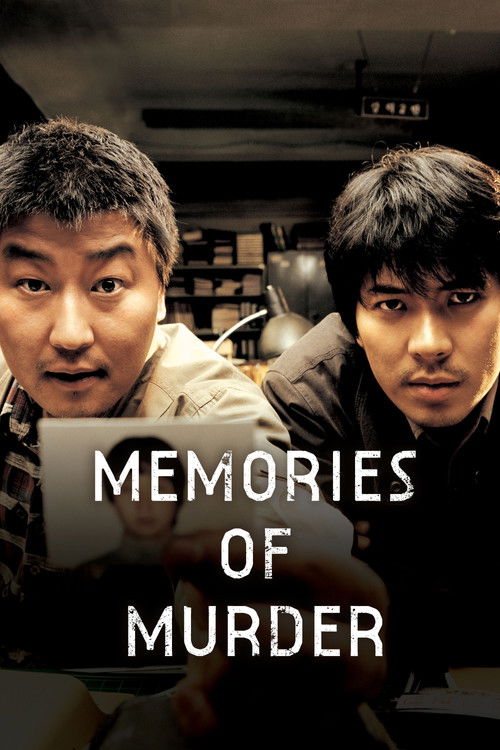
Memories of Murder (2003)
Directed by Bong Joon Ho
No · Ultra Based
How we score movies →Consciousness Markers
Critiques institutional corruption and state power abuse during authoritarianism, though this operates differently from modern anti-capitalist discourse.
Primarily a thriller that conveys social commentary through narrative and visual storytelling rather than preachy messaging or exposition.
Korean actors in Korean roles reflecting historical setting. Appropriate casting for the story, not contemporary diversity-conscious representation.
No LGBTQ+ content, themes, or characters present in the film.
Female victims are depicted as part of the historical crime story, not as expression of feminist consciousness or agenda.
Set in Korea with Korean characters. No modern racial consciousness or commentary on racial dynamics present.
No environmental themes or climate-related messaging in the film.
No body positivity messaging or representation present in the film.
No representation, discussion, or thematic engagement with neurodivergence.
Based on actual historical events. Documents institutional failure rather than revising or reinterpreting history.


Synopsis
A sadistic serial rapist and murderer of young women terrorizes a small province in 1980s South Korea. To prevent further crimes, three increasingly desperate detectives with conflicting methods race against time to unravel the violent mind of the killer in a futile effort to solve the case.
Why it received this score
Bong Joon Ho's 2003 thriller documents the Hwaseong serial murders of 1980s South Korea with the precision of a forensic pathologist examining a cold case file. The film's power derives not from progressive messaging but from its meticulous dissection of institutional failure during an authoritarian period. The three detectives, each employing different methods and moral compromises, become avatars of systemic dysfunction rather than vehicles for contemporary social consciousness.
The film's critique operates on the level of state violence and bureaucratic corruption, concerns that predate and operate independently of modern progressive discourse. What emerges is a portrait of modernization's dark side, where rapid development occurs alongside institutional brutality and evidentiary collapse. The murders remain unsolved not because of narrative incompetence but because the system itself resists resolution, a commentary on Korean history rather than a statement about gender or representation in the contemporary sense.
This is a serious, formally accomplished work of cinema that engages with real historical trauma. Its restraint in avoiding preachy messaging, combined with its focus on institutional rather than ideological critique, places it outside the framework we are measuring. It is a film about what happens when power operates without accountability, rendered through the grammar of the crime thriller.
Analysis generated by our Consciousness Algorithm
Critic Reviews
“Suspenseful, surprising, and psychologically rich.”
“Powerful, unrelenting, and with excellent performances — especially from Song who is never less than outstanding — Memories of Murder is unforgettable and justifiably described as a masterpiece. ”
“It takes enormous skill to pull off such a high-wire act without diminishing the gravity of the situation, but Bong and his first-rate cast are up to the task.”
“The script is as sloppy as Song's unkempt cop, sprinkled with intriguing ideas and imaginative details that, like the investigation, simply get lost in blind alleys.”