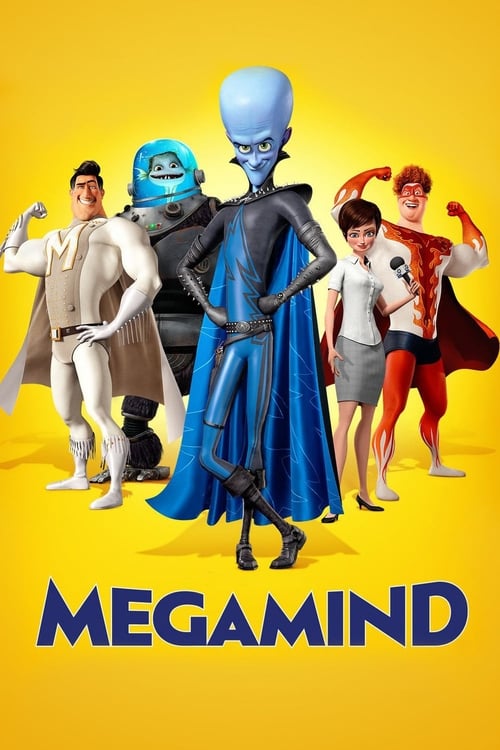
Megamind (2010)
Directed by Tom McGrath
No · Ultra Based
How we score movies →Consciousness Markers
Tina Fey's character is a capable, intelligent woman, but she functions primarily as a love interest and comedic support rather than as a central figure advancing feminist themes.
While the film explores philosophical questions about good and evil, it does so through narrative and character rather than preachy exposition. The tone remains comedic rather than preachy.
The main cast is predominantly white with minimal diversity. Tina Fey provides some female representation, but the film shows little intentional effort toward diverse casting.
No identifiable LGBTQ+ themes, characters, or subtext are present in the film.
The film contains no commentary on race, racism, or racial identity. The all-white main cast and absence of racial themes indicate zero engagement with this marker.
No climate-related messaging, environmental concerns, or ecological themes are present in the narrative.
The film contains no critique of capitalism, wealth inequality, or systemic economic oppression.
No body positivity messaging or representation of diverse body types is evident. The film treats physical appearance as a matter of comedy without progressive commentary.
No representation of neurodivergent characters or engagement with neurodiversity themes.
The film contains no attempt to reframe historical narratives or challenge conventional historical understanding.


Synopsis
After Megamind, a highly intelligent alien supervillain, defeats his long-time nemesis Metro Man, Megamind creates a new hero to fight, but must act to save the city when his "creation" becomes an even worse villain than he was.
Why it received this score
Megamind arrives as a cheerful artifact of pre-woke animation, a film so thoroughly innocent of contemporary progressive sensibilities that one might mistake it for a historical document. The story concerns itself with the redemption of a supervillain and the philosophical question of whether good and evil are mere labels imposed by circumstance rather than cosmic absolutes. These are legitimate dramatic concerns, but they emerge from timeless storytelling traditions rather than from any desire to interrogate modern power structures or social hierarchies. The film's central conceit, that a villain might be fundamentally misunderstood or capable of change, was not invented in the 2020s. It belongs to a lineage stretching back to classic literature.
The cast is uniformly pale, with Will Ferrell anchoring the proceedings as the titular blue supervillain. Tina Fey provides capable comedic support as a reporter, but her role is essentially ornamental. The film makes no visible effort toward representation casting, contains no identifiable LGBTQ+ content, offers no commentary on climate, capitalism, or systemic inequality, and remains blissfully untouched by disability representation or body positivity messaging. There is no revisionist history here, no attempt to reframe past narratives through a modern lens. The film simply tells its story without the burden of contemporary cultural consciousness.
What we have is a technically proficient animated comedy that prioritizes entertainment value above all else. In the context of modern woke cinema, this is practically radical in its refusal to engage. One might observe this as either refreshing or frustratingly evasive, depending on one's perspective. The film remains exactly what it set out to be: a superhero story for families, untethered from the cultural moment that produced it.
Analysis generated by our Consciousness Algorithm
Critic Reviews
“Megamind has presentation in spades. But it also has something even rarer than that. It's got heart.”
“Too goofy-surreal to pack a lot of emotional punch, but it's antically light on its feet, with 3-D images that have a lustrous, gizmo-mad sci-fi clarity.”
“Megamind's Kryptonite is a common weakness for any comedy so fast out of the blocks: It simply runs out of surprises.”
“This routine animated feature is a perfectly fine thing to waste.”