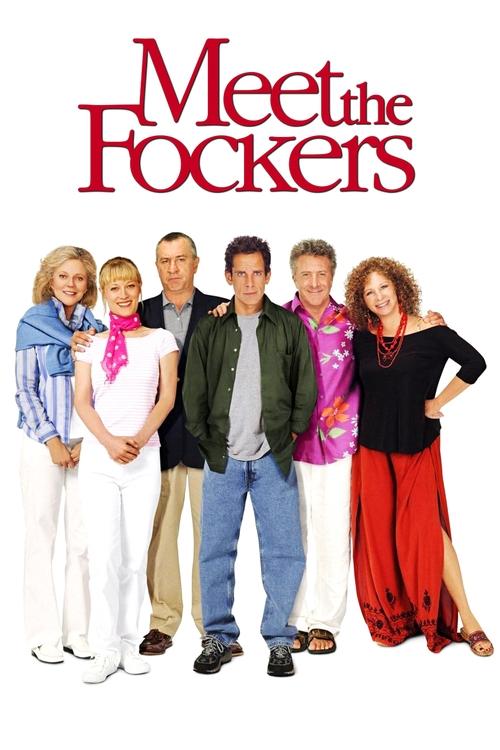
Meet the Fockers (2004)
Directed by Jay Roach
No · Ultra Based
How we score movies →Consciousness Markers
The cast includes Alanna Ubach as a Latina character, and Barbra Streisand brings a Jewish identity to the film, but these elements are incidental rather than intentional representation choices. No deliberate casting for diversity is evident.
Female characters are largely passive and exist to facilitate male comedy. Pam serves primarily as a romantic prize and source of male anxiety rather than as an agent of her own story.
A male nurse character exists without overt mockery, which represents a mild departure from typical comedy tropes of the era, but there is no meaningful LGBTQ+ representation or themes in the narrative.
The film contains minority characters but exhibits no consciousness of racial dynamics or social inequities. Representation exists without commentary or awareness.
The film contains no critique of capitalism or wealth disparity. Characters are consumed by consumer goods and status anxieties without any ironic commentary on these values.
The film operates within conventional beauty standards of the era. No body diversity is evident, and physical humor relies on conventional attractiveness hierarchies.
The film does not lecture or preach about social issues. Its comedy is situational rather than ideological, though some mild cultural liberalism is visible in character treatment.
Climate change and environmental consciousness are entirely absent from the film's concerns, as one would expect from a 2004 romantic comedy.
Neurodivergence is not represented or discussed in any form within the film's narrative.
The film contains no historical narrative or revisionist engagement with historical events. It is a contemporary romantic comedy.


Synopsis
Hard-to-crack ex-CIA man Jack Byrnes and his wife Dina head for the warmer climes of Florida to meet the parents of their son-in-law-to-be, Greg Focker. Unlike their happily matched offspring, the future in-laws find themselves in a situation of opposites that definitely do not attract.
Why it received this score
Meet the Fockers represents the comedy sensibilities of the early 2000s, a period when progressive cultural messaging had not yet calcified into the recognizable markers we now track with such precision. The film's humor derives primarily from generational and class friction rather than from any deliberate engagement with contemporary social consciousness. Greg's parents, portrayed by Hoffman and Streisand, are written as eccentric and permissive, but their characterization functions as a vehicle for fish-out-of-water comedy rather than as an earnest expression of progressive values.
The film does contain scattered elements that would later become familiar touchstones of the progressive comedy playbook. Dustin Hoffman's character is depicted as a male nurse, a profession historically associated with gender non-conformity, and the movie treats this detail without overt mockery, though also without particular celebration. The cast includes Alanna Ubach, a Latina actress, in a supporting role, though her character exists primarily as decoration rather than as a substantive presence. These elements suggest a baseline cultural liberalism, but they fall short of the intentional representation consciousness that would come to define the genre in subsequent decades.
The film's concerns are generic and universal: family dysfunction, romantic anxiety, and the terror of meeting one's future in-laws. It traffics in jokes about masculine insecurity and marital dysfunction without troubling itself to examine these themes through any particular ideological lens. One can detect in the film's treatment of its female characters a certain passivity, particularly in Teri Polo's portrayal of Pam, who functions primarily as a catalyst for male embarrassment rather than as a fully realized protagonist. The comedy operates at the level of slapstick and awkward social situations, territories that remain largely untouched by the cultural preoccupations of the 2020s.
Analysis generated by our Consciousness Algorithm
Critic Reviews
“One of those relatively rare comedies that's at once puerile, charming and very funny throughout.”
“The old-pro twosome of Streisand and Hoffman make such sexy and inviting ethnics (as a certain kind of movie likes to think of a certain kind of Jewish character) that they blithely prevail over the been-there-done-that gags.”
“It's a silly good time, and that's something these days.”
“Don't even rent the DVD, it'll only encourage them.”