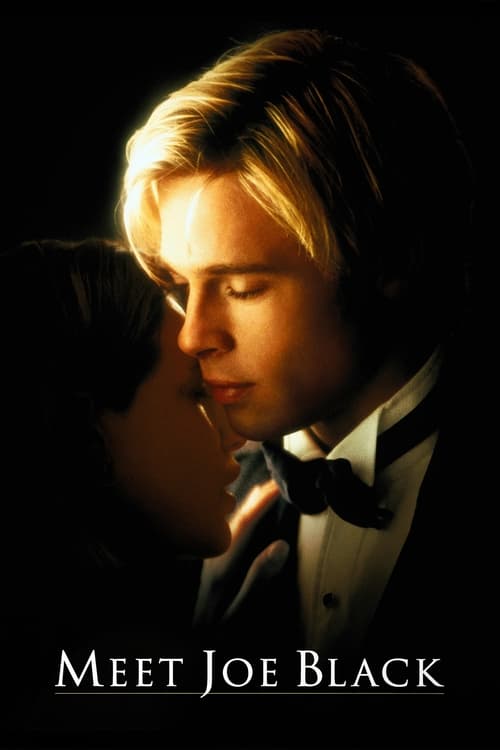
Meet Joe Black (1998)
Directed by Martin Brest
No · Ultra Based
How we score movies →Consciousness Markers
Female lead character and one Black supporting cast member present, though without any deliberate statement about representation. Casting reflects late-1990s Hollywood demographics rather than progressive intent.
No LGBTQ+ themes, characters, or representation whatsoever. The film is entirely heteronormative in its romantic framework.
Susan functions primarily as a romantic object rather than as an autonomous agent. No critique of gender dynamics or patriarchal structures exists in the narrative.
No exploration of racial themes, systemic racism, or racial identity. Supporting characters of color are present but their identities are never foregrounded or explored.
No environmental or climate-related themes appear in the film. The narrative is entirely unconcerned with ecological questions.
The protagonist is a wealthy billionaire whose power and fortune are never questioned or critiqued. Capitalism operates as the neutral backdrop rather than subject of interrogation.
No body positivity messaging. The film operates within conventional Hollywood aesthetics and beauty standards without commentary.
No representation of neurodivergent characters or themes. The film contains no exploration of neurodiversity.
The film is not concerned with history or historical events. It exists in a timeless romantic and metaphysical register.
The film contains no preachy messaging about social issues or contemporary progressive causes. Its concerns are entirely romantic and philosophical.


Synopsis
Bill Parrish has it all - success, wealth and power. Days before his 65th birthday, he receives a visit from a mysterious stranger, Joe Black, who soon reveals himself as Death. In exchange for extra time, Bill agrees to serve as Joe's earthly guide. But will he regret his choice when Joe unexpectedly falls in love with Bill's beautiful daughter Susan?
Why it received this score
Meet Joe Black is a 1998 romantic fantasy that operates comfortably within the conventions of late-nineties mainstream cinema, which is to say it exhibits virtually no markers of contemporary progressive consciousness. The film concerns itself with metaphysical questions about mortality and the nature of love, pursued through the vehicle of a billionaire businessman and a beautiful woman who serves primarily as a romantic object. Susan Parrish exists within the narrative less as an autonomous agent and more as the inevitable object of affection for a supernatural being who has taken human form, a narrative structure that belongs entirely to the romantic tradition predating modern social consciousness.
The film contains no LGBTQ+ representation, no interrogation of gender dynamics, no racial consciousness, no environmental concerns, and no anticapitalist sentiment whatsoever. The protagonist's wealth and power are never questioned or critiqued. Marcia Gay Harden appears in a supporting role, but her presence functions as straightforward casting rather than any deliberate statement about representation. The entire endeavor is pitched at the metaphysical and romantic registers, with zero interest in the social consciousness markers that would later define the cultural flashpoint of progressive sensibilities. This is pre-2015 filmmaking, concerned with timeless themes rather than contemporary social debates.
The minimal score reflects only that the film contains female characters and one Black cast member in supporting roles, existing in the film without narrative emphasis on their identity. These elements alone do not constitute progressive consciousness, merely the basic demographic reality of Hollywood casting in the late 1990s. Meet Joe Black is a film entirely innocent of woke sensibilities, which is to say it is innocent of the entire project being measured here.
Analysis generated by our Consciousness Algorithm
Critic Reviews
“The movie contains elements that make it very good, and a lot of other elements besides. Less is more.”
“Sometimes clever and enjoyable, even touching, yet too often the film makes you feel as if you're in Sunday school. ”
“Meet Joe Black flows nicely, and the whole of the film is bathed in some of the most sumptuous cinematography (courtesy of "Like Water for Chocolate's" Emmanuel Lubezki) of the year.”
“Every once in a while a film comes along that's so inexplicably ghastly that there's just no point in making nice about it. ”