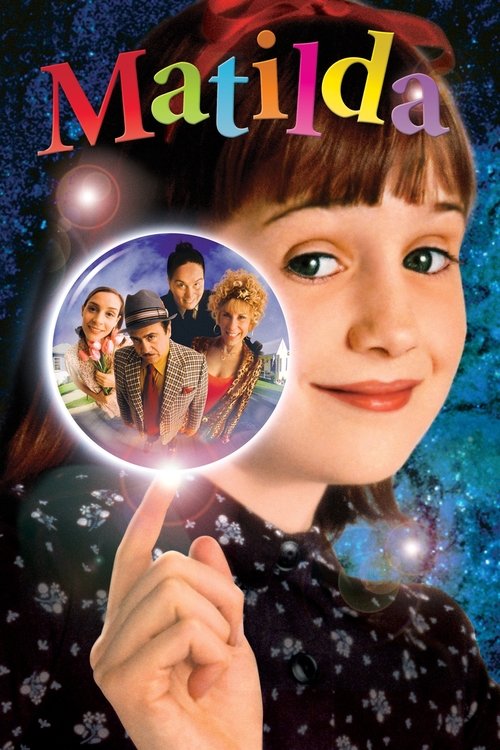
Matilda (1996)
Directed by Danny DeVito
No · Ultra Based
How we score movies →Consciousness Markers
The film celebrates a young girl's intellectual power and nonconformity, but frames her exceptionalism as individual achievement rather than systemic critique. Miss Trunchbull is coded negatively through her gender transgression.
The lead character is a girl, which was notable for 1996 children's films, but casting is otherwise unremarkable. No evidence of deliberate diverse representation beyond conventional casting practices.
Matilda's exceptional intelligence and precocity could be interpreted as neurodivergence, but the film does not engage with this as a cultural or social category. Her difference is presented as individual exceptionalism.
Miss Honey delivers some mild moral instruction about kindness and the value of reading, but the film avoids preachy preaching. Themes emerge organically from the narrative.
The film features primarily white characters in a British setting with no evident engagement with racial themes or consciousness. Casting reflects 1990s norms without apparent deliberation.
No LGBTQ themes, characters, or subtext are present in the film. The narrative contains no engagement with sexual orientation or gender identity.
No climate themes or environmental consciousness appear in this family fantasy film about a girl with telekinetic powers.
The film contains no critique of capitalism or wealth inequality. The Wormwoods' financial struggles are presented as personal failure rather than systemic injustice.
Bodies are treated as vehicles for comedy and characterization rather than as sites of cultural meaning. No body positivity messaging is evident.
This is a fantasy film with no engagement with historical events or revisionist approaches to history.


Synopsis
Matilda Wormwood is an brilliant and intelligent little girl. Unfortunately, her parents, Harry and Zinnia, fail to see that fact. As time passes, she finally starts school and has a kind teacher, loyal friends, and a terrifying, sadistic headmistress. As she becomes fed up with the constant cruelty, she discovers she has a special gift that she just might be able to use to outwit the unruly adults around her.
Why it received this score
Matilda occupies that peculiar position in cultural history where a film concerned with the empowerment of a young girl and the critique of adult authority reads as substantially less conscious than contemporary audiences might expect, yet was genuinely progressive for its moment. The narrative celebrates intellectual achievement and nonconformity, themes that align with certain progressive sensibilities, but it does so within an apolitical and individualist framework. Matilda succeeds despite her parents and headmistress through supernatural intervention and force of will instead of structural critique or systemic change. Her victory is personal, not collective.
The film's treatment of female characters deserves scrutiny. Matilda herself is presented as exceptional precisely because she defies gendered expectations, suggesting that conventional femininity represents limitation. Miss Trunchbull, the headmistress, is coded as monstrous partly through her transgression of gender norms, her athletic physicality played for grotesque humor. The film contains no evident engagement with LGBTQ themes, neurodivergence, climate consciousness, or anti-capitalist critique. Its body politics are unremarkable for a family film of the era, treating bodies as vehicles for comedy rather than sites of cultural meaning. The casting of Mara Wilson in the lead is straightforward; her intelligence and vulnerability are the story's focus, not her identity.
What persists is a film that celebrates intellectual merit and stands against institutional cruelty, but operates entirely within the individualist logic of the 1990s. It is not hostile to progressive values, but it is innocent of them. By contemporary standards, this is a film about a girl who uses her mind as her power, which reads as mildly feminist until we remember that modern cultural consciousness demands engagement with systemic inequality rather than mere celebration of individual exception.
Analysis generated by our Consciousness Algorithm
Critic Reviews
“A delightfully twisted fairy tale that artfully juggles broad tomfoolery and sly drollery, along with a generous serving of sight gags enhanced by special effects. Even though it's being pitched primarily at younger moviegoers and their parents, pic is exuberantly quirky enough to please almost anyone.”
“Matilda is fresh and spirited, and while the edge on it keeps the film interesting, DeVito manages to tilt it expertly from darkness to light. [02 Aug 1996, p.E4]”
“Between the movie's frenetic bursts of energy, however, there's more than enough to enjoy, assuming you're not a Dahl purist. The best thing about the movie is actress Mara Wilson (who many will recognize from her role in Mrs. Doubtfire). With sleep bags under her bright eyes, and an array of facial expressions that ranges from shocked to mischievous, she looks as though she belongs in a Dahl-like world. [02 Aug 1996, p.N29]”
“Matilda is a blackly comic, delightfully off-the-wall picture that both kids and adults will lap up.”