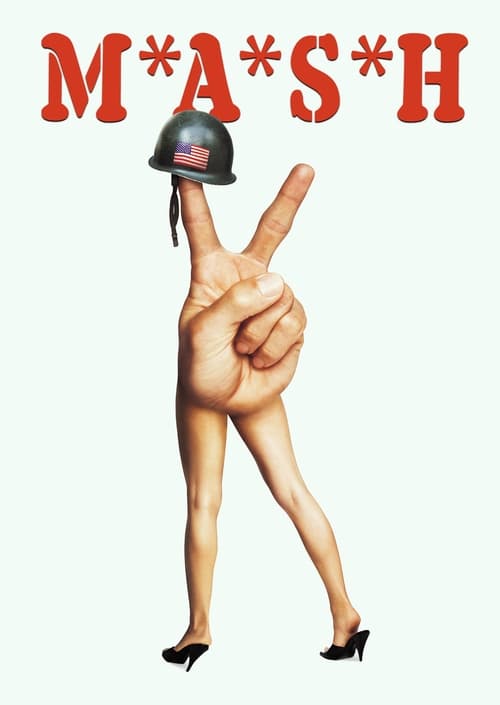
M*A*S*H (1970)
Directed by Robert Altman
No · Based
How we score movies →Consciousness Markers
Critique of military bureaucracy and institutional absurdity. Satire targets hierarchy and institutional power, though not explicitly anti-capitalist.
Sally Kellerman's character presented through male gaze as romantic object and comic target. Her humiliation provides comedic payoff. No feminist project evident.
Satirical about war and institutions but relies on comedy and chaos rather than explicit preaching. Trusts audience to decode political messaging.
Predominantly white male ensemble with Sally Kellerman as sole significant female character. No conscious diversity work or representation beyond reflection of era.
Uses Korean War setting as allegory for Vietnam War. Shows some historical consciousness-raising intent through contemporary political commentary.
Minimal racial awareness. Cast predominantly white with no engagement of race as theme or concern despite war setting.
Gary Burghoff's character exhibits quirky traits but no respectful thematic engagement with neurodivergence.
No engagement with body positivity concepts.
No meaningful LGBTQ+ representation or thematic engagement.
Climate themes entirely absent from film.


Synopsis
One of the world's most acclaimed comedies, M*A*S*H focuses on three Korean War Army surgeons brilliantly brought to life by Donald Sutherland, Tom Skerritt and Elliott Gould. Though highly skilled and deeply dedicated, they adopt a hilarious, lunatic lifestyle as an antidote to the tragedies of their Mobile Army Surgical Hospital, and in the process infuriate Army bureaucrats. Robert Duvall, Gary Burghoff and Sally Kellerman co-star as a sanctimonious Major, an other-worldly Corporal, and a self-righteous yet lusty nurse.
Why it received this score
M*A*S*H arrives as a relic from an earlier era of American cinema, which is to say it arrives as a film that believed satire could exist without a syllabus. Robert Altman's Korean War comedy deploys chaos and anarchic humor as its primary tools of institutional critique, trusting audiences to decode its anti-war messaging through montage and overlapping dialogue rather than through explicit thematic pronouncement. The surgeons' subversive behavior mocks military hierarchy and bureaucratic absurdity with genuine wit, and the film's political consciousness about the futility of war remains undiminished by time.
Yet from the vantage point of contemporary cultural sensibilities, M*A*S*H reveals the limitations of its moment with almost archaeological clarity. Sally Kellerman's "Hot Lips" exists primarily as an object of male desire and ridicule, her sexuality treated as both her defining characteristic and her ultimate humiliation. The ensemble cast remains overwhelmingly white and male, with no apparent consideration given to how the war might have affected other communities or perspectives. The film's satire of institutional power stops at the gates of gender and race, territories it does not seem to recognize as existing at all.
This is not a failure of the film to meet standards it never intended to meet. M*A*S*H is a comic masterpiece about the absurdity of war, executed with technical brilliance and genuine anarchic spirit. But the absence of modern progressive cultural markers is so complete that it reads less as a film engaging with social consciousness than as a product of a time when such consciousness had not yet been demanded of popular cinema. The film remains funny, subversive, and artistically vital. It simply never occurred to anyone involved that subversion might require examining their own assumptions about who got to be the subject versus the object of the joke.
Analysis generated by our Consciousness Algorithm
Critic Reviews
“We laugh, that we may not cry. But none of this philosophy comes close to the insane logic of "M*A*S*H," which is achieved through a peculiar marriage of cinematography, acting, directing, and writing.”
“Clever camera setups, Altman's patented overlapping dialogue, wonderful sight gags and situations, and universally fine ensemble performances combine to make this one the most enjoyable war-themed films ever.”
“M.A.S.H., one of America's funniest bloody films, is also one of its bloodiest funny films.”
“Although it is impudent, bold, and often very funny, it lacks the sense of order (even in the midst of disorder) that seems the special province of successful comedy.”