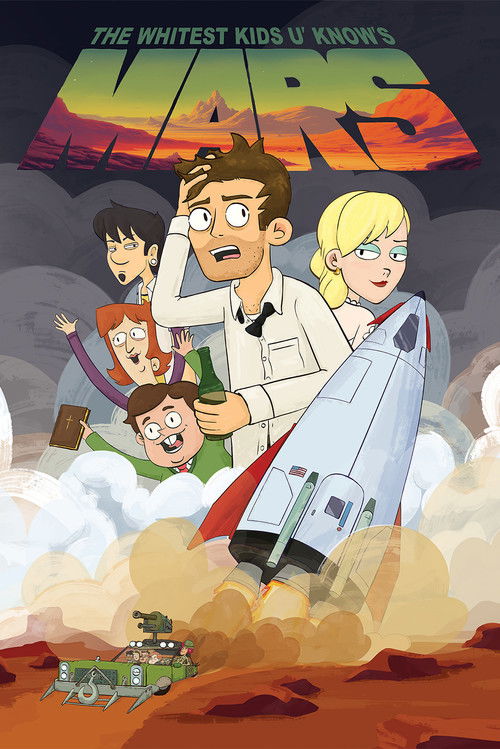
Mars (2026)
Directed by Sevan Najarian
No · Based
How we score movies →Consciousness Markers
The plot centers on characters being duped by a billionaire, suggesting anti-billionaire satire. However, this appears incidental to the comedic premise rather than ideological commitment.
Tribeca categorized the film under LGBTQIA+, suggesting some content in this area. However, WKUK's comedic tradition often uses transgressive humor that may not align with contemporary progressive values.
The cast is predominantly male troupe members with minimal female representation. No apparent commitment to diverse racial or ethnic casting.
The film prioritizes absurdist humor and chaos over messaging. Any social commentary remains subordinate to comedic irreverence. Minimal didactic tone.
No apparent engagement with racial themes or conscious representation. The casting appears based on troupe membership rather than diversity considerations.
The troupe's comedy has historically centered male performers and sensibilities. No evidence suggests this project represents a departure from that pattern.
No evidence of body positivity messaging. The troupe's humor often relies on physical comedy without progressive framing.
A Mars-set sci-fi comedy with no indication of climate or environmental themes. The space setting is purely comedic scaffolding.
No indication that the film engages with neurodivergence as a theme or consideration. The 'misfits' descriptor suggests character types rather than neurodivergent representation.
A sci-fi comedy with no historical themes. Revisionist history does not apply to this work.
Synopsis
A ragtag group of misfits embark on a wild space adventure to Mars, only to discover they've been bamboozled by a billionaire.
Why it received this score
Mars arrives as a curious artifact from a comedy collective whose sensibilities predate contemporary social consciousness by a considerable margin. The Whitest Kids U' Know have built their reputation on transgressive absurdism and crude humor that actively resists the gravitational pull of contemporary progressivism. This particular venture into animated feature filmmaking maintains that irreverent posture, albeit with a nominal billionaire-as-villain plot that provides a thin veneer of anti-capitalist sentiment. The film's inclusion of LGBTQIA+ content at Tribeca suggests some contemporary cultural awareness, though one approaches such categorizations with skepticism when applied to a troupe whose comedic method has historically prioritized shock value over sincere ideological commitment.
The casting roster reveals an ensemble composed primarily of the troupe's core male members, with Sara Paxton as the sole female credited cast member. This configuration reflects the group's traditional composition rather than any deliberate commitment to diverse representation. The film's visual and comedic approach, developed over more than a decade in production, carries the unmistakable imprint of early-2010s comedy sensibilities, before the cultural landscape shifted toward greater attention to marginalized voices and social responsibility. The project sits caught between eras, featuring some contemporary progressive markers applied to a fundamentally transgressive comedic sensibility that views such markers with mild disdain.
The film functions primarily as an elaborate in-joke for the troupe's devoted cult following, a constituency that has historically demonstrated little interest in the markers we measure here. Mars presents itself as chaos and irreverence masquerading in a sci-fi wrapper, which is precisely what its creators intended. The anti-billionaire premise arrives too late and too casually to register as genuine social critique rather than convenient plot scaffolding. We observe a project that exists in defiant tension with contemporary cultural expectations, which may be precisely the point.
Analysis generated by our Consciousness Algorithm