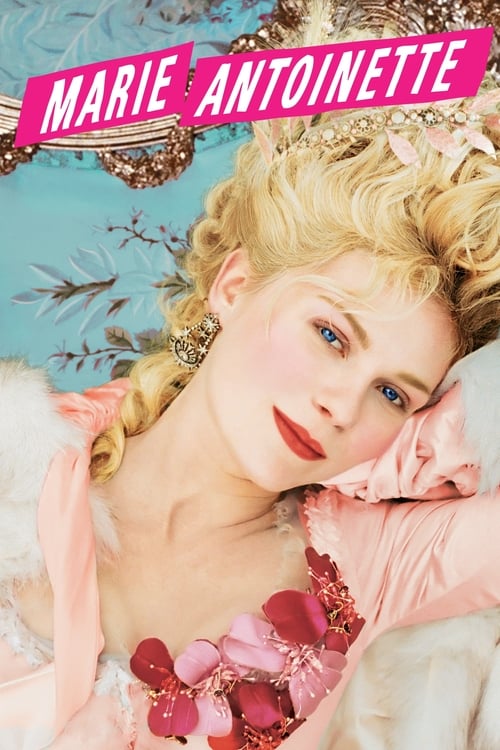
Marie Antoinette (2006)
Directed by Sofia Coppola
No · Based
How we score movies →Consciousness Markers
Coppola deliberately employs anachronisms and modern music on the soundtrack while revising the historical perspective to humanize Marie Antoinette and prioritize aesthetic experience over historical accuracy.
The film centers a female protagonist and explores her agency, constraints, and interior life within a patriarchal system. Coppola's directorial approach emphasizes Marie's perspective and the pressures placed upon her as a woman.
The cast is predominantly white European characters in a historical French setting with no particular effort toward contemporary diversity casting.
No LGBTQ+ themes, representation, or content present in the film.
No racial consciousness or commentary evident. The film is set in 18th-century France and engages no racial or colonial themes.
No climate-related themes or messaging present in the film.
While the film depicts extreme wealth and decadence at Versailles, it presents no explicit critique of capitalism or class systems.
No body positivity messaging or commentary on body diversity present in the film.
No representation or thematic engagement with neurodivergence.
The film does not employ expository or preachy dialogue meant to instruct audiences about progressive values or social positions.


Synopsis
A retelling of the story of France's iconic but ill-fated queen, Marie Antoinette - from her betrothal and marriage to Louis XVI at fifteen to her reign as queen at nineteen and ultimately the fall of Versailles.
Why it received this score
Sofia Coppola's "Marie Antoinette" arrives as a historical artifact that concerns itself with neither historical accuracy nor contemporary social messaging, occupying instead a peculiar space where aesthetics and empathy function as substitutes for both. The film deliberately scatters anachronisms throughout its frames, most infamously a pair of purple Converse sneakers that drift past during a montage of decadent consumption, signaling to viewers that we are not meant to accept this as documentary reconstruction. Rather, we are invited into a subjective experience of what it felt like to be a teenage girl thrust into the machinery of absolute monarchy, where shopping and gossip and the search for companionship become not frivolities but survival mechanisms.
The feminist sensibility operates quietly here, without proclamation. By centering Marie's interior life and her constraints as a woman in a system designed to render her ornamental, Coppola constructs something that resists the traditional historical narrative of Marie Antoinette as villainous or negligible. Yet this remains a work of artistic revisionism rather than progressive social consciousness. The film humanizes its subject through style and emotional accuracy rather than through explicit engagement with modern frameworks of justice or equality. Kirsten Dunst's performance captures the bewilderment of someone expected to perform monarchy without guidance or agency, but the film offers this as an aesthetic observation rather than a lesson.
What prevents "Marie Antoinette" from scoring higher on contemporary progressive sensibilities is precisely what makes it interesting as cinema: its indifference to teaching us anything. The film traffics in surface, texture, and the subjective experience of privilege without commentary or moral instruction. It operates according to an older set of assumptions about what cinema should do. By 2006 standards, this was already somewhat retro. By 2025 standards, it is practically antique.
Analysis generated by our Consciousness Algorithm
Critic Reviews
“Coppola captures the luxe insularity of Marie Antoinette's world in a way that leaves no doubt why the revolution had to happen. The picture's final image is a moment of devastating stillness that wouldn't be out of place in Luchino Visconti's end-of-an-era masterpiece "The Leopard."”
“Coppola brilliantly conjures the young queen's insular world, in which she was both isolated and claustrophobically scrutinized.”
“Kristen Dunst is pitch-perfect in the title role.”
“Reports of boos at the film's debut at Cannes are more understandable now, not because Marie Antoinette is an inaccurate or indifferent look at French history (it is), but because it's self-indulgent shit. Booing - and beheading - are too good for it.”