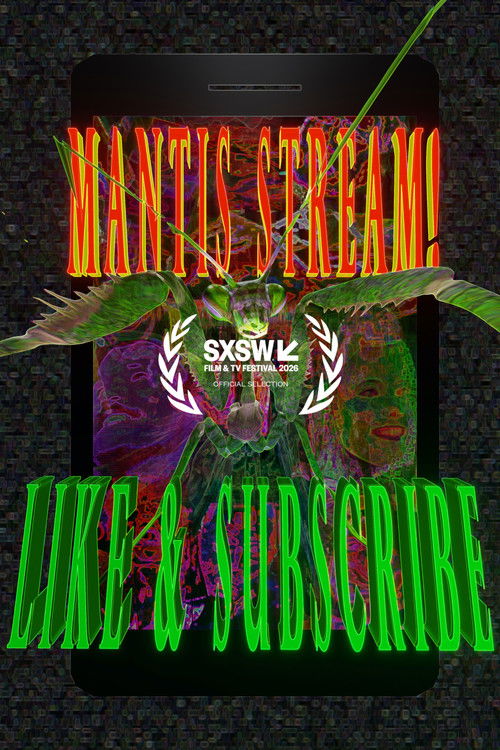
Mantis Stream! Like & Subscribe (2026)
Directed by Lincoln Robisch
No · Based
How we score movies →Consciousness Markers
The film's satire of livestreaming culture, attention economies, and the commodification of human tragedy operates as a critique of digital capitalism and the instrumentalization of all experience for engagement metrics and profit.
The cast includes actors of various racial and ethnic backgrounds, but representation appears incidental to the narrative rather than a deliberate marker of progressive casting practice. The film's focus is on performativity itself, not on celebrating diversity.
The film does not appear to foreground racial consciousness or systemic racial critique. The multiracial cast exists within a satire about internet culture that transcends racial categories through its focus on performative behavior.
While the girlfriend is present and the film examines performativity across genders, there is no apparent feminist agenda or critique of patriarchal structures. The satire is gender-neutral in its observations about social media behavior.
While the film contains implicit critique, it operates through formal experimentation and affective discomfort rather than through explicit preachiness or speechifying. The single-take structure enforces observation over explanation.
No discernible LGBTQ+ themes or characters are present in the available information about this film. The engagement is heterosexual and the focus is on internet culture rather than queer identity.
No climate-related themes or environmental consciousness are present in this film about online performativity and streaming culture. The work is entirely urban and digital in its concern.
Body positivity is not a concern of this work. The film uses the body's vulnerability and degradation as a site of satire about public performance, not as a vehicle for affirming bodily diversity or challenging beauty standards.
No representation of neurodivergence or disability advocacy is evident in the film. The choking death is played as absurdist horror rather than as commentary on disability or neurodivergent experience.
This contemporary satire makes no claims about historical revision or reinterpretation. It is entirely concerned with present-day internet culture rather than with reassessing past events or narratives.
Synopsis
Craig gets engaged and chokes to death on a egg, live on the internet.
Why it received this score
Mantis Stream! Like & Subscribe is a formally ambitious provocation about the aesthetics of catastrophe in the attention economy, which is to say it is a short film wherein a man chokes to death on an egg while his mother and emergency responders perform concern for an invisible audience. The work unfolds in a single, unbroken take, denying viewers the mercy of the cut, and forces them to confront their own complicity in the voyeuristic consumption of human suffering. This is not a gentle film, nor does it intend to be.
The satire operates on a register of pure cultural observation rather than ideological argument. Robisch and Maerten examine the mechanics of performative response in the age of livestreaming, where tragedy becomes content and genuine distress becomes indistinguishable from its performance. The film offers no solutions and makes no demands upon the social order. It simply holds a mirror to contemporary behavior and finds it wanting. The praying mantis motif, present in the girlfriend's livestream aesthetic, introduces an element of predatory nature lurking beneath the wholesome surface of social media performance.
What rescues this from being merely clever is its commitment to formal rigidity and its refusal of sentiment. The work is genuinely unsettling, which is no small achievement in an era of saturation. It does not ask us to agree with anything or to become better people. It asks only that we watch, uncomfortably, as the machinery of modern life grinds forward indifferent to individual suffering. This is critique, but it is critique that operates through affect rather than through the mechanisms of progressive consciousness-raising.
Analysis generated by our Consciousness Algorithm