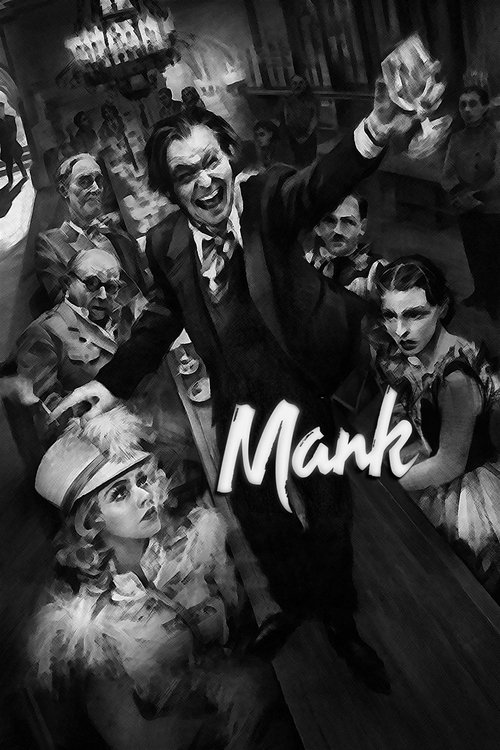
Mank (2020)
Directed by David Fincher
No · Based
How we score movies →Consciousness Markers
Mankiewicz's character frequently delivers monologues about the corruption and hypocrisy he observes. These speeches function as the film's primary vehicle for social commentary, creating a preachy quality where the protagonist explains systemic problems rather than showing them through action or consequence.
The film depicts the studio system as corrupt and controlling, with Mankiewicz voicing complaints about economic exploitation and studio power. However, this critique remains intellectual and detached rather than systemic or actionable. The cynicism functions as character trait rather than genuine ideological position.
The film presents a sympathetic portrait of Mankiewicz as a visionary critic of the system while downplaying historical complexities. It frames 1930s Hollywood through a contemporary sensibility of ironic detachment rather than genuine historical interrogation.
The film acknowledges the exploitation of actresses in the studio system, particularly through Marion Davies's character. However, this remains largely observational rather than analytical. Female characters lack agency and exist primarily as supporting figures in Mankiewicz's narrative.
The cast is predominantly white and male-centered. While Amanda Seyfried and Lily Collins provide female presence, they are secondary characters defined primarily through their relationships to men. No meaningful attempt to reflect contemporary diversity standards.
No LGBTQ+ themes, characters, or representation of any kind are evident in the film. The narrative contains no exploration of sexual orientation or gender identity.
The film contains no meaningful engagement with race or racial dynamics. The cast is uniformly white, and 1930s Hollywood's racial segregation and exclusion are not addressed or examined.
Climate-related themes are entirely absent from this period drama about 1930s Hollywood. Environmental concerns play no role in the narrative.
Body positivity themes are absent. The film makes no effort to challenge conventional beauty standards or celebrate diverse body types. Female characters are presented according to conventional Hollywood aesthetics.
No representation of neurodivergence or disabilities is present. Mankiewicz's alcoholism is treated as a character flaw and personal struggle rather than as a neurodivergent condition deserving respectful representation.


Synopsis
1930s Hollywood is reevaluated through the eyes of scathing social critic and alcoholic screenwriter Herman J. Mankiewicz as he races to finish the screenplay of Citizen Kane.
Why it received this score
Mank is a film about male genius, male ambition, and male excess, shot in black and white as if to suggest that moral complexity itself is a colorless affair. David Fincher's meditation on 1930s Hollywood centers entirely on the perspective of an alcoholic male screenwriter whose worldview constitutes the frame through which we understand the era. The studio system depicted here is presented as corrupt and controlling, and the film does acknowledge this exploitation, but the critique remains largely detached and intellectual rather than visceral. Mankiewicz himself is portrayed as a brilliant cynic who sees through the system's hypocrisies, yet the film seems more interested in his wit and verbal acuity than in examining the structural inequities he claims to despise.
The female characters exist primarily in relation to Mankiewicz and his needs. Amanda Seyfried's Marion Davies is sympathetic and well-acted, but her agency remains circumscribed by the narrative focus on a man's creative struggle. The film acknowledges the studio system's predatory nature toward actresses, but this acknowledgment functions more as period detail than as sustained thematic engagement. There is no interrogation of gender dynamics or patriarchal power that would elevate this beyond historical documentation. The racial composition of the cast and the film's treatment of race in 1930s Hollywood are entirely unremarkable and unstudied. The film's anti-capitalist impulses, such as they are, remain confined to abstract complaints about studio control rather than any meaningful exploration of economic injustice or systemic critique.
What emerges is a technically accomplished period piece that mistakes cynicism for insight and treats the protagonist's self-awareness as a substitute for genuine moral reckoning. The black and white cinematography serves aesthetics more than meaning. Fincher has crafted a film about a man who sees the corruption around him, which the film itself seems to believe constitutes progressive sensibility. It does not. This is essentially a prestige picture about prestige, a meta-commentary that congratulates itself for existing. The cultural consciousness on display here is that of a mid-century intellectual, not a contemporary one.
Analysis generated by our Consciousness Algorithm
Critic Reviews
“What an addictive romantic drama it is, mixing sentimentality with pure rapture.”
“After 30 years of gestation, Mank emerges one of the great films on the machinations of Hollywood”
“It’s simply telling a story about a man behind so many of our movie memories and making a new one in the process. And it is, without a doubt one, of the year’s very best.”
“The exposition-mountain screenplay leaves little to feel just as a devotion to the written word leaves scant room for anything to look at. I’m slightly unsure what anybody involved was hoping to get from the experience, much less what’s the takeaway sans basic admiration for baseline craft.”