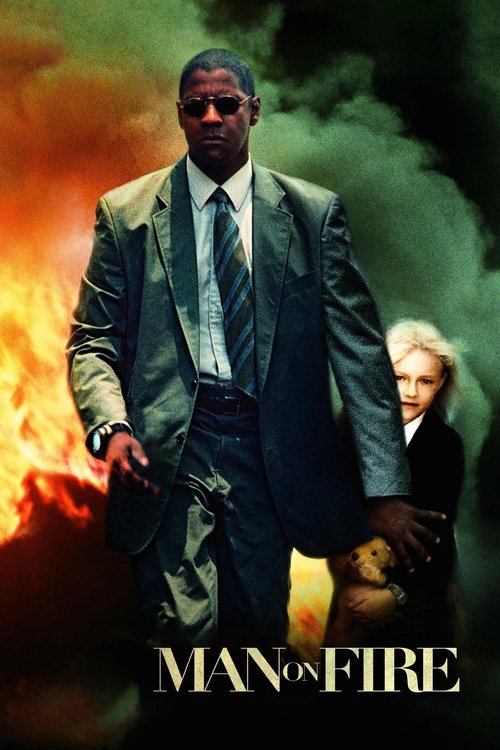
Man on Fire (2004)
Directed by Tony Scott
No · Ultra Based
How we score movies →Consciousness Markers
The film features a diverse cast including Black, Latino, and female actors, but they are cast in conventional supporting roles with no meaningful subversion of typical power dynamics.
While set in Mexico City with Mexican and Latino characters, the film treats the setting as an exotic backdrop for violence rather than engaging with cultural or racial specificity.
No LGBTQ+ themes, characters, or representation are present in the film.
The 10-year-old female character exists as the motivational object for the male protagonist's violence, not as an agent with her own agency or perspective.
No climate-related themes or messaging appear in the film.
The film presents no critique of capitalism, wealth, or class systems despite its setting in a corrupt Mexican criminal underworld.
No body positivity themes or messaging are present in the film.
No representation of neurodivergence or related themes appear in the film.
The film does not engage with historical revisionism or reinterpretation of past events.
The film contains no preachy messaging or exposition designed to educate the audience about social issues.


Synopsis
Jaded ex-CIA operative John Creasy reluctantly accepts a job as the bodyguard for a 10-year-old girl in Mexico City. They clash at first, but eventually bond, and when she's kidnapped he's consumed by fury and will stop at nothing to save her life.
Why it received this score
Man on Fire is a 2004 action thriller that operates entirely within the conventions of early-2000s Hollywood filmmaking, presenting a revenge narrative centered on a white male protagonist's emotional redemption through violence. The film features a diverse cast including Denzel Washington, Marc Anthony, and Giancarlo Giannini, but their presence functions as supporting characters in a story fundamentally about an American operative's moral journey. Mexico City serves as an exotic backdrop for the narrative rather than a setting treated with cultural specificity or respect.
The film contains no discernible progressive social messaging. There are no LGBTQ+ themes, no feminist subtext, no examination of systemic corruption or class inequality. The protagonist's brutal violence is portrayed as justified catharsis, with no ironic distance or critique of his methods. The narrative treats Mexico's kidnapping crisis as a plot device rather than a subject worthy of systemic examination or cultural consideration.
This is a competently made but ideologically unremarkable film. It exists in a pre-cultural-consciousness moment when such narratives required no progressive justification or contextualization. The diverse casting reflects only the practical reality of filming on location, not any deliberate commitment to representation or cultural awareness.
Analysis generated by our Consciousness Algorithm
Critic Reviews
“Man on Fire, with a best-ever Denzel Washington, is the first (nonreligious) sure thing to hit the multiplex this year. ”
“By no means perfect - a twist in the tale overextends its already lengthy running time - but it is terrific fun. ”
“For what Man on Fire delivers, it's worth enduring Scott's hyperkinetic visual techniques.”
“It's dispiriting to see good actors doing smart, solid work with so much unadulterated garbage swirling around them. Scott's art is also death, and we, the audience, are the ones he's jabbing at with his ruthless paintbrush. It's about time someone told him where to stick it. ”