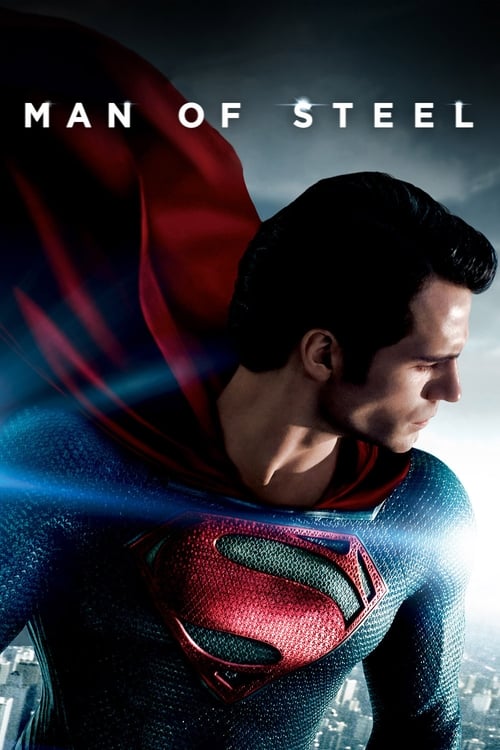
Man of Steel (2013)
Directed by Zack Snyder
No · Ultra Based
How we score movies →Consciousness Markers
Cast includes some diversity with Laurence Fishburne and Ayelet Zurer, but leadership roles and primary characters remain predominantly white. No deliberate effort to center underrepresented communities.
Amy Adams as Lois Lane is competent but passive, following male characters through the narrative. No significant female agency or empowerment themes.
General Zod's invasion could be tangentially read as resource competition, but this functions as plot device rather than critique of capitalism or economic systems.
Minimal preachy messaging or explicit social commentary. The film operates on spectacle and action rather than exhorting the audience toward particular moral positions.
No LGBTQ+ representation, themes, or subtext present in the film. Superman's sexuality and relationships are entirely heteronormative.
No meaningful engagement with racial themes, historical injustice, or racial equity. Characters of color exist in secondary roles without thematic significance.
No environmental messaging, climate concerns, or ecological consciousness present. The film's apocalyptic scenario involves alien invasion, not environmental crisis.
Superman is portrayed with idealized musculature. No body diversity, fat positivity, or challenge to conventional beauty standards.
No representation of neurodivergent characters or conditions. No acknowledgment of autism, ADHD, or other neurological differences.
Science fiction narrative with no historical setting or revisionist engagement with human history. No reframing of historical events or narratives.


Synopsis
A young boy learns that he has extraordinary powers and is not of this earth. As a young man, he journeys to discover where he came from and what he was sent here to do. But the hero in him must emerge if he is to save the world from annihilation and become the symbol of hope for all mankind.
Why it received this score
Man of Steel stands as a monument to the pre-woke blockbuster, a film so thoroughly committed to spectacle and mythic grandeur that it barely acknowledges the existence of progressive cultural sensibilities. Zack Snyder's vision is one of biblical proportions and apocalyptic destruction, wherein Superman's struggle is rendered as an almost theological meditation on duty and sacrifice rather than any contemporary social concern. The film treats its narrative with the gravity of scripture, which is to say it treats it with none of the ironic self-consciousness or preachy social awareness that would later become standard in tentpole filmmaking.
The casting is competent but unremarkable from a diversity standpoint. Henry Cavill carries the lead with appropriate brooding intensity, Amy Adams occupies the love interest role without significant agency, and the supporting cast is drawn largely from established Hollywood names. There is no meaningful representation of historically marginalized communities, no LGBTQ+ subtext, no environmental messaging, and certainly no body positivity rhetoric. The film's only nod toward anything resembling social consciousness is the vaguely anti-authoritarian stance toward General Zod, though this functions primarily as plot motivation rather than political statement.
What renders Man of Steel genuinely low on the scale is its utter indifference to the markers that would later define this category. The film is not hostile to progressive values; it simply does not acknowledge their existence. It predates the cultural moment when blockbuster filmmaking felt compelled to demonstrate social awareness. In this sense, it occupies a now-vanished territory: a major studio tentpole that could be made without reference to contemporary social debates. One suspects this would prove impossible today.
Analysis generated by our Consciousness Algorithm
Critic Reviews
“Man of Steel is more than just Avengers-sized escapism; it's an artistic introduction to a movie superhero we only thought we knew.”
“If the word “epic” has lost its meaning in the throes of recent summers, Man of Steel forcefully redefines it.”
“A bracing attempt to bring the legend back into contention that successfully separates itself from other Super-movies but misses some of their warmth and charm. But given the craft and class, this could be the start of something special”
“Snyder tries to up the spectacle ante with ever more explosions, crashes, thermal blasts, topological realignments, gunfire and mano-a-mano fistfights. But the result is a punishing sense of diminishing returns and a genre that has finally reached the point of mayhem-induced exhaustion. ”