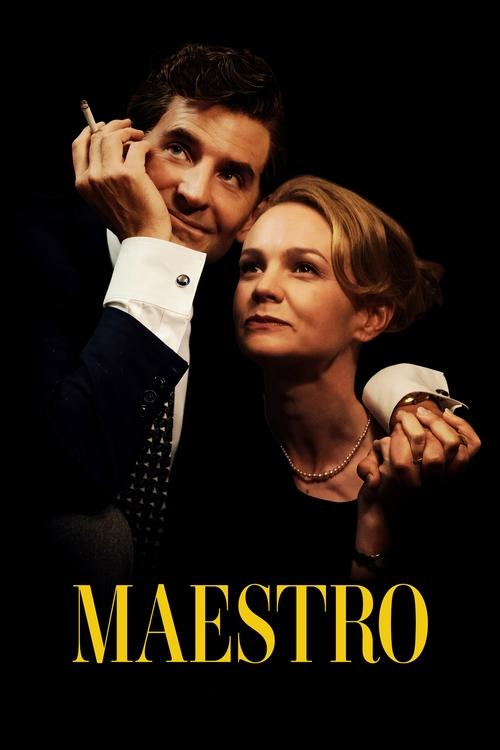
Maestro (2023)
Directed by Bradley Cooper
No · Ultra Based
How we score movies →Consciousness Markers
Bernstein's bisexuality exists in the film but is subordinated to the marriage narrative. His affairs with men are present but not the focus, resulting in a muted treatment of queer identity.
The cast is predominantly white with limited diversity. Carey Mulligan plays Felicia, a Latina woman, but representation operates within traditional narrative frameworks rather than addressing broader casting consciousness.
Felicia is portrayed sympathetically, but her character arc remains defined by her relationship to her husband and his career rather than her own agency.
The film depicts mid-century New York society with minimal engagement with racial themes or awareness of its historical moment's racial dynamics.
The film depicts wealthy musicians and upper-class society without critique or anti-capitalist messaging about wealth accumulation or class structures.
The film contains educational content about music and Bernstein's artistic legacy, but this emerges naturally from the subject matter rather than through preachy or preachy messaging.
No climate-related content or themes present in the film.
No engagement with body positivity or body acceptance themes.
No representation of neurodivergent characters or exploration of neurodiversity.
The film presents straightforward biographical narrative without revisionist reinterpretation of historical events or figures.


Synopsis
A towering and fearless love story chronicling the lifelong relationship between Leonard Bernstein and Felicia Montealegre Cohn Bernstein. A love letter to life and art, Maestro at its core is an emotionally epic portrayal of family and love.
Why it received this score
Bradley Cooper's "Maestro" operates as a meticulously crafted historical drama that treats the life of Leonard Bernstein with reverence but almost determinedly conventional sensibilities. The film centers its narrative on Bernstein's marriage to Felicia Montealegre, a choice that necessarily diminishes engagement with the composer's bisexuality and romantic complexity in favor of traditional biographical storytelling. Carey Mulligan delivers a sympathetic performance, but her character functions primarily as supportive spouse rather than as a fully realized counterpoint to Bernstein's artistic genius. The film's technical accomplishment, particularly in its musical sequences, cannot disguise its fundamental conservatism in approach and thematic reach.
The controversy surrounding Bradley Cooper's prosthetic nose overshadowed early reception, with critics debating whether the choice constituted problematic casting practices. The Anti-Defamation League's defense of the decision did little to settle the matter among those who saw it as symptomatic of Hollywood's broader casting choices. Yet this controversy, however spirited, points to a film that remains largely indifferent to contemporary social consciousness questions. The predominantly white cast and absence of racial context feels particularly dated for a 2023 production, even one set in mid-century New York. The film makes no visible effort to interrogate its historical moment or to grapple with questions of representation beyond surface-level inclusion.
The result is a biopic of impeccable technical polish and emotional earnestness that nonetheless represents a retreat from any engagement with modern progressive sensibilities. The film asks us to celebrate Bernstein's artistry and his marriage while remaining conspicuously silent on the complexities and contradictions of his personal life. It is precisely the kind of prestigious historical drama that the awards circuit finds respectable, which is to say it has learned nothing and forgotten nothing, content to preserve the past in amber rather than illuminate it anew. For a film released in 2023, this restraint reads less as artistic integrity and more as a deliberate choice to sidestep the very questions contemporary cinema increasingly cannot avoid.
Analysis generated by our Consciousness Algorithm
Critic Reviews
“For the uninitiated it is a revelation, and for the aficionado it will surely be a special treat. Its every frame is an expression of love for the music, the underground club scene, its creators and its patrons. ”
“Disco gets its due in this lightweight but entertaining look at the underground dance culture that flourished in New York City throughout the 1970s. ”
“Maestro is for people already aware of this history. For everyone else, this is pretty much invitation-only. ”
“Unfortunately akin to going to a dance club stone cold sober and wearing ear plugs. You get the gist of the general experience, but euphoria is far, far away.”