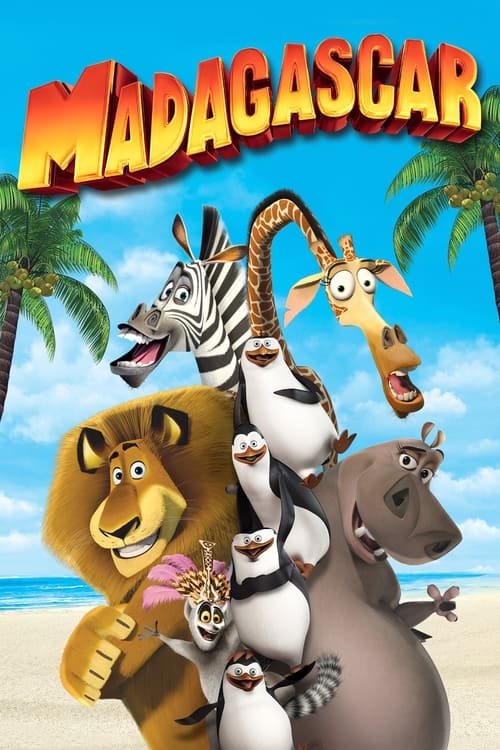
Madagascar (2005)
Directed by Eric Darnell
No · Ultra Based
How we score movies →Consciousness Markers
The voice cast includes Chris Rock, Jada Pinkett Smith, and Cedric the Entertainer, representing racial diversity in casting. However, this diversity is incidental to the narrative and carries no thematic weight within the film.
Gloria is depicted as a large, confident hippopotamus who is portrayed positively and romantically desirable. This could be read as body-positive representation, though it functions primarily as character design rather than conscious messaging.
Jada Pinkett Smith voices Gloria, a female character of agency and wit. However, she functions primarily as romantic interest and comic relief, not as a vehicle for feminist commentary or critique.
The zoo operates as a site of captivity that the animals escape, which could be read as mild critique of confinement. This is presented as plot mechanism rather than ideological statement.
Ben Stiller's lion character exhibits neurotic, anxious personality traits that could be read as representing anxiety or obsessive tendencies. This is played for comedy rather than representation.
No LGBTQ+ themes, characters, or representation present. The film contains only heterosexual animal relationships and contains no commentary whatsoever on sexual orientation or gender identity.
The film shows no awareness of race as a category of analysis. Characters are animals, not humans, and the setting of Madagascar carries no historical or colonial commentary.
No environmental themes or climate consciousness appear in the narrative. The tropical setting serves purely as backdrop for comedic scenarios.
The film contains no historical content whatsoever, revisionist or otherwise. It is pure fantasy with no engagement with historical events or narratives.
Madagascar contains no preachy elements, moral lectures, or moments where characters explain social issues to the audience. It is straightforward comedy and adventure.


Synopsis
Four animal friends get a taste of the wild life when they break out of captivity at the Central Park Zoo and wash ashore on the island of Madagascar.
Why it received this score
Madagascar arrives from the mid-2000s as a curious artifact of pre-woke animation, when studios could simply hire talented voice actors of various backgrounds without needing to construct an elaborate framework of social consciousness around the enterprise. The film does employ a racially diverse voice cast, which was pleasantly unremarkable at the time and remains so now, yet this diversity operates within the film itself as mere happenstance rather than statement. Ben Stiller's neurotic lion, Chris Rock's zebra, David Schwimmer's giraffe, and Jada Pinkett Smith's hippo are drawn characters whose vocal performance matters more than the performers' identities.
The narrative itself concerns itself entirely with animal hijinks and tropical escapism. There is no meditation on colonialism despite the setting, no interrogation of the zoo as carceral institution, no acknowledgment that Madagascar as a location carries historical weight. The lemurs are comic relief. The animals learn nothing about systemic oppression. What passes for character development amounts to the lion learning to appreciate his friends' company and the zebra developing confidence, which are humanist themes of the most generic sort, untethered from any particular cultural consciousness.
Madagascar is precisely what it appears to be: a competent animated comedy that happened to hire good actors and avoided saying anything remotely controversial about anything whatsoever. The film predates the contemporary lexicon of progressive sensibility by several years. In an era when diversity in voice casting was not yet a subject of cultural commentary, representation functioned as a practical matter rather than an ideological statement. This is both its greatest strength and its most telling limitation as an artifact of its time.
Analysis generated by our Consciousness Algorithm
Critic Reviews
“Dishes up some very corny jokes, but the images have a brighter-than-life vivacity.”
“The animals' personalities have been carefully calibrated: They have sufficient edge to amuse us as characters, yet they're cuddly enough to market as plush toys or action figures.”
“It could be more involving, but it's funny enough that you won't care.”
“The animation is deft but the screenplay is stilted, the voice-performances are unimaginative, and the whole project is surprisingly clumsy in its efforts to please young and old alike. A major disappointment.”