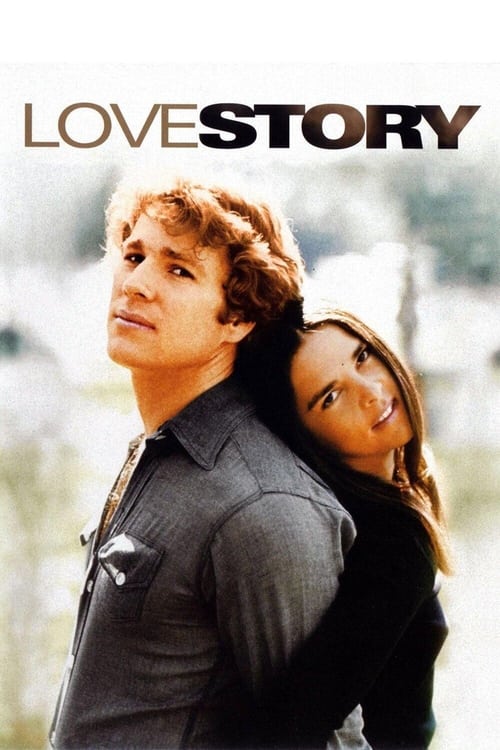
Love Story (1970)
Directed by Arthur Hiller
No · Ultra Based
How we score movies →Consciousness Markers
Ali MacGraw carries the film as a lead, unusual for 1970, but her character ultimately exists to support the male protagonist's story and emotional journey.
Jenny is educated and pursuing music, but her arc culminates in sacrifice for romance. Her agency is subordinated to the demands of the love story.
Class conflict is present as a romantic obstacle, but the film treats it as a personal prejudice rather than systemic critique. Wealth inequality is never interrogated.
The film is a straightforward melodrama without preachy messaging or moral lectures. Themes emerge naturally from plot and character rather than explicit commentary.
No LGBTQ+ themes or representation. Entirely heteronormative romantic narrative with no acknowledgment of sexual orientation or gender identity.
The cast is entirely white with no engagement whatsoever with questions of race, representation, or racial dynamics.
No environmental themes or climate consciousness present in the narrative or visual presentation.
No body positivity themes. The film adheres to conventional 1970s beauty standards without commentary or challenge to those norms.
No representation of neurodivergence or engagement with disability, mental health, or neurodevelopmental differences.
No historical setting or revisionist engagement with past events. The film is contemporary to its release.


Synopsis
Harvard Law student Oliver Barrett IV and music student Jennifer Cavilleri share a chemistry they cannot deny - and a love they cannot ignore. Despite their opposite backgrounds, the young couple put their hearts on the line for each other. When they marry, Oliver's wealthy father threatens to disown him. Jenny tries to reconcile the Barrett men, but to no avail.
Why it received this score
Love Story arrives from an era when progressive sensibilities had not yet calcified into the specific cultural markers we now recognize. The film presents class conflict as a romantic obstacle rather than a structural critique, and while it centers a female lead with artistic ambitions, she exists primarily as the emotional anchor for the male protagonist's narrative arc. Ali MacGraw's Jenny is educated, capable, and independent, but her agency is ultimately subordinated to the demands of heterosexual romance and sacrifice.
The film's engagement with class prejudice, while present, operates at the level of sentiment rather than analysis. Oliver's wealthy father opposes the match out of snobbish elitism, but this is treated as a personal failing rather than an examination of systemic inequality. The resolution offers no genuine critique of wealth or power, only the romantic notion that love transcends social boundaries. We are meant to find this touching rather than troubling.
What we observe here is a film that is humanist and sympathetic to its characters without exhibiting the specific constellation of contemporary progressive markers that define modern cultural consciousness. It contains elements that might be read as proto-feminist, but these emerge organically from the story's emotional needs rather than from any deliberate ideological agenda. For a 1970 romance, it is neither ahead of its time nor lagging behind. It is simply a period piece, earnest and untroubled by the frameworks we now apply to cultural artifacts.
Analysis generated by our Consciousness Algorithm
Critic Reviews
“The interesting thing is that Hiller has saved the movie without substantially changing anything in the book.”
“It looks to be clean and pure and without artifice, even though it is possibly as sophisticated as any commercial American movie ever made.”
“It is generally successful on all artistic levels, propelled by the best-selling Erich Segal novel written from the original screenplay.”
“Love Story is actually better than Segal's previously released best-seller (written from his screenplay in order to promote the film). But then that's not saying much.”