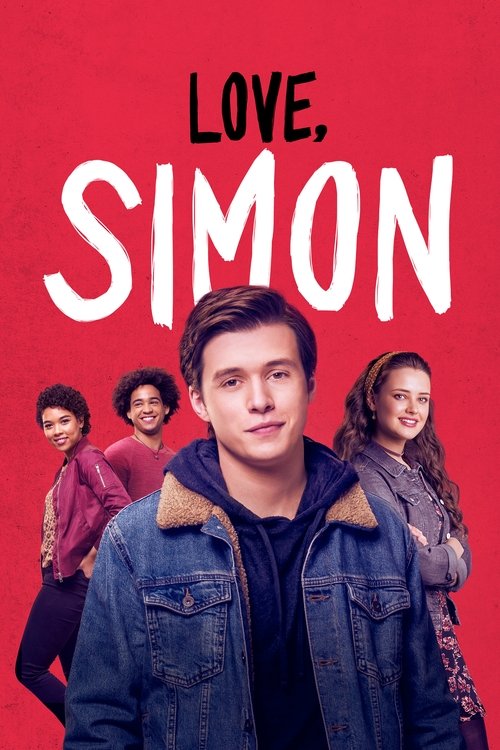
Love, Simon (2018)
Directed by Greg Berlanti
Yes · Woke
How we score movies →Consciousness Markers
The entire film is structured around LGBTQ+ identity and the coming-out experience. A gay teenager is the protagonist, and his journey toward self-acceptance and romance is treated with complete affirmation and normalcy.
The cast includes actors of various racial and ethnic backgrounds in supporting roles, though the narrative remains centered on a white gay protagonist. Diversity exists but is not the story's primary focus.
While the film treats its LGBTQ+ affirmations as self-evident rather than debatable, its tonal lightness and romantic comedy framework prevent it from adopting an overtly preachy or preachy tone.
While the film includes diverse casting, there is minimal explicit engagement with racial identity or racial consciousness. Characters of color are present but their experiences are not centered or explored.
The film features female characters but they function primarily as supporting players in Simon's narrative. The feminist content is limited to background representation rather than thematic engagement.
No evidence of climate-related themes or environmental consciousness in this teen romance narrative.
The film contains no critique of capitalism or class structures. Simon's world is firmly situated within suburban middle-class normalcy.
No explicit body positivity messaging or engagement with non-standard body representation in this conventionally cast romance film.
No representation or engagement with neurodivergent characters or themes in the narrative.
The film makes no attempt to revise or reframe historical narratives. It is set in a contemporary high school environment.


Synopsis
Everyone deserves a great love story, but for 17-year-old Simon Spier, it's a little more complicated. He hasn't told his family or friends that he's gay, and he doesn't know the identity of the anonymous classmate that he's fallen for online.
Why it received this score
Love, Simon arrives as a competent, if somewhat cautious, entry in the mainstreaming of LGBTQ+ teen cinema. The film concerns itself primarily with the experience of a privileged gay teenager whose greatest obstacles appear to be social embarrassment rather than material hardship or genuine danger, a choice that speaks volumes about its intended audience and the cultural moment of its release. Greg Berlanti constructs a narrative that treats coming out as the central dramatic crisis of American adolescence, which is not inaccurate so much as narrowly focused on a particular demographic reality. Simon's sexuality is presented as entirely normal within the film's universe, and his journey toward self-acceptance and romantic fulfillment follows the exact template of heterosexual teen romances, which carries both progressive and limiting implications.
The film's progressive sensibilities manifest most clearly in its straightforward affirmation of homosexuality as a non-issue requiring celebration rather than debate. The supporting cast includes students of various racial backgrounds in organic roles, though the narrative remains firmly centered on Simon's emotional development, and the film offers little engagement with how identity intersects across multiple axes. Where Love, Simon demonstrates genuine commitment to its thematic project is in its refusal to treat the closet as psychologically necessary or the coming-out process as anything other than fundamentally positive. The film offers no counterargument to its central thesis, which could be read as either admirably confident or somewhat preachy depending on one's tolerance for narrative certainty.
By 2018 standards, this represented a significant cultural statement about the normalization of LGBTQ+ youth in mainstream American cinema. The film's tonal lightness and romantic comedy framework necessarily limit the depth of its engagement with more complex dimensions of queer experience, but its existence as a mainstream studio production centering a gay protagonist marks a measurable shift in what Hollywood considers commercially viable. Love, Simon occupies the role of the well-meaning middle ground, neither revolutionary nor complacent, a film that affirms rather than interrogates.
Analysis generated by our Consciousness Algorithm
Critic Reviews
“Love, Simon is a John Hughes movie for audiences who just got woke. And for all its attempts not to offend, it's a genuine groundbreaker.”
“Love, Simon is a universal story, even if you’re not a gay teenager. The challenge of figuring out who we are and standing comfortably in that identity might begin in high school, but often lasts a lifetime.”
“It’s not exactly like the novel, but it captures the best parts of it.”
“Over two shapeless hours, it walks through sequences that announce their emotional gravitas while only sporadically earning it.”