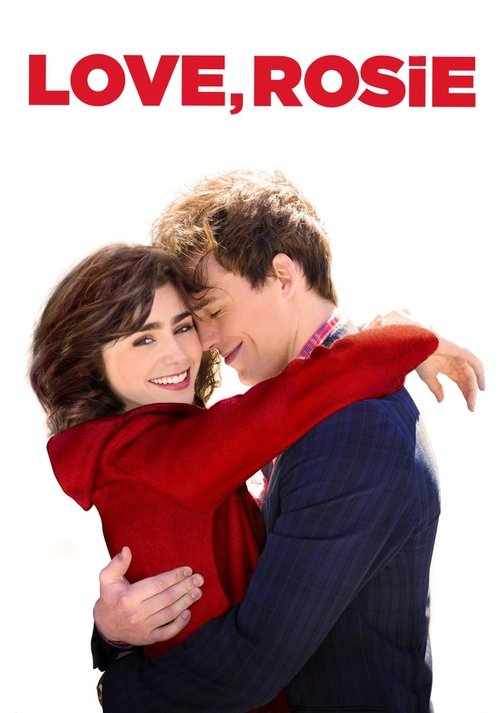
Love, Rosie (2014)
Directed by Christian Ditter
No · Ultra Based
How we score movies →Consciousness Markers
Rosie pursues career ambitions and professional goals, but her narrative arc is ultimately resolved through romantic fulfillment rather than autonomous achievement or social critique.
The cast is uniformly white and conventionally attractive with no meaningful diversity in ethnicity, body type, or visible disability representation.
There are no LGBTQ+ characters, relationships, or themes in the film. The narrative is entirely heterosexual.
The film contains no exploration of racial dynamics, systemic inequality, or racial consciousness of any kind.
There is no environmental messaging, climate awareness, or ecological consciousness present in the film.
The film contains no critique of capitalism, wealth inequality, or systemic economic injustice.
All characters conform to conventional beauty standards with no representation of body diversity or positive messaging around non-normative bodies.
There is no representation of neurodivergence, mental health conditions, or neurodiverse characters in the film.
The film contains no historical revisionism or reinterpretation of historical narratives.
The film makes no attempt to educate or lecture its audience about social issues or political matters.


Synopsis
Since the moment they met at age 5, Rosie and Alex have been best friends, facing the highs and lows of growing up side by side. A fleeting shared moment, one missed opportunity, and the decisions that follow send their lives in completely different directions. As each navigates the complexities of life, love, and everything in between, they always find their way back to each other - but is it just friendship, or something more.
Why it received this score
Love, Rosie is a 2014 romantic comedy that treats its narrative with the utmost sincerity, which is to say it treats itself as a film primarily concerned with matters of the heart rather than matters of social consciousness. The film follows two conventionally attractive leads through years of will-they-won't-they tension, career decisions, and romantic entanglements, all executed with the competence one expects from a mid-budget studio romance. The story unfolds across multiple continents and life stages, yet this geographic and temporal scope does little to broaden the film's cultural perspective.
The film's engagement with progressive sensibilities remains negligible. Rosie pursues professional ambitions, which might suggest feminist undertones, but her arc is fundamentally framed within romantic resolution rather than autonomous achievement or social critique. The cast is uniformly white and conventionally attractive, with no meaningful representation of diverse identities, no LGBTQ+ elements, and no environmental or anti-capitalist messaging. The narrative contains no body diversity, no neurodivergent representation, no historical revisionism, and lacks any pedagogical impulse to lecture its audience about social issues.
What emerges is a time capsule of pre-2015 romantic cinema, sincere and well-intentioned but entirely unconcerned with the cultural markers that would come to define progressive filmmaking in the subsequent decade. It is a film that asks whether two people belong together, not whether society belongs to everyone. This is not a criticism of the film's entertainment value, merely an observation about its cultural positioning.
Analysis generated by our Consciousness Algorithm
Critic Reviews
“As appealingly humanized by Collins and Claflin, Rosie and Alex are sufficiently flawed, three-dimensional beings for their continued attachment to each other to convince.”
“Love, Rosie’s early charm fades by the end, given that, as time (and the movie) wears on, neither Rosie nor Alex get any more mature when it comes to matters of the heart.”
“Likeable leads and the odd good joke makes this romance an amiable time-passer.”
“A misguided attempt to spin a nightmare scenario into a cutesy rom-com premise, this British production takes place in a harrowingly claustrophobic world where personal growth ends at age 18, and you meet everyone you’ll ever become friends with in your whole life during high school.”