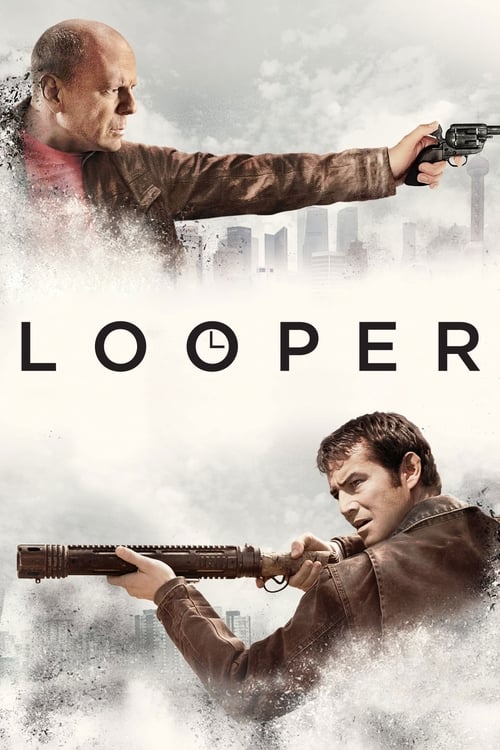
Looper (2012)
Directed by Rian Johnson
No · Ultra Based
How we score movies →Consciousness Markers
Emily Blunt's character Sara is a capable single mother with agency, but the film does not foreground feminist themes or consciousness. She serves the plot rather than embodying progressive gender awareness.
The film critiques organized crime and explores moral questions within a capitalist system, but this reflects noir convention rather than contemporary anti-capitalist messaging.
The cast is predominantly white with standard Hollywood representation patterns. No deliberate effort toward diverse casting is evident.
No LGBTQ+ themes, characters, or representation present in the film.
The film contains no exploration of racial themes or consciousness. The criminal underworld is not racialized or examined through any racial lens.
No climate-related themes or messaging present in the film.
No body positivity discourse, representation, or messaging present in the film.
No representation of neurodivergent characters or themes present in the film.
The film is set in a fictional future and past, with no engagement in historical revisionism or reinterpretation of historical events.
The film tells its story through plot and character development rather than explicit moralizing or preachy lectures about social issues.


Synopsis
In the year 2044, time travel has not yet been invented but in 30 years it will have been. When the mob wants to get rid of someone, they will send their target into the past where a looper, a hired gun, like Joe is waiting to mop up. Joe is getting rich and life is good until the day the mob decides to close the loop, sending back Joe's future self for assassination.
Why it received this score
Looper arrives as a precisely engineered science fiction thriller with no interest in contemporary cultural consciousness whatsoever. The film concerns itself with time travel paradoxes, contract killing, and the moral reckoning that arrives when a young assassin confronts his older self. These are timeless noir preoccupations, executed with considerable craft and narrative ingenuity, but they float free from any engagement with progressive social frameworks. The 2012 release date places this comfortably before the cultural moment that would define modern progressive sensibilities, and the film shows no inclination to anticipate or explore those territories.
Emily Blunt appears as Sara, a single mother and farmer who becomes entangled in the protagonist's crisis. She is written as a capable, intelligent character with her own agency and motivations. However, her presence reflects standard Hollywood casting practice rather than any deliberate commitment to progressive representation or feminist consciousness. The film's moral universe remains focused on individual choice, male violence, and temporal mechanics. It does not invite us to interrogate systems of power or cultural hierarchies. The supporting cast, predominantly white, exists within a criminal underworld that is never racialized or commented upon in terms of social consciousness.
The film's greatest sin, from the perspective of progressive cultural analysis, is its complete indifference to the entire project. It is a work of entertainment that trusts narrative momentum and thematic coherence to carry the day. Whether one admires this or finds it deficient depends entirely on one's expectations for what cinema should accomplish. What remains clear is that Looper operates in an entirely different register from the cultural moment that would later preoccupy critics and audiences alike.
Analysis generated by our Consciousness Algorithm
Critic Reviews
“Director Rian Johnson's resulting film, a cornfield neo-noir, is the coolest, most-confident sci-fi flick since 2006's "Children of Men." ”
“The best sci-fi movie since "Moon." The best time-travel yarn since "12 Monkeys." And one of the best films of 2012. You'll immediately want to see it again.”
“Intelligent science-fiction sometimes seems an endangered species - too much physics and there's a risk of creating something cold and remote, too many explosions and get lost in the multiplex. Looper isn't perfect, but it pulls off the full Wizard Of Oz: it has a brain, courage and a heart. ”
“Looper felt to me like a maddening near-miss: It posits an impossible but fascinating-to-imagine relationship...and then throws away nearly all the dramatic potential that relationship offers. If someone remakes Looper as the movie it could have been in, say, 30 years, will someone from the future please FedEx it back to me?”