Little Miss Sunshine (2006)
Directed by Valerie Faris
No · Ultra Based
How we score movies →Consciousness Markers
The film features a female director and female protagonist, but casting reflects practical ensemble selection rather than deliberate diversity positioning. Characters are presented as individuals, not as representatives of demographic categories.
Steve Carell's character is a closeted gay man, but his sexuality functions as another source of family dysfunction and comedy rather than as meaningful representation or affirmation of LGBTQ identity.
Paul Dano's character is a Nietzsche-obsessed teenager who appears neurodivergent, presented with affection but primarily as a source of comic relief within the family's dysfunction.
The film satirizes beauty pageants and objectification, but this critique operates at a surface level and predates modern feminist frameworks. The narrative does not engage with systemic gender issues.
The ensemble features varied body types and ages presented without comment, but this reflects practical casting rather than any explicit body positivity messaging or consciousness.
The film mocks consumer culture and beauty pageants superficially, but this represents generic satire rather than any coherent critique of capitalism or class systems.
The film occasionally signals its criticism of beauty pageants and materialism, but stops short of any sustained preachy messaging or moral lecturing.
No evidence of racial consciousness or engagement with issues of race, representation, or racial dynamics in the film.
No engagement with climate or environmental themes whatsoever.
No engagement with historical revisionism or reinterpretation of historical events.


Synopsis
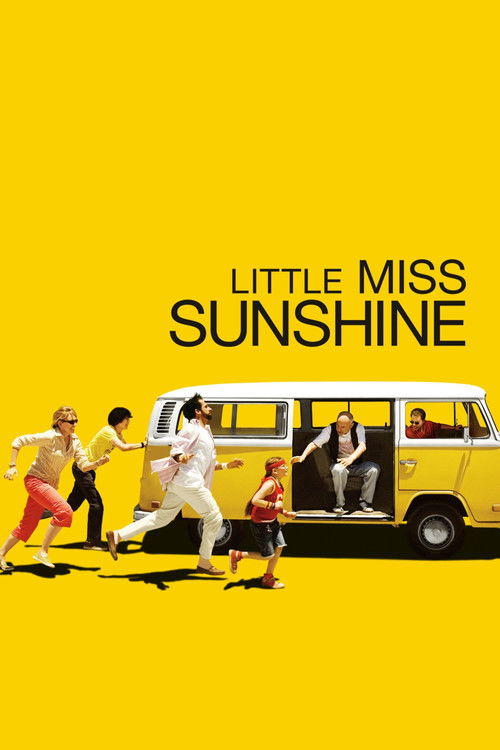
A family loaded with quirky, colorful characters piles into an old van and road trips to California for little Olive to compete in a beauty pageant.
Why it received this score
Little Miss Sunshine remains a product of its era, a mid-2000s indie comedy that traffics primarily in character eccentricity and family dysfunction rather than any systematic engagement with contemporary social consciousness. The film's critique of beauty pageants and consumer culture, while present, operates at a surface level of satire that predates the specific cultural frameworks we now associate with progressive sensibilities. The comedy derives almost entirely from the family members' individual neuroses and their collision with mainstream American rituals, not from any deep interrogation of systemic issues.
The film does feature a female director and a female protagonist, which registers as a baseline representation concern, though Olive herself is presented as a nine-year-old caught in her family's chaos rather than as a consciousness-raising vessel. The ensemble cast includes diverse age ranges and body types in a naturalistic fashion, but this reflects casting pragmatism rather than any deliberate statement. Steve Carell's character is a Proust scholar and a closeted gay man, but his homosexuality functions primarily as another layer of comic dysfunction within the family structure, not as a platform for LGBTQ affirmation or visibility. The film treats his sexuality with a kind of bemused sympathy that feels more patronizing than progressive in retrospect.
The film's indifference to social justice frameworks represents its most striking characteristic. It is a film about broken people doing broken things, and it finds this situation endlessly amusing. That remains its primary artistic commitment, one that predates the 2020s cultural sensibilities we now use as our measurement standard.
Analysis generated by our Consciousness Algorithm
Critic Reviews
“What makes husband-and-wife directing team Jonathan Dayton and Valerie Faris' hilarious debut such a great family film isn't that it's suitable for the whole family (it's not), but that it speaks a simple truth about what it means to be part of one.”
“As ambitious, honest and subversive as any American movie since "Election."”
“Like the shambling VW van its hapless characters steer from Albuquerque to Redondo Beach, Little Miss Sunshine is a rickety vehicle that travels mostly downhill.”