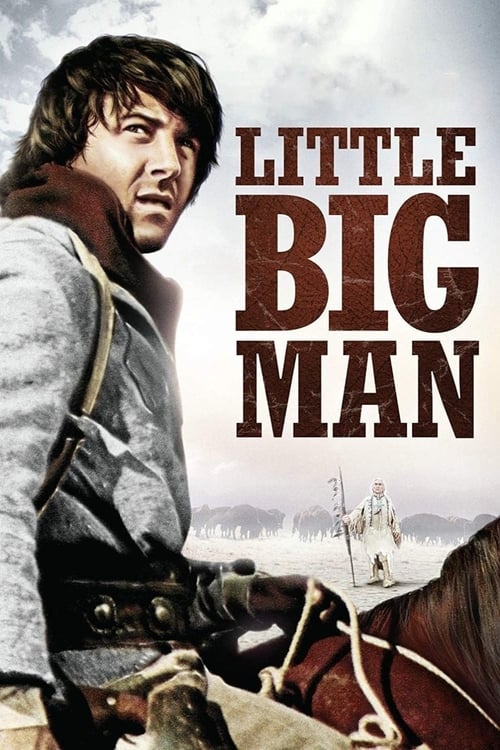
Little Big Man (1970)
Directed by Arthur Penn
No · Based
How we score movies →Consciousness Markers
The film's entire project is the deliberate revision of American frontier mythology. It explicitly challenges the heroic Custer narrative and presents colonialism as genocide. This is the film's central achievement and its most explicitly progressive marker.
The film makes explicit statements about the brutality of colonialism and presents Native Americans as victims of genocide rather than noble savages. This represents a deliberate challenge to racist Western mythology, though it operates within 1970s frameworks rather than contemporary racial consciousness discourse.
The film critiques American imperialism and military aggression, particularly relevant to Vietnam War anxieties, but does not engage with capitalist critique in any systematic way. The anti-war sentiment reflects 1970s counter-culture rather than contemporary anti-capitalist rhetoric.
The film includes Native American characters and treats them sympathetically, but the casting reflects 1970s industry norms rather than deliberate representation politics. Chief Dan George provides dignity to his role, but this predates modern diversity initiatives.
While the film makes clear political statements, its tone is satirical and darkly comic rather than pedagogical. It does not lecture the audience but rather invites them to recognize the absurdity of established narratives through narrative irony.
Female characters exist in the narrative but occupy traditional supporting roles. Faye Dunaway's character, while present, does not represent a feminist perspective or challenge gender norms in any conscious way.
The film contains no LGBTQ+ themes or characters. This is a historical epic focused on frontier conflict and personal survival.
Climate themes are entirely absent from the film. The narrative focuses on historical conflict and personal experience rather than environmental concerns.
Body positivity is not a theme in this film. The narrative does not engage with contemporary discussions of body image or acceptance.
Neurodivergence is not addressed in the film. The focus remains on historical events and character development rather than neurological representation.


Synopsis
Jack Crabb, looking back from extreme old age, tells of his life being raised by Indians and fighting with General Custer.
Why it received this score
Arthur Penn's 1970 revisionist Western arrives as a forceful critique of American frontier mythology, particularly resonant in the Vietnam War context in which it emerged. The film deliberately inverts the traditional Western narrative by presenting Native Americans as sympathetic protagonists and white colonizers as brutal aggressors. General Custer emerges not as a hero but as a delusional fanatic, and the Cheyenne tribe receives a level of cultural respect and dignity that was genuinely progressive for mainstream cinema at the time. This represents a fundamental challenge to the mythology that had dominated the genre for decades.
However, we must acknowledge that "Little Big Man" operates within a pre-modern progressive framework. Its critique of American imperialism and its sympathy for indigenous peoples reflect 1970s counter-cultural sensibilities rather than the specific markers of contemporary social consciousness. The film does not engage with representation casting as a deliberate statement about diversity in the industry. Chief Dan George, though sympathetic and complex, remains a Native American character portrayed through a white lens. The film's anti-war messaging and its debunking of historical myth-making feel more aligned with 1970s New Hollywood cynicism than with the identity-conscious progressivism that emerged in the 2010s and accelerated thereafter.
The film's satirical energy and its obvious contempt for colonial violence operate in a different register than contemporary lecture-based storytelling. Its comedy comes from deflating pretension rather than from pedagogical intent. We recognize this as a serious, angry film about serious injustices, but serious films about injustice are not inherently exhibits of modern progressive cultural markers. "Little Big Man" remains a remarkable artifact of its era, but it belongs to a different genealogy than the films we are evaluating for contemporary sensibility.
Analysis generated by our Consciousness Algorithm
Critic Reviews
“Arthur Penn's Little Big Man is an endlessly entertaining attempt to spin an epic in the form of a yarn.”
“Hoffman is uncharacteristically charming in a demanding role; the supporting cast is uniformly excellent, particularly Chief Dan George as a befuddled patriarch who takes the supernatural as a matter of course.”
“It also accomplishes that rarest achievement, the breathing of life into an ossified art form. The '70s has its first great epic.”
“The film tries to cover too much ground, even though Calder Willingham's script eliminates or telescopes events and characters from the Berger novel.”