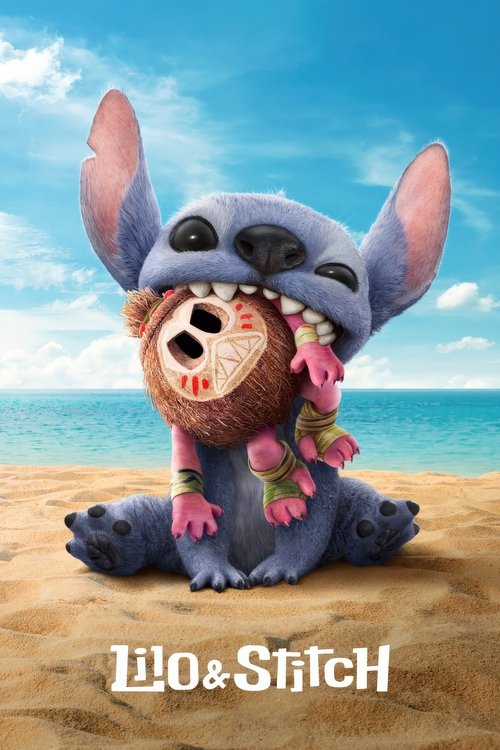
Lilo & Stitch (2025)
Directed by Dean Fleischer Camp
Partly · Woke-Adjacent
How we score movies →Consciousness Markers
Lead casting of Maia Kealoha as Lilo and inclusion of multiple Native Hawaiian and Asian-American cast members demonstrates conscious effort toward authentic representation in a Hawaiian-set story.
The deliberate casting and inclusion of Hawaiian cultural elements in the cast and crew suggests awareness of racial and indigenous representation, though the depth of cultural engagement remains unclear.
The Hawaiian setting potentially allows for engagement with colonial history and indigenous displacement, but it is unclear whether the remake pursues this angle or treats Hawaii as mere backdrop.
Lilo is a female protagonist dealing with family trauma and social isolation, but the original narrative structure does not center feminist consciousness as a primary concern.
As a family comedy, the film is unlikely to feature preachy messaging, though the casting choices and cultural awareness could introduce expository elements about Hawaiian identity.
The original film features diverse body types among its cast, but body positivity is not an articulated theme or concern in the narrative.
Lilo's behavioral difficulties could be read as neurodivergent coding, but the film does not engage with neurodivergence as an explicit or progressive framework.
The story concerns a working-class family struggling with poverty and custody issues, but this is character circumstance rather than systemic critique.
No apparent LGBTQ+ themes in available materials. The story's focus remains on family dynamics and inter-species friendship without obvious queer representation.
No indication of climate activism or environmental messaging in the source material or adaptation. The tropical setting is incidental rather than thematic.


Synopsis
The wildly funny and touching story of a lonely Hawaiian girl and the fugitive alien who helps to mend her broken family.
Why it received this score
The 2025 live-action adaptation of Lilo & Stitch represents the peculiar cultural moment in which a film can be simultaneously earnest about representation and deeply uncertain about what representation should actually entail. By casting Maia Kealoha, a Native Hawaiian actress, in the lead role, the production makes a deliberate choice that the 2002 animated original, whatever its merits, did not need to confront. This is not accidental. The presence of Hawaiian and Asian-American cast members (Tia Carrere, Amy Hill, Kaipo Dudoit) signals an awareness that the source material's Hawaiian setting demands something more than lip service. Yet the film's commitment to this awareness remains fundamentally a question mark until one actually watches it.
The casting choices suggest a production conscious of contemporary discourse around cultural authenticity and representation in family entertainment. However, casting alone does not constitute progressive sensibility; it merely creates the conditions for it. The film's actual engagement with Hawaiian culture, colonialism, displacement, and family structures within an indigenous context will determine whether these choices amount to substantive storytelling or mere aesthetic correction. Early materials offer little clarity on this matter. The story's core remains the same: a troubled girl finds connection with an alien creature. Whether the remake uses its setting as anything more than geography is the central question that haunts this enterprise.
What elevates the woke score beyond the mere casting calculus is the inclusion of Courtney B. Vance in a significant role and the apparent commitment to keeping the story's emotional core intact rather than diluting it for broader appeal. The film walks a narrow path: it could easily collapse into either patronizing tokenism or genuine engagement with Hawaiian identity and family trauma. As it exists now, in pre-release form, it occupies an uncertain middle ground, which is perhaps the most honest position any contemporary Disney remake can claim.
Analysis generated by our Consciousness Algorithm
Critic Reviews
“A celebration of movie-studio ohana that should warm the hearts of moviegoers everywhere.”
“Here's a tiresome feature that could be made into a wonderful 20-minute film -- or, with a few adjustments, into two or three 10-minute shorts.”