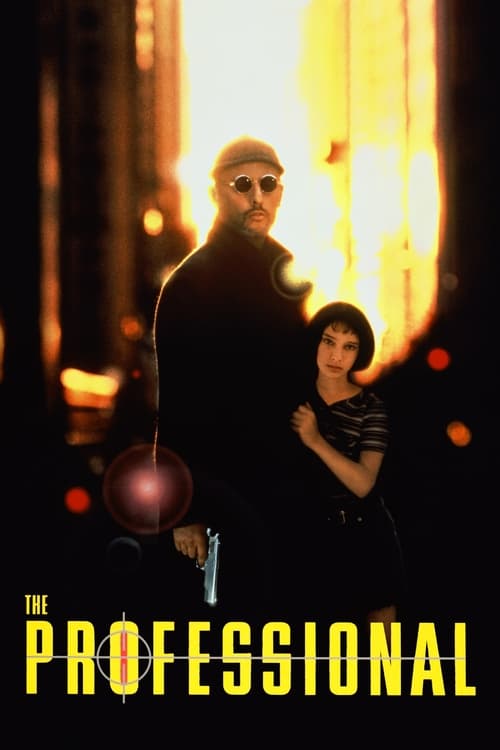
Léon: The Professional (1994)
Directed by Luc Besson
No · Ultra Based
How we score movies →Consciousness Markers
Mathilda demonstrates agency and determination, but her character exists within a morally ambiguous framework that neither celebrates nor critiques her choices through a feminist lens. The film predates modern feminist discourse.
Minimal preachy moments. The film prioritizes narrative and action over explicit messaging, though some scenes approach moral instruction regarding Léon's philosophy and Mathilda's education.
Cast reflects 1994 Hollywood demographics with no apparent diversity considerations. Natalie Portman as the lead, supporting roles filled according to conventional casting practices of the era.
The protagonist is a professional assassin operating within a capitalist system, but the film offers no critique of capitalism itself. His profession is presented as a morally complex choice, not a systemic indictment.
No racial consciousness or exploration of race relations present. The film's setting and character demographics are presented without commentary or awareness of racial dynamics.
No LGBTQ+ themes, representation, or subtext present in the film. Heterosexual dynamics are assumed without examination or commentary.
Climate change and environmental concerns are entirely absent from the narrative. The film concerns itself with personal conflict and urban crime, not ecological themes.
No body positivity messaging present. Characters are presented according to conventional aesthetic standards without commentary on body diversity or acceptance.
No representation of neurodivergent characters or conditions. The film contains no explicit coding or discussion of autism, ADHD, mental health, or neurological diversity.
No historical revisionism present. The film is not concerned with reinterpreting historical events or challenging established historical narratives.


Synopsis
Léon, the top hit man in New York, has earned a rep as an effective "cleaner". But when his next-door neighbors are wiped out by a loose-cannon DEA agent, he becomes the unwilling custodian of 12-year-old Mathilda. Before long, Mathilda's thoughts turn to revenge, and she considers following in Léon's footsteps.
Why it received this score
Léon: The Professional occupies a peculiar temporal position in the discourse surrounding social consciousness. Released in 1994, it predates the modern constellation of progressive sensibilities by more than a decade, and thus cannot be credibly evaluated as though it were made in 2024. The film presents Mathilda as an active agent in her own narrative, a young woman whose intelligence and determination drive the plot forward, but this hardly constitutes the kind of contemporary feminist posturing that would register on modern scales. Her agency exists within a morally murky context where she pursues violent revenge, a choice the film neither celebrates as empowerment nor critiques as a failure of consciousness. It is simply what the character chooses to do.
The film's casting reflects the straightforward demographics of its setting, with no apparent effort toward contemporary representation benchmarks. Natalie Portman, a white actress, plays the lead role; the supporting characters are cast according to conventional Hollywood logic of the period. There is no racial consciousness on display here, no climate crusade, no anti-capitalist messaging, no body positivity rhetoric, no neurodivergent representation coded with self-aware visibility. The film concerns itself with none of these markers. What we observe instead is a genre exercise in the action thriller mode, executed with technical proficiency and visual stylization.
The modest woke score reflects not the film's quality or moral seriousness, but rather its historical distance from the specific cultural moment that defines modern progressive sensibilities. A film made in 1994 cannot be held accountable for failing to incorporate frameworks that did not yet exist in their current form. To score it otherwise would be to commit the error of anachronism, a sin far more grave than whatever progressive deficiencies it may harbor.
Analysis generated by our Consciousness Algorithm