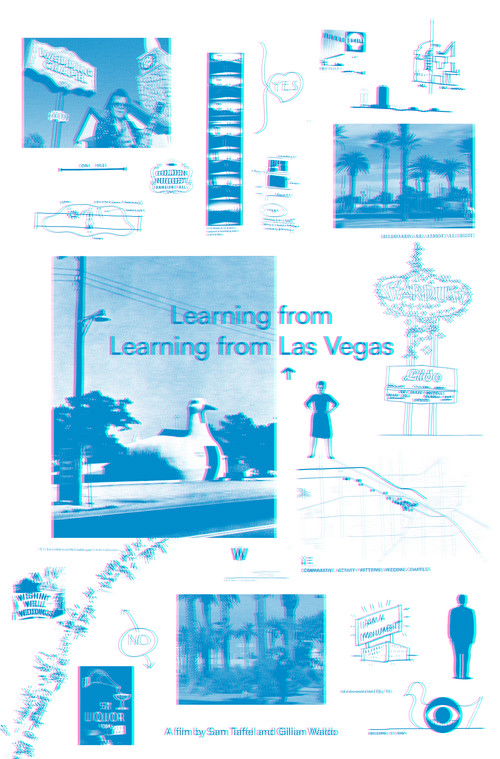
Learning from Learning from Las Vegas (2026)
Directed by Gillian Waldo
Partly · Woke-Adjacent
How we score movies →Consciousness Markers
The Pritzker Prize omission of Denise Scott Brown is a genuine and documented feminist grievance, and the film appears to engage directly with the question of gendered credit in architecture. The 2013 petition campaign and the broader pattern of erasing women's contributions to canonical work are central to the film's subject matter.
The film revisits the canonical status of a foundational architectural text and implicitly argues that its authorship has been incompletely credited. Reframing Venturi's Pritzker as a joint achievement denied to Scott Brown is a modest but genuine act of historical revision.
An experimental documentary built around an advocacy undercurrent regarding professional recognition and gender equity carries inherent sermonizing potential. The Wisconsin Film Festival framing and the film's apparent thesis about what lessons we should draw from history suggest a measured but present lecturing impulse.
The film centers on a female architect whose contributions were historically minimized, but this is a documentary about real historical figures rather than a casting decision. The centering of Scott Brown's perspective carries mild representational intent.
The original Learning from Las Vegas famously celebrated commercial strip architecture as a legitimate aesthetic form, and this adaptation appears to continue in that spirit. Any anti-capitalist reading would require considerable imagination.
No evidence of LGBTQ+ themes, characters, or framing in any available description or contextual material.
No evidence of racial themes in the film's subject matter, framing, or available descriptions. Las Vegas's demographic landscape is not addressed in this context.
No evidence of climate or environmental themes. The film examines Las Vegas vernacular architecture appreciatively, in the spirit of the original 1972 text, without apparent ecological critique.
No evidence of body positivity themes in any available material.
No evidence of neurodivergence themes in any available material.
Synopsis
An experimental adaptation of the seminal architectural text Learning from Las Vegas (1972) by architects Denise Scott Brown and Robert Venturi. The film details the evolution of their relationship, explores the motels, neon signage, and wedding chapels described in the book, and asks what lessons can we glean from the contemporary landscape of Vegas.
Why it received this score
Gillian Waldo's experimental documentary arrives bearing one of the longest titles in recent memory and the specific energy of a graduate seminar that has run fifteen minutes over time. It adapts the 1972 architectural text "Learning from Las Vegas" by Denise Scott Brown, Robert Venturi, and Steven Izenour, a book that famously argued we should take the commercial strip seriously as a form of American vernacular design. The film agrees with this argument. It also has some additional thoughts about who deserves credit for making it.
The Pritzker Prize omission of Scott Brown in 1991 is the film's animating grievance, and it is, to be fair, a legitimate one. Venturi received architecture's highest honor for work that Scott Brown co-created, and the committee's explanation that the prize could only go to one person has aged about as well as a neon sign in the Nevada sun. Waldo's film positions itself as a corrective, tracing the evolution of Scott Brown and Venturi's personal and professional relationship while also cataloguing motels, wedding chapels, and the particular grammar of roadside signage. The archival footage of Las Vegas functions as both subject and backdrop, a city that has always been comfortable hosting arguments about authenticity and credit.
Where the film earns its modest score on the scale of contemporary social consciousness is not through heavy-handed messaging but through sustained thematic focus. It is not interested in Las Vegas as spectacle. It is interested in Las Vegas as a case study in how we decide what counts and who counts. This is a narrower and more architectural version of a familiar cultural conversation, delivered with the restraint appropriate to a film about people who spent their careers thinking carefully about duck-shaped buildings. The lectures are present. They are just delivered in a quieter register than the strip itself would suggest.
Analysis generated by our Consciousness Algorithm