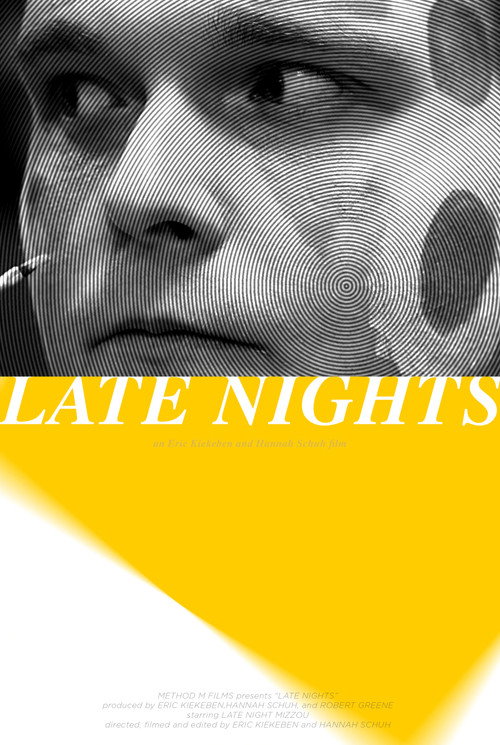
Late Nights (2026)
Directed by Eric Kiekeben
No · Ultra Based
How we score movies →Consciousness Markers
The film is embedded in a journalism school honors program context, which carries a mild institutional earnestness, but there is no evidence of sermonizing or agenda-driven messaging directed at the audience.
Co-director Hannah Schuh brings a female voice to the filmmaking team, though there is no evidence the film itself foregrounds feminist themes or critiques.
The film touches on the pressures of a changing media industry, which carries a faint undercurrent of critique toward the entertainment economy, though this appears incidental rather than ideological.
No evidence of casting choices made with representational intent. The subjects are documentary participants, not cast members, and no commentary on demographic diversity is present.
No LGBTQ+ themes, characters, or storylines are identified in any available material about this film.
No evidence of racial consciousness as a thematic concern. The film's focus is on institutional survival and creative ambition, not racial identity or systemic racism.
No climate or environmental themes are present or suggested in any available description of the film.
No body positivity themes or related content are present in this film.
No neurodivergence themes or related characters are identified in any available material.
The film is a contemporary documentary with no historical revisionism. It concerns events unfolding in the present tense.
Synopsis
Late Night Mizzou, a club founded by freshmen Cam Koffel, aimed to revolutionize student journalism and comedy with weekly late-night shows filled with live and pre-recorded sketches, mimicking the professional shows they grew up idolizing. Now, entering its fourth year, Cam and his club members are confronted with the harsh reality that their club has barely captured the attention of their fellow students, let alone the national audience they envisioned. With graduation looming, Cam is in a desperate race against time to save their creation from oblivion amid waning student support, a changing industry and discrepancies within the club.
Why it received this score
A documentary about college students who started a late-night comedy show and were surprised to discover that other college students did not care. The premise is, in its own quiet way, a complete story. Eric Kiekeben and co-director Hannah Schuh follow the Late Night Mizzou club through its fourth year at the University of Missouri, a year defined by the gap between the founders' ambitions and the indifference of their peers. This is, we are told, a crisis. We take their word for it.
The film's social consciousness registers somewhere in the range of a well-meaning campus bulletin board. It is a documentary born of an Honors College independent study, which is perhaps the most accurate possible origin story for a film about young people who believe they are revolutionizing an industry. To its credit, the film appears to engage honestly with failure, internal conflict, and the brutal arithmetic of student engagement. These are not nothing. They are, in fact, the only things here. The markers of progressive cultural signaling that animate so much contemporary documentary filmmaking are largely absent. No one is asked to examine their privilege. The industry is treated as a difficult landscape, not a villain. The club members are treated as people, not symbols.
The result is a film that exists in a curious blind spot: too earnest to be cynical, too modest to be preachy, and too niche to generate the cultural friction that would make it legible to any discourse beyond the Mizzou campus. Its progressive temperature is approximately room temperature. This is, by the standards of our current moment, almost radical.
Analysis generated by our Consciousness Algorithm