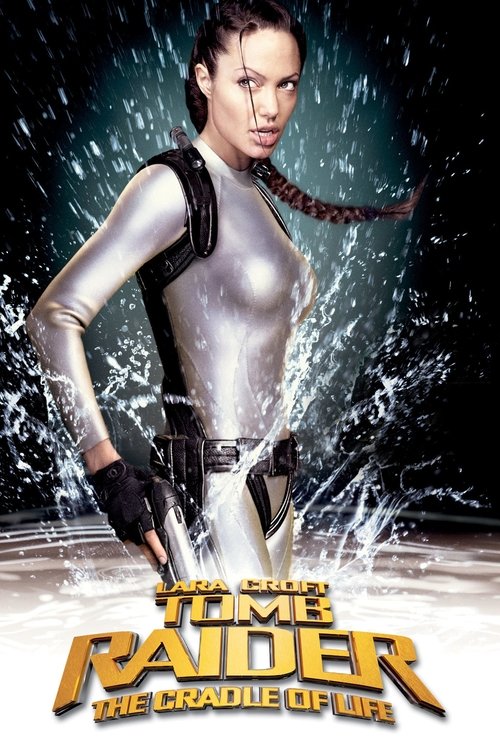
Lara Croft: Tomb Raider - The Cradle of Life (2003)
Directed by Jan de Bont
No · Ultra Based
How we score movies →Consciousness Markers
Female protagonist is physically capable and independent, commanding action sequences and making autonomous decisions. However, this reflects early 2000s action cinema rather than modern feminist interrogation of power or gender dynamics.
International cast includes actors of color in supporting roles (Djimon Hounsou, Simon Yam), but casting appears functional rather than deliberate in addressing representation. Diversity exists without thematic engagement.
The villain is a wealthy scientist engaged in bioterrorism, suggesting some critique of elite power, but this critique is underdeveloped and serves primarily as plot motivation rather than thematic exploration.
Actors of color appear in supporting and antagonistic roles without any thematic examination of racial dynamics or power structures. Their presence does not indicate conscious engagement with racial consciousness.
No LGBTQ+ themes, characters, or representation present in the film. The narrative contains no romantic or sexual subtext involving same-sex relationships.
No climate-related themes or environmental consciousness evident in the narrative. The plot concerns mythical artifacts rather than ecological or environmental concerns.
No engagement with body positivity or disability representation. The film focuses on physicality as a marker of heroic capability without interrogating beauty standards or bodily diversity.
No representation of neurodivergence or engagement with disability/neurodiversity themes in any form.
The film does not engage with historical revision or reinterpretation. Mythological and fictional elements are presented as adventure set dressing rather than historical commentary.
The film maintains a straightforward action-adventure tone without preachy or pedagogical impulses. No speeches or scenes designed to educate the audience about social issues.


Synopsis
Off the coast of the volcanic island of Santorini, the intrepid archaeologist Lara Croft makes the unexpected discovery of a pulsating golden orb able to guide its holder to the mythical Pandora's Box. As the legendary artifact contains ancient mysteries of unfathomable power - said to contain one of the deadliest plagues on Earth, Lara is tasked by MI6 to make sure it doesn't fall into the wrong hands. With the aid of former Marine turned mercenary Terry Sheridan, she travels the world in pursuit of the precious item in a race against time; she must beat the unscrupulous Nobel Prize-winning scientist turned bioterrorist, Jonathan Reiss, to it.
Why it received this score
Lara Croft: Tomb Raider - The Cradle of Life presents a curious artifact of early 2000s action cinema, a film that predates the contemporary vocabulary of progressive sensibility by nearly a decade and thus occupies an uncertain position in any reckoning of modern cultural consciousness. Angelina Jolie's portrayal of an athletic, independent female protagonist capable of outmaneuvering male adversaries was indeed notable for its time, though the film makes little effort to interrogate power structures or social hierarchies in any meaningful way. The narrative concerns itself primarily with globe-trotting adventure and the pursuit of mythical objects, treating its female lead as a capable action vehicle rather than a subject worthy of thematic exploration regarding gender, representation, or societal dynamics.
The supporting cast, which includes actors of various ethnic backgrounds (Djimon Hounsou, Simon Yam, and others), functions largely as functional plot apparatus rather than as vehicles for any substantive engagement with questions of racial consciousness or representation. Their roles do not suggest any deliberate commitment to diverse casting so much as the practical necessities of an international action film. The film's villain, played by Ciarán Hinds, is a Nobel Prize-winning scientist turned bioterrorist, a concept that might in a more ideologically engaged work serve as commentary on institutional corruption or technological hubris, but here it exists merely as justification for action sequences. Climate change, economic inequality, neurodivergence, and historical revisionism receive no attention whatsoever. The lecture energy remains mercifully absent.
What we have is a straightforward action spectacle from an era before the cultural anxieties that now dominate mainstream filmmaking had fully crystallized. Lara Croft herself was a proto-feminist action hero, though not in any sense that would satisfy contemporary progressive analysis. She is competent and strong, which was sufficient in 2003. That sufficiency has since become complicated.
Analysis generated by our Consciousness Algorithm
Critic Reviews
“In a summer where the special effects in movies have grown steadily more repetitive and dreary, "LCTR:TCOL" uses imagination and exciting locations to give the movie the same kind of pulp adventure feeling we get from the Indiana Jones movies. ”
“Angelina Jolie focuses her wild energy into outlandish heroics, and emerges with more attractiveness and credibility than all three of those silly Charlie's Angels combined. ”
“It wouldn't be fair to gripe about the hundreds of plot holes; the whole thing is hole.”