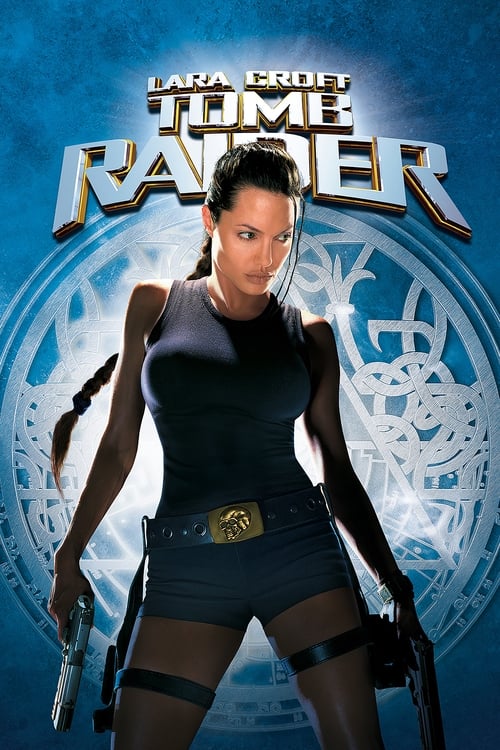
Lara Croft: Tomb Raider (2001)
Directed by Simon West
No · Ultra Based
How we score movies →Consciousness Markers
Lara is a strong, independent female character who drives the action. However, the film frames her primarily through her body and sexuality, with no interrogation of gender dynamics or feminist analysis.
Angelina Jolie leads as a capable female action hero, which was relatively uncommon in 2001. However, the casting is not otherwise diverse, and the film shows no conscious effort toward inclusive representation in supporting roles.
The film occasionally delivers exposition about ancient artifacts and their supposed powers, but this is minimal and presented as adventure plot mechanics rather than moral instruction or educational messaging.
No LGBTQ+ themes, characters, or subtext appear in the film.
The film contains no meaningful engagement with racial themes or racial consciousness. Characters of color appear only in incidental supporting roles.
There is no environmental messaging or climate activism present in the film.
While Lara is an aristocratic heiress, the film does not critique wealth or capitalism. Her background is simply part of her character's origin story.
The film celebrates and emphasizes a narrow body type with no representation of body diversity or progressive messaging about bodies.
There are no neurodivergent characters or themes related to neurodiversity in the film.
While the film involves fictional ancient artifacts, it does not engage in revisionist history of actual events or historical groups.


Synopsis
Orphaned heiress, English aristocrat and intrepid archaeologist, Lara Croft, embarks on a dangerous quest to retrieve the two halves of an ancient artifact which controls time before it falls into the wrong hands. As an extremely rare planetary alignment is about to occur for the first time in 5,000 years, the fearless tomb raider will have to team up with rival adventurers and sworn enemies to collect the pieces, while time is running out. But, in the end, who can harness the archaic talisman's unlimited power.
Why it received this score
Lara Croft: Tomb Raider arrives as a straightforward action-adventure film adapted from a video game, notable primarily for its female action protagonist but otherwise untethered from any recognizable markers of modern progressive sensibility. Angelina Jolie carries the picture through a series of globe-trotting set pieces involving mystical artifacts and rival treasure hunters, performing the role with the commitment one might expect from a major action star. The film frames her character as capable and autonomous, yet consistently emphasizes her body as spectacle rather than instrument, a tension that defines early-2000s action cinema but reflects no consciousness of its own complications.
The supporting narrative offers no meaningful engagement with diversity, class consciousness, environmental concerns, or social commentary of any stripe. The film's villain is simply a villain, the stakes are simply high, and the artifact is simply powerful. We are meant to follow Lara from one impossible location to another without pause for reflection on why she pursues these objects, what they represent, or what their retrieval means beyond personal triumph. The dialogue exists primarily to deliver exposition and advance the plot toward the next action sequence.
What emerges is a film of its era, a product of 2001 action cinema that happened to star a woman but made no deliberate attempt to interrogate gender, power, or representation. It is a film that simply exists, asking little of itself and less of its audience. In the taxonomy of modern social consciousness, it barely registers.
Analysis generated by our Consciousness Algorithm
Critic Reviews
“So monumentally silly, yet so wondrous to look at, that only a churl could find fault.”
“She's (Jolie) the most amazing special effect in movies. The best thing in Lara Croft: Tomb Raider is a bungee-jumping ballet that Lara performs late at night in her mansion, soaring high and low in Japanese silk pajamas and with her hair pulled tightly back.”
“Rather than the mad, kinetic video-game vigor you'd expect, the movie proceeds at a more leisurely and methodical gait. I rather liked that.”
“The game is great fun -- the movie ought to be taken out back and shot.”