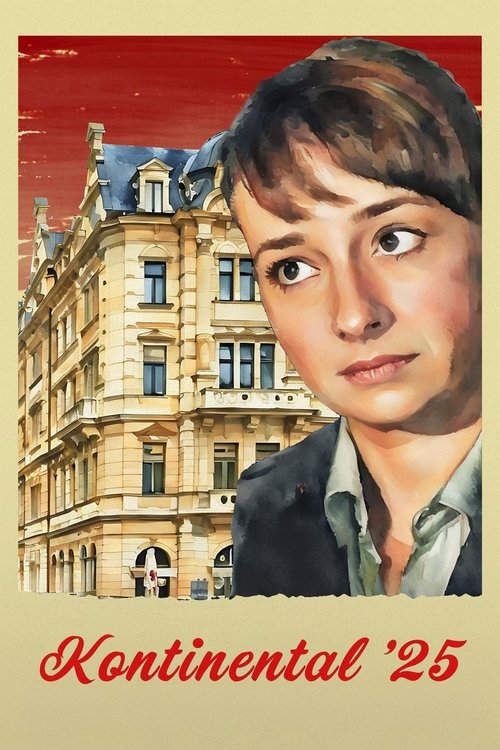
Kontinental '25 (2025)
Directed by Radu Jude
No · Based
How we score movies →Consciousness Markers
This is the film's dominant ideological axis. The entire narrative mechanism, a state-sanctioned eviction feeding a homeless man into oblivion, is a direct indictment of post-socialist capitalist machinery. Critics specifically note the film questions 'what we've sacrificed by letting our lives be overcome by capitalist pursuit.'
The film carries a clear moral thesis, encapsulated by The New Yorker's observation that 'a guilty conscience isn't enough,' and critics describe 'scabrous anger' and 'layered political commentary.' The absurdist delivery blunts the sermon, but the sermon is still there, tapping its foot.
The film casts from its authentic Romanian and Hungarian-minority milieu, which reflects the demographic reality of Cluj-Napoca rather than any conscious diversity mandate. The Hungarian protagonist is a function of the setting, not a statement.
The protagonist is a woman placed inside a bureaucratic and moral pressure cooker, but her gender is incidental to the story's concerns. The film is not interested in her womanhood as a site of oppression.
Radu Jude's filmography is steeped in historical revisionism, but this particular film is set entirely in the present and is concerned with contemporary Romania. A faint residue of that sensibility lingers in the film's framing of post-socialist 'modernization' as a continuity of historical failure.
No LGBTQ+ themes, characters, or subplots are present in any available material on the film.
Race is not a thematic or narrative element. The film's social fractures are drawn along class and economic lines, not racial ones.
No climate, environmental, or ecological themes appear anywhere in the film or its critical reception.
No body positivity themes or messaging are present.
No neurodivergence themes or characters are identified in the film.
Synopsis
Orsolya is a bailiff in Cluj, the main city in Transylvania. One day she has to evict a homeless man from a cellar, an action with tragic consequences that triggers a moral crisis which Orsolya must weather as best she can.
Why it received this score
Radu Jude, Romania's most reliably furious filmmaker, here delivers a film shot in eleven days on an iPhone that somehow feels more considered than most productions assembled over years with actual budgets. "Kontinental '25" follows Orsolya, a bailiff in Cluj who evicts a homeless man from a cellar, after which the man dies, after which Orsolya experiences guilt, after which Jude asks whether guilt is a morally sufficient response to systems designed to produce exactly this outcome. The answer, delivered with the weary bluntness of a man who has stopped expecting better, is no. This is not a comforting film. It was not designed to be.
The anti-capitalist architecture here is load-bearing. The entire plot is essentially a diagram of post-socialist Romanian society rendered as black comedy: a state functionary executes a legal order, the machinery of property law grinds forward, a man with no property is eliminated by it, and the person who pulled the lever is left to contemplate her soul in a country that has largely moved on to other concerns. Critics have noted the film's debt to Rossellini's "Europa '51," which also featured a bourgeois woman confronting the human wreckage of economic systems she had previously found easy to ignore. Jude updates the premise for an era in which everyone has theoretically read the right articles and still does the same things. The lecture energy is present and accounted for, though it arrives wrapped in enough absurdist irony that it retains plausible deniability.
What keeps the film from collapsing under its own moral weight is Jude's refusal to let Orsolya be simply a villain or simply a victim of circumstance. She is both, which is the more uncomfortable position, and Eszter Tompa holds that tension without flinching. The film's social consciousness is of the Eastern European variety: older, grimmer, and considerably less interested in affirmation than its Western counterparts. There are no solutions offered. There is no community that rallies. There is only the city of Cluj, fragmented and ongoing, and a woman standing in it with her conscience and not much else.
Analysis generated by our Consciousness Algorithm
Critic Reviews
“In common with Jude’s scathing attack on the gig economy and toxic online culture in Do Not Expect Too Much from the End of the World, Kontinental ’25 takes a scattershot approach to various targets: anti-Semitism, capitalism, nationalism and religious hypocrisy. The incomparable writer-director’s dark comedy doesn’t care to resolve its heroine’s quandary; it’s out to poke with ethical heft and barbed wit.”
“At once incisive and ambiguous, it’s proof that Jude is operating on a completely different level than most of his contemporaries.”
“Everything in the characteristically hyper-literate Kontinental ’25 is shaped by influence and allusion, which itself points back to Jude’s singular predilection for refracting film history through the prism of modern life. The movie itself is essentially just one big riff on Roberto Rossellini’s “Europe ’51,” another hyper-topical story about a guilt-stricken woman’s search for peace. ”
“This lacks the zest and dynamism of Jude’s more subversive output, though even a minor work from a major filmmaker still manages to thrill and tantalize.”