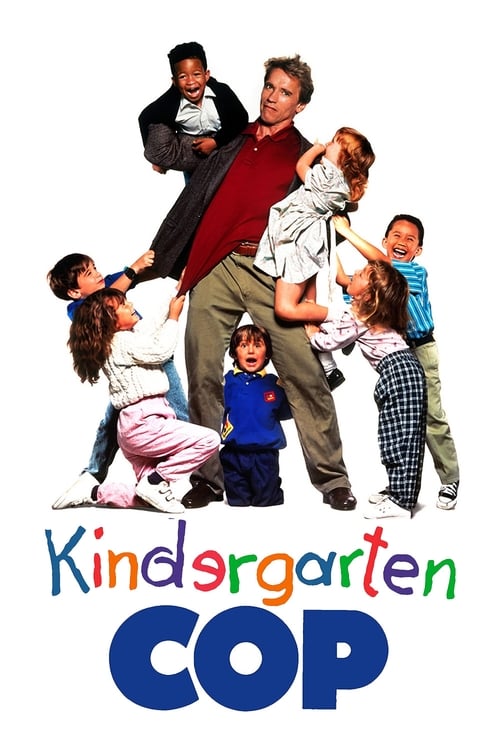
Kindergarten Cop (1990)
Directed by Ivan Reitman
No · Ultra Based
How we score movies →Consciousness Markers
The juxtaposition of a hypermasculine action star in a kindergarten classroom offers incidental commentary on gendered spaces, but this is comedic rather than intentional feminist critique.
The film contains minimal preachy elements. Domestic abuse is presented as plot material rather than an opportunity for moral instruction or social messaging.
Cast is predominantly white and reflects 1990s mainstream Hollywood demographics. Female characters exist in supporting roles without deliberate diverse representation.
The film features children of various body types in the classroom scenes, though this reflects casting practicality rather than deliberate body positivity messaging.
No LGBTQ+ themes, characters, or representation present in the film.
No racial consciousness or commentary present. Racial dynamics are not addressed in any form.
No climate-related themes, messaging, or environmental consciousness present.
No anti-capitalist themes or critiques of wealth and class structures present.
No representation of neurodivergence or disability consciousness present in the film.
No historical revisionism or reframing of historical events present.


Synopsis
Hard-edged cop John Kimble gets more than he bargained for when he goes undercover as a kindergarten teacher to get the goods on a brutal drug lord while at the same time protecting the man's young son. Pitted against a class of boisterous moppets whose antics try his patience and test his mettle, Kimble may have met his match in more ways than one.
Why it received this score
Kindergarten Cop arrives as a relic from an era that predates our current cultural taxonomy by three decades. It is a film unconcerned with representation matrices, progressive messaging, or social consciousness. The premise itself, a mountain of Austrian muscle forced into the company of small children, functions purely as comedic juxtaposition. Arnold Schwarzenegger plays against type, which was novel in 1990, but this represents a straightforward genre inversion rather than any meaningful interrogation of masculinity or gendered spaces.
The film treats its supporting female characters as functional plot elements. Penelope Ann Miller provides romantic interest. Pamela Reed exists as a fellow educator. Linda Hunt appears briefly. None of these roles carry any subtext beyond their narrative utility. The ensemble of child actors reflects the demographics of early 1990s Hollywood casting, which is to say overwhelmingly homogeneous.
What remains is a film of its moment, designed to leverage Schwarzenegger's star power through the novelty of placing him in an incongruous setting. It contains no identifiable markers of contemporary progressive sensibility. The domestic abuse plot thread, involving a child's abusive father, is handled as straightforward thriller material rather than as an opportunity for social commentary. This is cinema that simply does not engage with the cultural questions we now use to categorize film.
Analysis generated by our Consciousness Algorithm
Critic Reviews
“Arnold Schwarzenegger's enjoyable but not hugely special Kindergarten Cop - has a whole roomful of the little tykes making genital jokes and constantly having to go to the bathroom. [21 Dec 1990, p.7]”
“The Great Stone Man never looks more alien than when he smiles, but the expression starts to become him, and as he grows more human through his contact with the kids, Schwarzenegger begins to exude actual warmth.”
“Part cop caper, part coo-fest, it is a feel-good movie, a jolly little button-pusher about a street-smart cop who brings law and order to a classroom full of unruly but adorable youngsters.”
“It would be lying not to say that some of the moviemakers here aren't working at the top of their craft, or that the movie won't reach audiences. On its own terms, Kindergarten Cop is nearly fool-proof: the last word in glib, shallow, soulless, spuriously warm-hearted commercialism. [21 Dec 1990, p.1]”