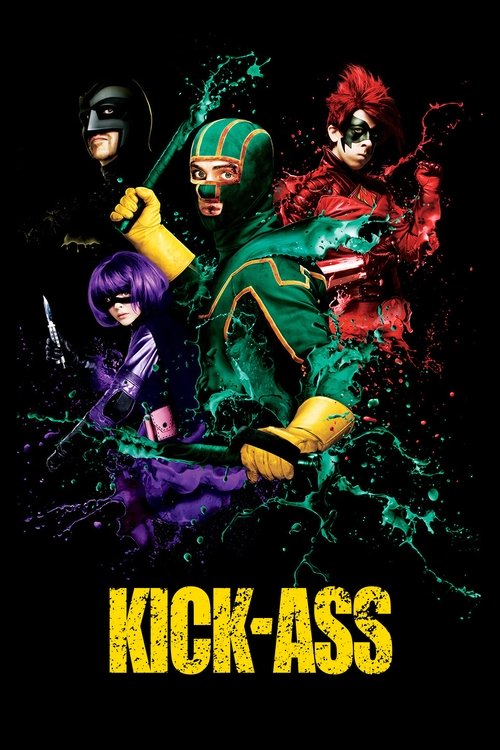
Kick-Ass (2010)
Directed by Matthew Vaughn
No · Ultra Based
How we score movies →Consciousness Markers
Cast is predominantly white with minimal diverse representation. No thematic engagement with casting choices or representation concerns.
Hit-Girl is a skilled female fighter, but her portrayal as an 11-year-old assassin is shock value rather than feminist commentary.
Film maintains an irreverent, satirical tone throughout. No preachy messaging about social issues.
No LGBTQ+ characters, themes, or representation present in the film.
No engagement with racial themes, racial consciousness, or commentary on systemic racism.
Climate issues are entirely absent from the film.
The film features a crime boss villain but contains no critique of capitalism or wealth inequality.
No body positivity themes or commentary present in the film.
No representation of or themes related to neurodivergence.
Not applicable to this contemporary action film.


Synopsis
Dave Lizewski is an unnoticed high school student and comic book fan who one day decides to become a super-hero, even though he has no powers, training or meaningful reason to do so.
Why it received this score
Kick-Ass arrives at the woke scorecard as a fascinating artifact of pre-consciousness cinema. Released in 2010, before the cultural constellation of progressive sensibilities crystallized into its current form, the film operates in an entirely different register from what we now scrutinize. Matthew Vaughn's violent superhero deconstruction courts shock value with almost anarchic glee, deploying an 11-year-old assassin who speaks in profanities and kills with mechanical efficiency. The transgression is the point, but it is not in service of any particular social awareness or progressive agenda.
The film's relationship to its female characters, particularly Hit-Girl, illustrates this perfectly. Her presence generates discomfort not because of feminist commentary but because of deliberate tonal inconsistency and reliance on shock as narrative currency. She is not a statement about female empowerment or agency. She is a provocation. The cast reflects the default whiteness of 2010 action cinema, unremarkable in its homogeneity and untouched by any impulse toward representation as a thematic concern. Nicolas Cage plays a single father with maniacal cheerfulness, Aaron Taylor-Johnson stumbles through his role as the eponymous hero, and the film never pauses to interrogate any of these choices through a contemporary lens.
What emerges is a film fundamentally indifferent to the frameworks we now use to analyze cultural products. It is not anti-woke, nor is it pre-woke in the sense of being ahead of its time. It simply exists before the vocabulary existed. The film is competent action cinema with a satirical edge and a taste for provocation, but it contains no engagement with racial consciousness, climate concerns, body diversity, LGBTQ+ representation, or any of the other markers that now define cultural consciousness. It is a relic of a different era, one that makes no claims and offers no apologies.
Analysis generated by our Consciousness Algorithm
Critic Reviews
“A ridiculously entertaining, perfectly paced, ultra-violent cinematic rush that kicks the places other movies struggle to reach.”
“It brings together several popular strains of contemporary moviemaking and combines them into one big, shameless, audacious, compulsively watchable, irresistibly likable piece of pure entertainment.”
“Equal parts audacious dark comedy, wish-fulfillment fantasy and over-the-top, tongue-in-cheek action-adventure.”
“Kick-Ass - based on a graphic novel - thinks it's so brave and bold. But it's more like the title character, a dweeb who just thinks he's tough.”