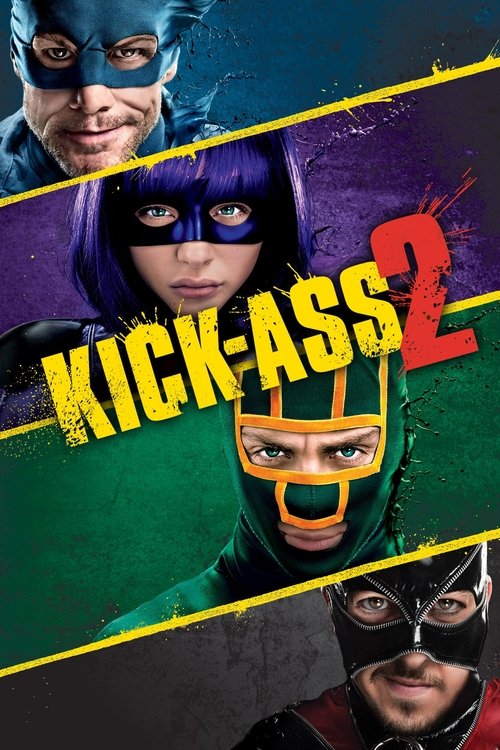
Kick-Ass 2 (2013)
Directed by Jeff Wadlow
No · Ultra Based
How we score movies →Consciousness Markers
The ensemble cast includes racial diversity (Morris Chestnut, Lyndsy Fonseca), but this diversity is incidental to the narrative rather than a deliberate representation strategy or commentary.
Hit-Girl is a capable female action character, but she functions as a revenge fantasy archetype rather than as a vehicle for feminist ideology or commentary.
No LGBTQ+ characters, themes, or representation present in the film.
The film contains no racial themes, consciousness, or commentary.
No environmental or climate-related themes present.
While the film satirizes consumer culture and superhero mythology through satire, there is no anti-capitalist ideological framework or messaging.
No body positivity messaging or representation present.
No representation or discussion of neurodivergence.
No historical revisionism or alternate history elements present.
The film's humor is crude and physical rather than preachy. There is no pedagogical intent or lecture-like delivery of ideology.


Synopsis
After Kick-Ass' insane bravery inspires a new wave of self-made masked crusaders, he joins a patrol led by the Colonel Stars and Stripes. When these amateur superheroes are hunted down by Red Mist — reborn as The Mother Fucker — only the blade-wielding Hit-Girl can prevent their annihilation.
Why it received this score
Kick-Ass 2 operates in a register entirely divorced from modern progressive sensibilities. This is a film that mistakes transgression for thought, that believes graphic violence and crude humor constitute cultural commentary. The narrative follows a gang of amateur superheroes as they battle a villain's revenge plot, all of this staged with the kind of self-satisfied transgression that characterized mid-2010s irreverence before the cultural moment shifted. The film contains a diverse ensemble cast, but diversity here is merely incidental casting rather than a conscious representation strategy. Hit-Girl, the film's most compelling character, functions as a revenge fantasy figure, a child assassin rendered as entertainment rather than as a vehicle for any ideological position about gender or violence.
What one observes throughout is a film allergic to sincerity of any kind. The humor depends entirely on shock value, on the violation of superhero genre expectations through excessive gore and crude language. There is no feminist agenda here, no racial consciousness, no environmental concern, no anti-capitalist framework. The film is content to exist as pure satire, as a middle finger directed at the superhero genre itself, without offering any alternative vision or progressive framework. Even Jim Carrey's Colonel Stars and Stripes, a military figure who eventually disavows the film's violence, arrives too late and with too little conviction to register as meaningful social commentary.
The film's fundamental indifference to progressive cultural values is not a flaw but rather its entire point. It represents a moment in cinema when transgression still felt like a viable form of cultural critique, before such strategies calcified into exhaustion. One must score it low on the scale of modern progressive sensibilities not because it is immoral or harmful, but because it is simply not interested in the conversation at all. It is a film speaking in an entirely different language, one in which shock registers as argument and provocation passes for analysis.
Analysis generated by our Consciousness Algorithm
Critic Reviews
“The most welcome change is the tone. Wadlow has decided he's making a straight-up comedy, and he demonstrates a knack for it. ”
“The film delivers almost exactly what fans of the first installment are hoping for.”
“It's rambunctiously amusing but the laughs clot in your throat. There's a meaner streak this time to Kick-Ass and Hit Girl's exploits, or maybe Carrey's sensitivity is justified. Either way, the third act of Kick-Ass 2 is a visceral beatdown.”