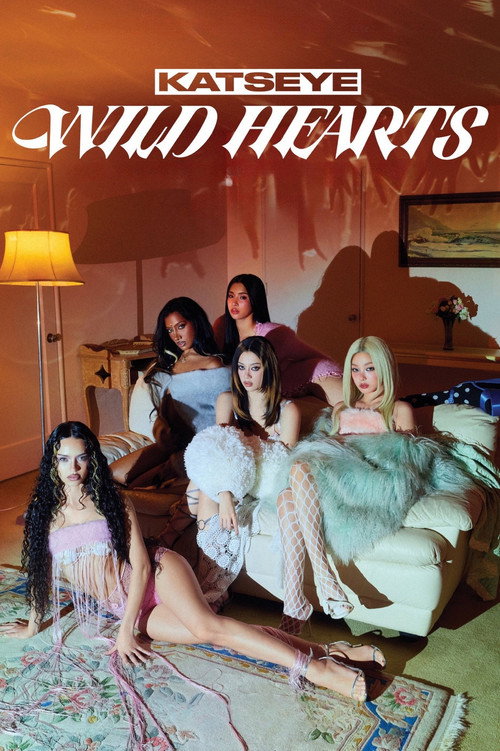
KATSEYE: WILD HEARTS (2026)
Directed by Nadia Hallgren · $4.0M domestic
Partly · Woke-Adjacent
How we score movies →Consciousness Markers
The entire premise of KATSEYE as a 'global girl group' is built around its multicultural architecture, with members' Filipino, Indian-American, African-European, Cuban-American, and South Korean identities foregrounded as selling points. The film does not merely reflect this diversity; it celebrates it as the product's core feature.
The film frames member Lara Raj's co-writing and production work as a meaningful act of female creative autonomy within a corporate pop machinery, and the group's general messaging around female empowerment runs throughout. It stops short of sustained ideological argument, but the throughline is consistent.
The documented discourse around Manon Bannerman's reduced screen presence carries explicit racial dimensions, and members are shown discussing experiences with racism and xenophobia in international fan communities. The film gestures at these tensions without fully excavating them.
Mental health disclosures (two members on hiatus for wellbeing) are woven into the narrative with appropriate gravity, and the segment on toxic online criticism carries a pointed moral framing. The film does not harangue, but it does position its subjects as instructive examples of resilience under public cruelty.
No specific LGBTQ+ themes are documented in the film's content. A marginal score reflects the broadly inclusive fan-community framing, but nothing concrete emerges from the research.
No evidence of climate themes anywhere in the film or its surrounding discourse.
The film is, by critical consensus, a glossy promotional vehicle that opens with a QR code directing audiences to purchase NFT-style commemorative tickets. Whatever one thinks of this, it is not a critique of capital.
No body positivity themes are documented in the film's content or reception.
No neurodivergence themes are present or discussed in any available coverage.
The film has no historical scope to revise. It concerns events from approximately the last two years.
Synopsis
A celebration to the group's new era and the fans who made it possible. Features exclusive behind-the-scenes footage, Eyekons fan videos, and intimate interviews with the members.
Why it received this score
KATSEYE: WILD HEARTS arrives as a documentary in the same way that a press release arrives as literature: the form is technically correct, the intentions are visible from considerable distance, and the content has been stress-tested for maximum palatability. Directed by Nadia Hallgren, whose previous subjects include Michelle Obama and civil rights attorney Ben Crump, this 80-minute film applies the same sober, empathetic lens to a six-member girl group assembled by corporate algorithm and reality television. The result is a document that is genuinely warm, professionally executed, and about as unguarded as a shareholder presentation.
The film's central thesis, that KATSEYE represents something historically meaningful in the architecture of global pop, is not wrong so much as it is relentlessly insisted upon. The group's multicultural composition (Filipino, Indian-American, African-European, Cuban-American, South Korean) is treated as both artistic achievement and moral proof of concept, which places the film in an interesting position: it wants credit for the diversity while declining to examine the corporate machinery that engineered it. Member Lara Raj co-writing a bonus track is presented as a breakthrough for female creative agency. The record executives who control the rest of the catalogue are presented as enthusiastic collaborators. These two facts coexist without friction, which tells us a great deal about the film's appetite for complexity. The segment addressing online criticism of the group's single "Gnarly" is the closest the film gets to conflict, and it resolves, as these things do, in a lesson about resilience and the cruelty of strangers.
The film opens with a QR code encouraging theatergoers to claim a digital commemorative ticket for their favorite member, which is a sentence that contains more information about 2026 than most journalism manages. The mental health disclosures are handled with genuine care, and the members themselves are charismatic and clearly talented. Hallgren is a skilled filmmaker and it shows. But the film's progressive credentials and its status as a promotional vehicle are not in tension here; they are, in fact, the same product, packaged together with considerable craft and sold to people who already love what they are about to see.
Analysis generated by our Consciousness Algorithm