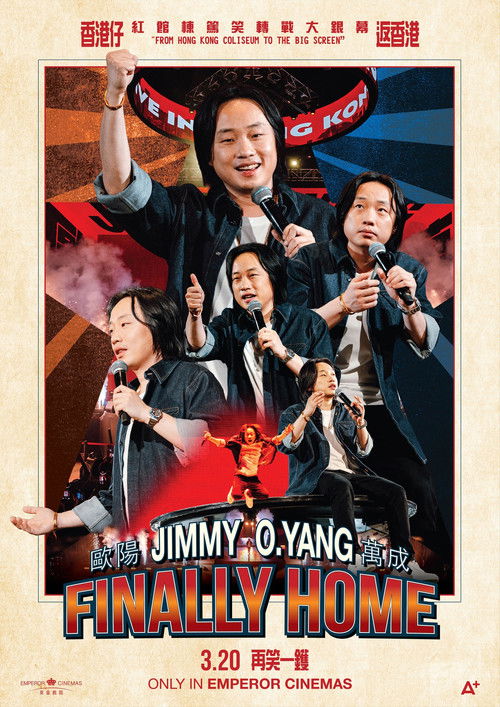
Jimmy O. Yang Finally Home (2026)
Directed by Jimmy O. Yang
Partly · Woke-Adjacent
How we score movies →Consciousness Markers
The entire special is architecturally built around Yang's identity as a Hong Kong-American performer. His status as an Asian man who 'snuck into' Hollywood is not background texture but the load-bearing wall of the material.
Yang explicitly addresses Asian representation in entertainment, the immigrant assimilation experience, and bicultural identity as recurring comedic subjects. The homecoming framing amplifies these themes considerably.
Yang's advocacy for Asian representation carries genuine autobiographical conviction that occasionally edges toward earnest testimony. It remains, however, embedded in comedy rather than free-standing sermon.
No LGBTQ+ themes identified in any available material about this special.
No feminist themes or gender-politics material identified in research.
No climate or environmental themes identified.
No anti-capitalist themes identified. The arena spectacle and theatrical distribution suggest the opposite orientation entirely.
No body positivity themes identified in available research.
No neurodivergence themes identified.
No revisionist historical framing identified. The special is personal memoir, not historical argument.
Synopsis
From stand-up stages to the big screen, from global fame to "Finally Home," Jimmy is back! Packed with rapid-fire punchlines and iconic one-liners, this time you don't need to fight for concert seats—just step into the cinema and laugh out loud together.
Why it received this score
Jimmy O. Yang returns to Hong Kong after twenty-five years and brings pyrotechnics, surprise cameos, and the accumulated cultural weight of every Asian-American comedian who ever played a heavily accented background character before getting their own thing. He is aware of this. He will tell you about it. The special is filmed across five arena shows in the city of his birth, performed in a blend of English and Cantonese, and framed as a homecoming of both the personal and symbolic variety. Yang has described himself as the Taylor Swift of Hong Kong, which is either a statement of fact or a calibrated provocation, and the special does not appear interested in resolving that ambiguity.
The social consciousness here is genuine and largely earned. Yang's comedy has always drawn from the specific reservoir of the Hong Kong immigrant who learned English from rap videos and then somehow ended up in Crazy Rich Asians, and the material on Asian representation in Hollywood is autobiographical rather than imported from a talking points memo. The racial consciousness score reflects real content, not ambient vibes. There is, however, a detectable undertow of advocacy in the earnestness with which Yang frames his own career as a victory lap for a demographic, which is a perfectly reasonable thing to feel and a mildly exhausting thing to watch performed at arena scale with pyrotechnics.
The lecture energy is low and the comedy is apparently high. The special does not appear to be a vehicle for grievance so much as a vehicle for Jimmy O. Yang, which is a distinction that matters. We score what is present. What is present is a bicultural comedian processing identity through punchlines in front of his hometown crowd, which scores modestly on two of our ten markers and leaves the other eight at zero. The arena is full. The bill will be fought over. This is sufficient.
Analysis generated by our Consciousness Algorithm