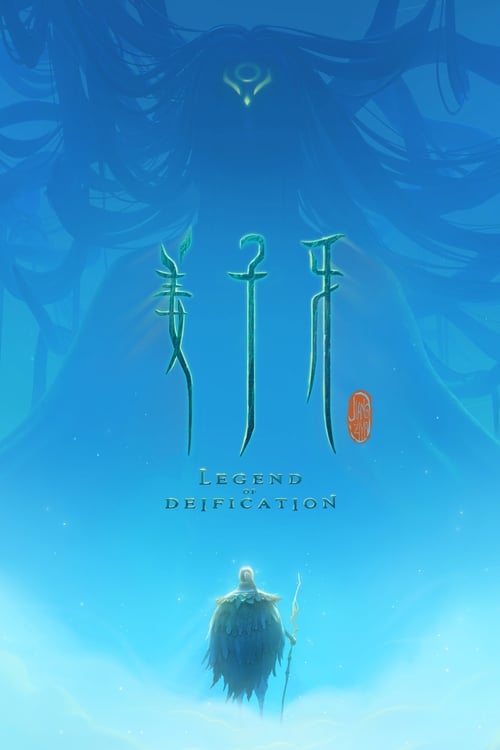
Jiang Ziya (2020)
Directed by Cheng Teng
No · Based
How we score movies →Consciousness Markers
The film reinterprets classical mythology to render previously villainous figures sympathetic, which constitutes a form of narrative revisionism, though it operates within fantasy rather than historical claims.
The cast includes primarily male characters in positions of power and authority. The female protagonist is silent and victimized, offered as an object of moral consideration rather than an agent.
The film contains implicit critique of rigid hierarchical authority and unquestioning obedience to systems of power, though this emerges from classical philosophical traditions rather than contemporary anti-capitalist frameworks.
While the film attempts to grant moral weight to a female character, she remains voiceless and defined entirely through her victimhood and the male protagonist's choice regarding her fate. This is sympathy, not feminism.
The film's moral messaging emerges organically from character conflict rather than preachy exposition. There is no sense of being lectured to, though the stakes are presented with clarity.
As a Chinese film working within Chinese mythology, the film naturalizes its cultural context without self-conscious reflection on racial or ethnic categories. This is neither progressive nor regressive by contemporary standards.
The mute female protagonist might be read as neurodivergent through a contemporary lens, but the film does not engage with disability as a meaningful category or source of agency.
No LGBTQ+ themes, representation, or subtext are present in the film. The narrative contains no romantic or sexual relationships that would provide space for such representation.
No environmental themes, climate anxiety, or ecological consciousness appear in the narrative. The film is unconcerned with contemporary ecological preoccupations.
The film employs conventional animated character design with no visible diversity in body type, disability representation, or deliberate body-positive messaging.


Synopsis
Atop the ruins of war, top commander Jiang Ziya is given the task to banish the Nine-tailed Fox Demon who threatens all mortals' very existence. When he discovers the Nine-tailed Fox's life linked to the soul of an innocent girl, he is faced with a challenging decision: follow the will of heaven or find his own path to righteousness.
Why it received this score
Jiang Ziya presents itself as a meditation on moral autonomy against systemic authority, which should theoretically resonate with certain contemporary sensibilities. The film's central conflict pits individual conscience against divine mandate, and one might observe parallels to modern skepticism of institutions. However, the film remains fundamentally a classical mythology adaptation, grounded in traditional Chinese cosmology and storytelling conventions that predate the cultural movements we are tasked with measuring. The Nine-tailed Fox, a figure of seduction and danger in classical literature, is recontextualized here as a sympathetic character linked to an innocent girl, but this represents narrative reimagining rather than systematic cultural repositioning. The female protagonist exists primarily as a plot device whose fate drives the moral dilemma, rather than as an agent of her own story.
The animation employs visually striking but conventional character designs without particular attention to body diversity or representation beyond the standard fantasy cast. There are no discernible LGBTQ+ themes, neurodivergent representation, or climate consciousness woven into the narrative fabric. The film's treatment of gender, while not hostile, offers nothing approaching contemporary feminist reframing. A girl who cannot speak, rendered sympathetic through her victimhood rather than her agency, occupies the emotional center of the story. This is pathos, not progressive consciousness.
The broader context matters here: as a Chinese national cinema product released during the Golden Week holiday, the film exists within a different cultural and industrial framework entirely. It succeeds or fails as entertainment and as artistic expression, but to measure it against 2020s American progressive cultural markers is to apply a category error. The film's moral questioning, genuine as it may be, emerges from classical philosophical traditions rather than contemporary social justice frameworks. It is a competent fantasy adventure that happens to contain themes of moral choice, not a work deliberately engaging with the specific cultural preoccupations we are assessing.
Analysis generated by our Consciousness Algorithm
Critic Reviews
“Impressively for a piece of foundation-stage universe building, Jiang Ziya manages to hint at a world beyond the frame without mitigating its individual pleasures.”
“Jiang Ziya is occasionally difficult for the uninitiated to follow, with reams of backstory squeezed into an exquisitely hand-drawn prologue and some perplexing reincarnation business later on.”
“Review: "Jiang Ziya" Features Chinese Mythology Told Through World-Class Animation Follow up to the 2019's "Ne Zha", "Jiang Ziya" solidifies a new generation of epic, computer animated Chinese film making.”
“Years ago, Jiang Ziya, the head disciple of Jingxu Hall, joined his master in a ravaging war to fight demons and capture the Nine-Tailed Fox Demon. Known to be the first to climb the Stairway to Heaven, he was expected to become the leader of gods. However, Jiang Ziya's final task to execute the Nine ...”