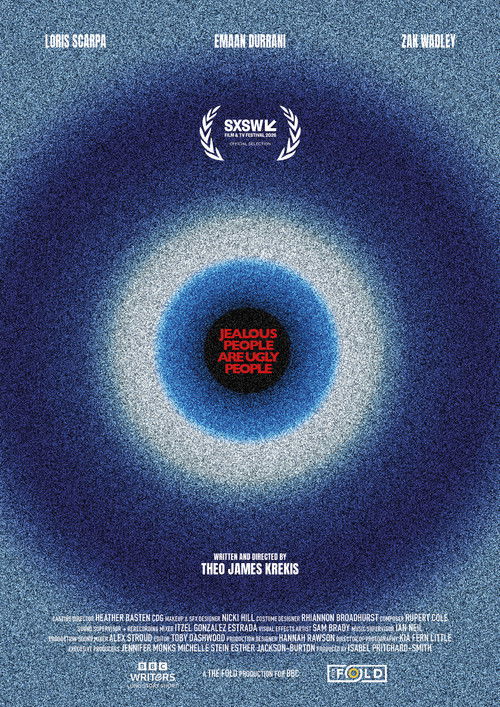
Jealous People Are Ugly People (2025)
Directed by Theo James Krekis
No · Ultra Based
How we score movies →Consciousness Markers
The film examines career success and material advancement through a lens of jealousy and moral corruption, suggesting ambition itself is spiritually corrosive. This contains faint anti-capitalist sentiment, though it is not the film's primary focus.
The cast appears to be ethnically diverse, but this diversity is clearly incidental to the narrative rather than intentional representation. The characters' identities are not foregrounded or discussed.
Greek cultural heritage and superstition are central to the plot, but this represents cultural specificity rather than racial consciousness in the modern sense. The film engages with cultural identity only as folklore.
The grandmother figure transmits cultural knowledge, but this is a traditional gothic trope rather than a feminist intervention. The narrative centers male jealousy without interrogating gender dynamics.
The film allows its supernatural premise to speak for itself rather than delivering explicit moral instruction. The grandmother's warnings are atmospheric rather than preachy.
No LGBTQ+ themes are present in the film. The narrative focuses on two male characters in a friendship dynamic without any romantic or queer subtext.
Climate themes are entirely absent from this psychological horror short. The supernatural crisis has nothing to do with environmental concerns.
Body positivity is not a concern of this film. Physical appearance and bodily diversity are not addressed or celebrated.
No neurodivergent characters or themes are present. The film does not engage with disability or cognitive diversity.
The film does not attempt to reframe historical narratives. It draws on genuine Greek superstition without reimagining or recontextualizing historical events.
Synopsis
Vasilly has become painfully jealous of his best friend, Luke. But things aren't going so well for Luke. Every time he shares some good news, he starts to suffer from strange and violent repercussions. Disturbed by the uncanny timing, Vasilly recalls his Yiayia's warnings about the Greek superstition of the evil eye - and starts to believe his own envy might be to blame for Luke's bad luck. Jealous People Are Ugly People is a darkly comic psychological thriller about male jealousy, inherited superstition, and the corrosive power of repressed ambition.
Why it received this score
Theo James Krekis has crafted a short film that operates almost entirely in the realm of psychological horror and classical superstition, a choice that positions it outside the contemporary social consciousness framework entirely. The narrative centers on male jealousy as a corrupting force, examining it through the lens of inherited Greek superstition rather than through any recognizable modern identity politics. Vasilly's resentment of his friend's success feeds what the film treats as a genuinely supernatural malevolence, one that predates current discourse and belongs instead to the domain of folklore and family trauma.
The film's cast appears incidental to its thematic concerns. Krekis is interested in jealousy as a universal human pathology, not as a vector for exploring representation or identity. The grandmother figure (Yiayia) who warns of the evil eye serves the narrative function of transmitting inherited superstition across generations, a classic gothic device that has nothing to do with contemporary progressive sensibilities. The short operates in a register closer to folk horror than social commentary, drawing its power from cultural specificity rather than from engagement with current identity frameworks.
This represents a work fundamentally uninterested in the markers that would elevate its score. There is no attempt to interrogate systemic structures, no celebration of neurodivergence or body variance, no climate consciousness lurking beneath the supernatural premise. The film is about something else entirely: the corrosive power of envy and the weight of inherited superstition. One might argue this represents a kind of artistic integrity, though the assessment requires only that we note what is absent.
Analysis generated by our Consciousness Algorithm