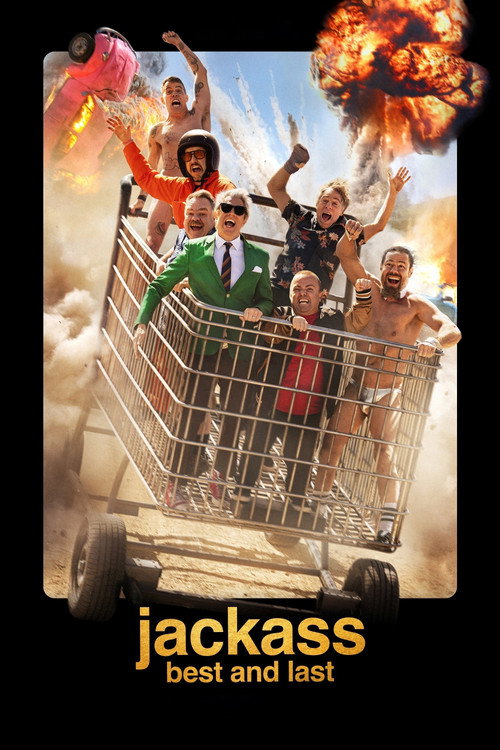
Jackass: Best and Last (2026)
Directed by Jeff Tremaine · $14.7M domestic
No · Ultra Based
How we score movies →Consciousness Markers
The ensemble is the same predominantly white male crew assembled in 2002, with Davon 'Jasper' Wilson providing some diversity as a continuing cast member. This represents organic franchise continuity rather than any deliberate representational agenda.
Johnny Knoxville has acknowledged that Jackass is 'really gay,' a characterization the franchise has worn as a badge of honor since its inception. This homoerotic transgression predates and operates entirely outside the modern advocacy framework, functioning instead as a form of gleeful taboo-breaking that has nothing to do with sincere allyship.
Preston Lacy's physique has been a recurring element of the franchise's visual comedy for two decades, though the framing is comedic rather than affirmational. The film does not celebrate bodies so much as destroy them, which is a philosophically distinct position.
The film's introspective framing around aging, legacy, and 'what it means to walk away' introduces a mild sentimental register between stunts. Nobody lectures anyone about anything, but the elegiac tone occasionally suggests that we are meant to feel something, which is a close enough cousin to be noted.
There is no feminist content here. The film is, by any measurable standard, the most aggressively male cinematic enterprise currently in theatrical release.
No racial consciousness themes are present. Race is not addressed, examined, or weaponized at any point in the proceedings.
No climate themes are present. The carbon footprint of the stunts themselves is, presumably, a separate matter.
This is a Paramount Pictures and MTV Entertainment Studios product celebrating its own twenty-five-year brand legacy with considerable commercial intent. Anti-capitalism does not enter the picture.
No neurodivergence themes are present. The decision-making on display may raise questions, but none of them are clinical.
No revisionist history is present. The film is, if anything, deeply reverent of its own past.
Synopsis
The fifth and final installment to Jackass franchise where the crew go on one last insane crusade.
Why it received this score
There is a version of film criticism in which "Jackass: Best and Last" presents no analytical challenge whatsoever. Men, mostly the same men from 2002, hurt themselves and each other for our amusement one final time. The social consciousness register is, to use a technical term, inert. No systemic inequities are interrogated. No underrepresented communities are centered. The film's entire ideological project is the proposition that the human body is funny when it collides with things.
And yet the film is not without its complications for the diligent scorer. Johnny Knoxville has gone on record affirming that Jackass is "really gay," a designation the franchise has cultivated since its inception through a form of homoerotic transgression so brazen and so thoroughly pre-ideological that it defies modern categorization. This is not allyship. This is something older and stranger, a kind of performative boundary dissolution that predates the vocabulary we would now use to describe it. The franchise also leans, in this farewell installment, into themes of aging and mortality, with Knoxville reportedly weeping during production. The specter of men confronting their own physical limits adds a faint elegiac undertone that occasionally tips toward sentiment. It does not tip toward a TED Talk, which is the relevant threshold.
The core achievement of the Jackass franchise, across twenty-five years, is that it has remained almost perfectly sealed against the concerns of the surrounding culture. Other franchises have adapted, evolved, and issued statements. Jackass has continued to throw men into bees. "Best and Last" maintains this discipline with admirable consistency, delivering a film that scores near zero across nine of ten markers not through any deliberate ideological resistance, but through a total, almost meditative indifference to the conversation entirely. That is, in its own way, a form of purity.
Analysis generated by our Consciousness Algorithm