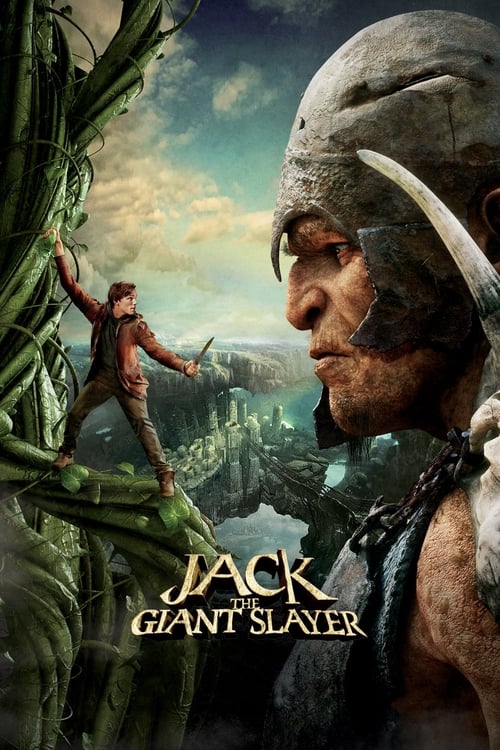
Jack the Giant Slayer (2013)
Directed by Bryan Singer
No · Ultra Based
How we score movies →Consciousness Markers
Princess Isabelle is more active than typical damsel-in-distress tropes and participates in some action sequences, but the film remains a male-centered hero's journey with limited feminist critique.
The cast is predominantly white with minimal ethnic diversity. Eleanor Tomlinson as the princess represents a female presence, but the film remains male-centered in its action and narrative focus.
The film contains minimal preachy messaging, though there are occasional lines about courage and nobility that lean slightly toward inspirational rhetoric.
No LGBTQ+ themes, characters, or representation are present in the film.
The film contains no discussion of race, racial identity, or racial justice. The predominantly white cast and medieval fantasy setting preclude any racial consciousness.
Climate change and environmental concerns are entirely absent from this fantasy adventure.
The film presents a feudal monarchy as the default power structure without critique. There is no anti-capitalist messaging or class consciousness.
The film features conventionally attractive lead characters and no representation of body diversity or body positivity messaging.
No characters with neurodivergence or disability representation are present or discussed in the film.
This is a fantasy film with no historical events or figures to revise. The medieval setting is entirely fictional.


Synopsis
The story of an ancient war that is reignited when a young farmhand unwittingly opens a gateway between our world and a fearsome race of giants. Unleashed on the Earth for the first time in centuries, the giants strive to reclaim the land they once lost, forcing the young man, Jack into the battle of his life to stop them. Fighting for a kingdom, its people, and the love of a brave princess, he comes face to face with the unstoppable warriors he thought only existed in legend–and gets the chance to become a legend himself.
Why it received this score
Jack the Giant Slayer is a straightforward fantasy adventure that arrived in 2013, a year when progressive cultural markers were only beginning to crystallize into what would become the recognizable aesthetic of the 2020s. The film adapts the classic Jack and the Beanstalk tale with a largely traditional narrative structure: a young farmhand becomes a hero, rescues a princess, and defeats an external enemy. Eleanor Tomlinson plays Princess Isabelle, who is given a somewhat more active role than traditional damsel archetypes, but the film remains at heart a conventional hero's journey with minimal attention to contemporary social consciousness.
The cast is predominantly white and male-dominated, which reflects both the fantasy adventure genre conventions of the era and the source material itself. There are no overt LGBTQ+ themes, no discussion of climate change, no revisionist historical commentary, and no particular emphasis on body diversity or neurodivergence. The film's relationship to capitalism is neutral rather than critical, and it contains no lecture-like preachiness about social issues. While Princess Isabelle participates in the action and shows agency, the feminist framework is minimal rather than central to the narrative.
Reviewing this film through a 2020s progressive lens reveals a fundamentally pre-woke entertainment product. It is a competently executed fantasy film that seeks primarily to entertain rather to educate or challenge on matters of contemporary social consciousness. The modest uptick in the female lead's agency accounts for the film's meager score, but this represents a minor concession to evolving sensibilities rather than a meaningful engagement with progressive themes.
Analysis generated by our Consciousness Algorithm
Critic Reviews
“A rousing, original and thoroughly entertaining adventure. ”
“By the standards of today's bombastic "event" movies, this is a refreshingly modest endeavor—one in which the main event is the skillful holding of our attention, all the way from "Once upon a time" to "Happily ever after."”
“One reason it works so well: The film always looks believable, and it’s easy to get wrapped into Singer’s fairy-tale world.”
“This epic waste of $190 million plunders the grab bag of overused plotlines, failing to put its own stamp on much of anything.”