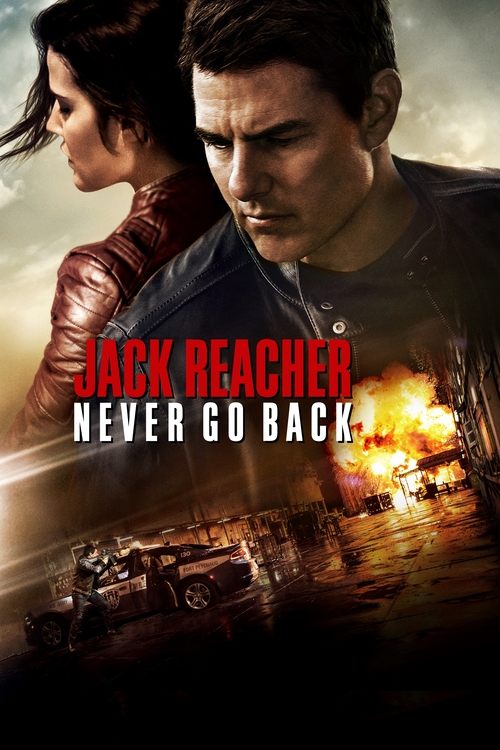
Jack Reacher: Never Go Back (2016)
Directed by Edward Zwick
No · Based
How we score movies →Consciousness Markers
Features Cobie Smulders as a capable military officer and includes Aldis Hodge and other actors of color in supporting roles. The casting reflects surface-level diversity but lacks meaningful depth or commentary.
Cobie Smulders' character is a competent military officer sharing narrative importance with the male lead, yet she is repeatedly sidelined, captured, and requires rescue, undermining any genuine feminist framework.
Actors of color appear in the cast but are presented as functional plot devices without depth, agency, or any examination of racial dynamics or systemic structures.
The plot involves military corruption and espionage, suggesting some critique of institutional malfeasance, but this remains underdeveloped and serves only as plot mechanics rather than ideological critique.
Minimal preachy messaging. The film prioritizes action sequences over thematic or moral instruction, though its military setting contains implicit endorsements of institutional structures.
No LGBTQ+ themes, characters, or representation evident in the film.
No climate-related themes, messaging, or environmental consciousness present in the film.
No body positivity themes or representation of diverse body types. The film adheres to conventional action genre aesthetics.
No representation of neurodivergent characters or exploration of neurodiversity.
The film contains no historical revisionism or reframing of historical narratives.


Synopsis
Years after resigning command of an elite military police unit, the nomadic, righter-of-wrongs Reacher is drawn back into the life he left behind when his friend and successor, Major Susan Turner is framed for espionage. Reacher will stop at nothing to prove her innocence and to expose the real perpetrators behind the killings of his former soldiers.
Why it received this score
Jack Reacher: Never Go Back presents itself as a film invested in progressive representation, yet it remains fundamentally a conventional action vehicle more interested in fist-fights and car chases than in exploring the social implications of its casting choices. Cobie Smulders' Major Susan Turner occupies the narrative as a capable military officer who shares protagonist duties with Cruise, a choice that signals some awareness of gender dynamics in the genre. However, her agency is ultimately circumscribed by the plot mechanics: she is framed, captured, and repeatedly rescued, her competence existing primarily as a foil to underscore Reacher's indispensability.
The film's approach to racial representation follows an even more cautious logic. Aldis Hodge and other actors of color appear in the ensemble cast, but their characters exist within a strictly functional framework, serving the plot without depth or interiority. There is no interrogation of the military-industrial structures depicted, no critique of power, no examination of systemic injustice. The film is, in essence, a Tom Cruise vehicle dressed in the clothing of a more diverse cast, which it mistakes for progressive intent.
Director Edward Zwick, despite his track record with socially conscious material, deploys his sensibilities here only as surface texture. The film contains no climate commentary, no body positivity rhetoric, no neurodivergent representation, no genuine feminist framework beyond the presence of a female character in a position of authority. What we observe is a fundamentally conservative film that has absorbed the aesthetic of diversity without the substance of social consciousness.
Analysis generated by our Consciousness Algorithm
Critic Reviews
“Overall, a superior sequel. Some people will never get over the height discrepancy but character-wise, Never Goes Back brings Reacher closer to the books for the type of thriller that rarely gets made these days.”
“With few words and the odd squint, Cruise hard boils all of his charisma into a clenched fist, but is more than happy to let a dynamic Smulders take the lead in many scenes.”
“Cruise finds the core of Reacher in his eyes, with a haunted gaze that says this lone wolf is still on a mission and still a long way from home. That's the Reacher Lee Child created in his books. And Cruise does him proud.”
“Of course, action movies don’t have to be believable or poignant. They just have to get your adrenaline pumping. But the movie lacks inspiration in that department, too, owing to action sequences you’ve seen before, familiar music and dialogue so predictable you could make a game out of guessing the next line.”