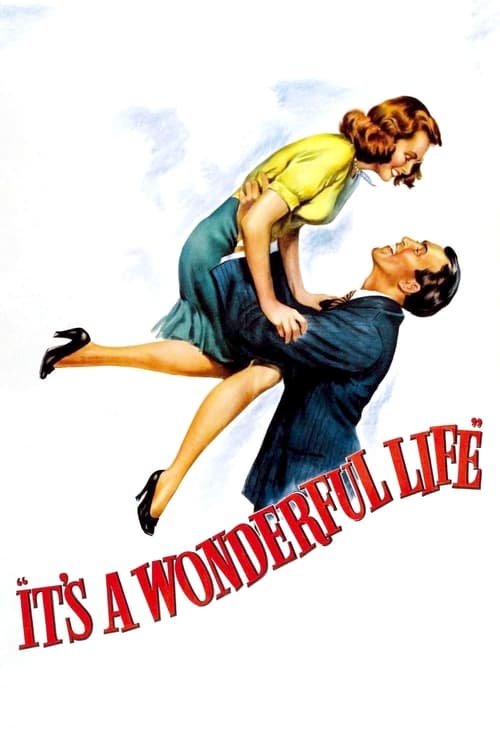
It's a Wonderful Life (1946)
Directed by Frank Capra
No · Ultra Based
How we score movies →Consciousness Markers
The film contains genuine critique of capitalist predation through Mr. Potter's character and celebrates community cooperation through the building and loan. However, this reflects 1940s New Deal liberalism rather than contemporary anti-capitalist sensibilities.
The film's moral lessons emerge organically from the narrative rather than through preachy exposition. Clarence's role as guide is integrated into the fantasy structure.
The cast reflects the demographics of 1940s small-town America with no intentional representation politics. Donna Reed plays the female lead in a supporting domestic role.
Mary Bailey is presented as a capable woman who chooses domesticity and family, reflecting 1940s gender norms rather than contemporary feminist consciousness.
No LGBTQ+ themes or characters present in the narrative.
The film features an all-white cast in an all-white town with no engagement with racial themes or consciousness whatsoever.
No environmental themes or climate consciousness present in the film.
No body positivity messaging or commentary present in the film.
No representation or discussion of neurodivergence in the narrative.
The film presents a straightforward historical narrative set in contemporary times with no attempt to rewrite or reframe historical events.


Synopsis
George Bailey has spent his entire life giving to the people of Bedford Falls. All that prevents rich skinflint Mr. Potter from taking over the entire town is George's modest building and loan company. But on Christmas Eve the business's $8,000 is lost and George's troubles begin.
Why it received this score
Frank Capra's "It's a Wonderful Life" remains one of cinema's most durable artifacts, though its reputation as a cultural touchstone has obscured what it actually is: a 1946 film deeply committed to the moral framework of its moment. The picture's thematic architecture rests on class consciousness and community solidarity, genuine concerns that predate contemporary progressive sensibilities by a generation. George Bailey's struggle against Mr. Potter's acquisitive greed speaks to genuine tensions between cooperative economics and monopolistic capital, but this is the language of New Deal liberalism, not modern social consciousness.
The film's gender politics are instructive in their period specificity. Donna Reed's Mary Bailey is portrayed as intelligent and capable, yet the film's narrative arc moves inexorably toward her fulfillment through marriage and motherhood. This is not presented as a constraint imposed by patriarchal systems but as the natural and desirable outcome of romantic love. The film contains no irony about this trajectory, no metacritical awareness of gender as a constructed category. What we see is authentic 1940s sentiment, not a progressive statement dressed in period costume.
Examined through the lens of contemporary social consciousness, "It's a Wonderful Life" registers as almost entirely neutral. Its moral universe operates on principles of human dignity, community care, and resistance to exploitation, all worthy themes but not specifically aligned with the cultural markers that define modern progressive consciousness. The film's endurance suggests that these humanist concerns transcend any particular ideological moment. This is precisely what makes it unsuitable for contemporary classification. It is simply too old to be woke, and too sincere to pretend otherwise.
Analysis generated by our Consciousness Algorithm
Critic Reviews
“It's one of those ageless movies, like "Casablanca" or "The Third Man," that improves with age. Some movies, even good ones, should only be seen once. When we know how they turn out, they've surrendered their mystery and appeal. Other movies can be viewed an indefinite number of times. Like great music, they improve with familiarity. It's a Wonderful Life falls in the second category.”
“The film is gripping enough simply with the telling of George's lifestory. A genuine American classic.”
“This couldn't be other than a Capra picture, the humanness of its story the dominant factor at every turn of situation. His direction of the individual characterizations delivered is also distinctively his, and the performances, from the starring roles of James Stewart and Donna Reed down to the smallest bit, are magnificent. When Capra is at his best, no one can top him. ”
“Capra is an old-time movie craftsman, the master of every trick in the bag, and in many ways he is more at home with the medium than any other Hollywood director. But all of his details give the impression of contrived effect...To make his points he always takes an easy, simple-minded path that doesn’t give much credit to the intelligence of the audience.”