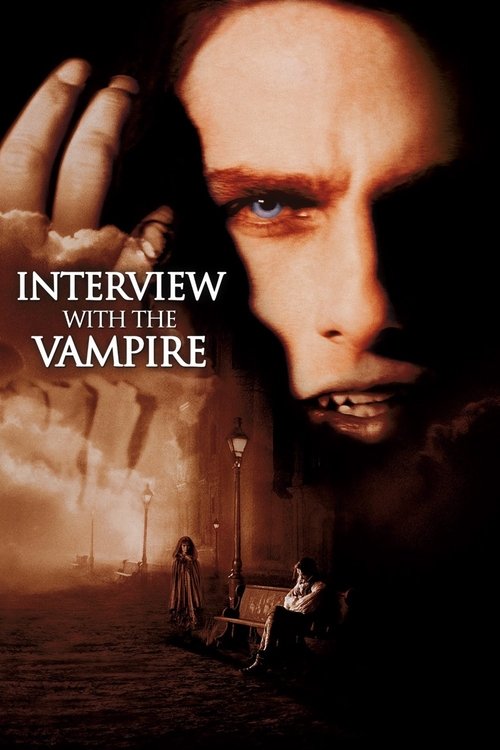
Interview with the Vampire (1994)
Directed by Neil Jordan
No · Based
How we score movies →Consciousness Markers
Strong homoerotic and queer-coded subtext permeates the Louis-Lestat relationship and extends to Armand. However, this queerness remains subtext rather than explicit text, reflecting pre-modern queer cinema conventions.
The cast includes Thandiwe Newton and other supporting actors of color, but these choices appear incidental rather than deliberate. No effort is made to highlight or center diverse representation.
While the cast includes actors of color, the film shows no particular racial consciousness or commentary. Characters of color exist in the narrative without any acknowledgment of racial dynamics or themes.
The film offers little in terms of feminist consciousness. Claudia is trapped in a patriarchal vampire family structure, and her agency is minimal. Female characters are largely passive or decorative.
The vampires are portrayed as wealthy and aristocratic, yet there is no critique of capitalism or class systems. Their luxury and decadence are presented as romantic rather than problematic.
The film celebrates conventionally attractive bodies and sensuality but offers no body positivity messaging. All vampires conform to narrow beauty standards and there is no diversity in body representation.
The film is primarily narrative-driven with minimal preachy intent. While there are philosophical monologues about existence and meaning, these are character-driven rather than audience-directed lectures.
No climate themes or environmental consciousness present in the film. The narrative focuses entirely on personal vampire mythology and contains no ecological commentary whatsoever.
No representation of neurodivergence or disability in the film. No characters with autism, ADHD, mental health conditions, or other neurodivergent traits are depicted.
The film makes no attempt to revise historical narratives or challenge dominant historical interpretations. It is a gothic fantasy with no historical pretense.


Synopsis
A vampire relates his epic life story of love, betrayal, loneliness, and dark hunger to an over-curious reporter.
Why it received this score
Neil Jordan's adaptation of Anne Rice's vampire chronicle arrives at an awkward historical juncture. The film is suffused with homoerotic subtext, particularly in the tormented dynamic between Louis and Lestat, yet this queerness exists largely in shadow work, coded rather than declared. For modern audiences, the homoeroticism reads as unavoidably queer, but the film itself refuses to make this explicit, preferring to let the sensuality and emotional anguish between men speak in the language of metaphor. This is pre-modern queer cinema in temperament, even if the subtext proves remarkably legible to contemporary viewers who have learned to read such signs.
The film's approach to representation feels scattered and inconsistent by modern standards. The casting includes some diversity, notably Thandiwe Newton in a supporting role, but these choices appear incidental rather than intentional. The real controversy centers on the casting of an 11-year-old Kirsten Dunst as the vampire child Claudia, a decision that has aged poorly in retrospect. The role required a child to perform seduction and inhabit adult sensuality, which the production solved through coaching her to make "sexy" facial expressions, a detail that now reads as deeply uncomfortable. The film was released in 1994, before the contemporary discourse around such matters had fully crystallized, which is both an explanation and not an excuse.
The result is a film that contains elements we might now read as progressive, yet lacks the conscious social intention that would qualify it as genuinely engaged with modern progressive sensibilities. The homoeroticism is real but unacknowledged. The diversity is present but unremarked. The film exists in a cultural moment before such things required self-awareness, and that innocence of intention is perhaps the most revealing thing about it.
Analysis generated by our Consciousness Algorithm
Critic Reviews
“A lot of stars aligned with this film and I still think it stands the test of time.”
“Interview with the Vampire treats vampires not as folkloric monsters or Gothic aristocrats who corrupt traditional values, but as romantic figures of transgressive and alluring desire.”
“Only 11 at the time, Dunst's range is extraordinary, and she easily outclasses her adult male co-stars in every scene.”