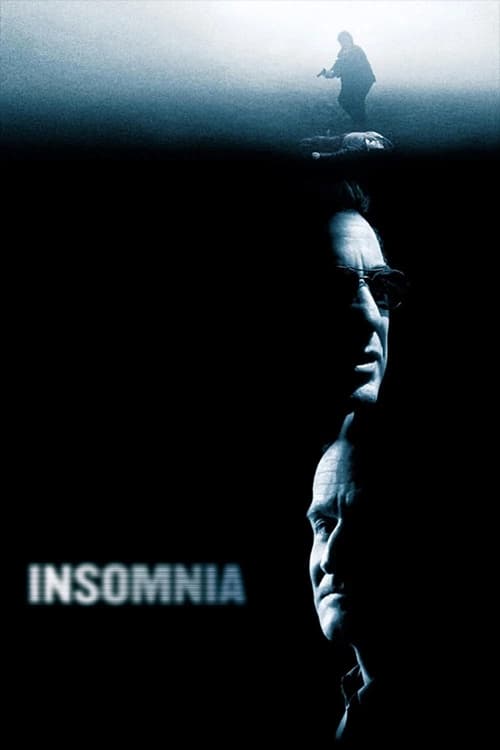
Insomnia (2002)
Directed by Christopher Nolan
No · Ultra Based
How we score movies →Consciousness Markers
The cast includes two female actors (Swank, Tierney) in supporting roles, but the film remains male-dominated and shows no particular commitment to diverse casting beyond conventional Hollywood baseline.
Female characters exist in the narrative but occupy subordinate positions typical of 2002 crime thrillers, with no feminist critique or challenge to gender hierarchies.
No LGBTQ+ themes, characters, or representation are present in the film.
The film contains no examination of race, racial dynamics, or racial consciousness.
Climate themes are entirely absent from the film.
There is no critique of capitalism or wealth inequality in the narrative.
Body positivity is not a consideration in the film.
Neurodivergence is not explored or represented in the film.
The film contains no historical revisionism or reexamination of historical narratives.
The film does not lecture or heavy-handedly present social messages to the audience.


Synopsis
Two Los Angeles homicide detectives are dispatched to a northern town where the sun doesn't set to investigate the methodical murder of a local teen.
Why it received this score
Insomnia arrives as a work of studied moral ambiguity set against the perpetual daylight of an Alaskan town, which serves primarily as visual metaphor rather than social statement. Christopher Nolan's remake of the Norwegian original concerns itself with the corruption of a compromised detective rather than with any broader examination of systemic inequity or cultural representation. The film presents a world of hardened professionals, most of them white men, navigating ethical compromise in the fog of exhaustion and professional failure. Robin Williams, playing against type as a murderer, represents the film's only gesture toward unpredictability, though this remains a casting choice rather than a thematic one.
The inclusion of Hilary Swank and Maura Tierney in the cast provides nominal female presence, but both occupy supporting roles that confirm rather than challenge the genre's conventional hierarchies. There is no interrogation of power structures, no exploration of identity, no engagement with the social questions that have come to occupy contemporary cinema. The film is content to examine individual moral failure through the lens of genre convention, a perfectly respectable artistic project that simply declines to make statements about anything beyond its immediate narrative scope.
This is a competent thriller that understands itself as a thriller and nothing more. One might admire such clarity of purpose, even as one notes its complete indifference to the cultural conversations that define contemporary progressive sensibility. The film will not challenge you on questions of representation, equity, or systemic justice. It will, however, provide a solidly constructed procedural with two committed lead performances and a setting that genuinely unsettles.
Analysis generated by our Consciousness Algorithm
Critic Reviews
“A rare case of an American remake that actually improves on a European movie.”
“A perfect fit between filmmaker (Memento's Christopher Nolan) and material (Norway's same-name psycho-chiller from 1997), this remake gets all there is to get out of a peculiar premise with promise.”
“Nolan pushes the twilight-zone atmosphere so hard that it loses its capacity for mystery. When it's not assaulting us with jolting audiovisual expressions of fatigue, this movie plays like a pedestrian response to David Lynch's effortlessly eerie "Twin Peaks."”