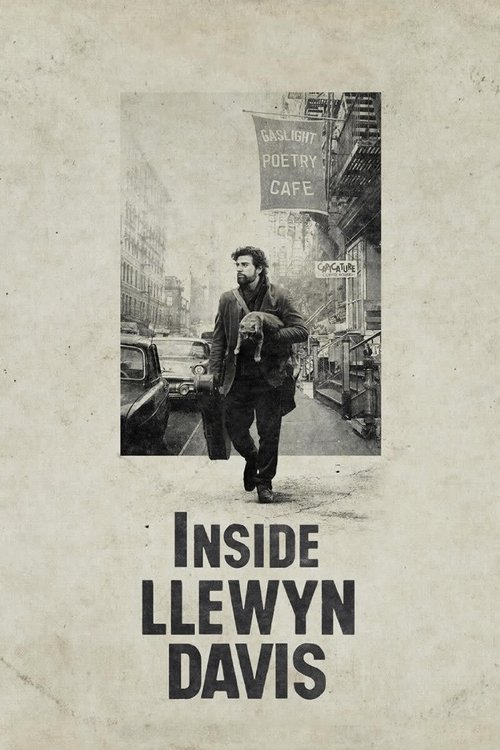
Inside Llewyn Davis (2013)
Directed by Ethan Coen
No · Ultra Based
How we score movies →Consciousness Markers
Economic struggle is depicted sympathetically, showing the precarity of artistic life. However, this reflects the Coens' fatalism rather than explicit anti-capitalist messaging.
Carey Mulligan's Jean is sympathetic but not centered. The film reflects 1960s gender dynamics without critique or feminist framing.
The film is subtle and artistic rather than preachy. It avoids explicit messaging about social issues, preferring ambiguity and fatalism.
The film presents the 1961 folk scene with period accuracy but adds the Coens' own bleak interpretation without attempting historical revisionism.
No deliberate representation casting or diversity initiatives. The film reflects the actual 1961 folk scene without commentary on representation.
No LGBTQ+ themes, characters, or representation present in the film.
The film is set in 1961 but displays no racial consciousness, commentary on race, or engagement with racial themes.
No environmental or climate-related themes are present in the film.
No body positivity themes, discussions, or representation are present.
No representation or discussion of neurodivergence or mental health conditions.


Synopsis
In Greenwich Village in the early 1960s, gifted but volatile folk musician Llewyn Davis struggles with money, relationships, and his uncertain future.
Why it received this score
Inside Llewyn Davis occupies an interesting position in the contemporary critical landscape: it is a serious film about economic precarity and artistic struggle, yet it possesses almost no markers of what one might call modern progressive consciousness. The Coen Brothers have crafted a portrait of 1961 Greenwich Village that is sympathetic to its protagonist's suffering without offering any framework for understanding that suffering through the lens of systemic injustice. Llewyn Davis fails not because society has failed him, but because he is, fundamentally, a failure of character. The film's fatalism is complete and unsparing.
The production treats its period setting with fidelity but without interrogation. The folk scene of early 1960s Manhattan is presented as it was, not as it should have been viewed through contemporary sensibilities. Women, minorities, and questions of representation simply do not register as concerns for the filmmakers. Carey Mulligan's Jean is a fully realized character, but she exists primarily as a mirror for Llewyn's moral failures rather than as a subject whose own story matters. There is no attempt to center her perspective or to suggest that the structures surrounding her are unjust.
What animates the film instead is a kind of bleak humanism: the recognition that people suffer, that their suffering is often self-inflicted, and that the universe offers no redemption or final meaning. This is a deeply serious artistic vision, but it is not one that traffics in the particular vocabulary of contemporary social consciousness. The Coens remain committed to their own artistic fatalism, indifferent to whether their vision aligns with or challenges the political sensibilities of any given moment.
Analysis generated by our Consciousness Algorithm
Critic Reviews
“Inside Llewyn Davis isn't about someone trying to make it big, but someone just trying to make it, and the Coens celebrate the hard road that can inspire great art.”
“This is a gorgeously made character study leavened with surrealistic dimensions both comic and dark, an unsparing look at a young man who, unlike some of his contemporaries, can’t transcend his abundant character flaws and remake himself as someone else.”
“Inside Llewyn Davis is a revelatory showcase for Isaac, who sings with an angelic voice and turns a potentially unlikable character into a consistently relatable, unmistakably human presence — a reminder that humility and genius rarely make for comfortable bedfellows.”
“The movie is so “interior,” it so zeroes in on Isaac and his baleful stare, that we’re relieved any time something overtly funny happens.”